Background
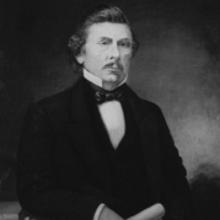
Walker Brooke was born on 25 December 1813 at Page Brooke, Clarke County, Virginia, United States. He was the son of Humphrey Brooke and Sarah Walker Page.


Charlottesville, VA, United States
Walker Brooke graduated from the University of Virginia at Charlottesville in 1835.
Charlottesville, VA, United States
Walker Brooke graduated from the University of Virginia at Charlottesville in 1835.
congressman lawyer politician senator
Walker Brooke was born on 25 December 1813 at Page Brooke, Clarke County, Virginia, United States. He was the son of Humphrey Brooke and Sarah Walker Page.
Walker Brooke attended the public schools in Richmond, Virginia and Georgetown, D.C. He graduated from the University of Virginia at Charlottesville in 1835.
Walker Brooke was admitted to the Virginia bar in 1838. He taught school in Kentucky before moving to Lexington, Holmes County, Mississippi, in the 1840s where he built up a large law practice. He was elected to the lower house of the Mississippi legislature in 1848 and to the upper house in 1850 and 1852. In 1852-1853, he served as a member of the Mississippi Union party in the United States Senate. As a cooperation member of the Mississippi constitutional convention of 1861, he was a cautious member of the Committee of 15 which drew up the Ordinance of Secession.
In the provisional Congress, he was a member of the committee to organize the Executive Department and served on the Inauguration and the Patents Committees. Brooke became a Democrat but was defeated for the Confederate Senate by James Phelan in late 1861.
In 1862, President Davis appointed him to the Board of Commissioners under the Sequestration Acting. There he dealt with the confiscated estates of alien enemies. In late 1863, he was provost marshal of Vicksburg. Although he had much experience and ability, Brooke did little during the remainder of the war. He might have fallen out of sympathy with the Confederate cause and merely retired to private life.
Little is known of his postwar career, save that his law practice declined and that he lost the will to participate in the reconstruction of his state.
At first, Brooke was a member of the Whig party. He voted for secession and was the only Whig in the Mississippi delegation elected to the provisional Congress at Montgomery. In 1861 he became affiliated with the Democratic Party.
In 1840, Walker married Jane Jefferson Lewis Eskridge. Their children were Roberta, Lucy Jefferson, Callowhill Minnis, Walker, James Humphrey, Francis Temple, Horace Miller, Hugh H., Jane Walker, Mary Sims.
1824-1904
1842-1890
1844-1932
1847-1911
1848-1849
1851-1851
1851-1878
1854-1945
1855-1933
1858-1916
1864-1927