Background
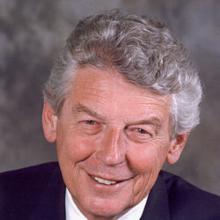
Willem Kok IV was born on 29 September 1938, in Bergambacht in the Netherlands Province of South Holland, the son of Willem Kok III a carpenter, and Neeltje de Jager. He has one younger brother born in 1945.

Wim Kok in 1994

Anne Frank Foundation

International Crisis Group, logo

ICMP headquarters in The Hague
Nyenrode Business Universiteit
Socialist International
Anne Frank Foundation
International Crisis Group, logo
ICMP headquarters in The Hague


lobbyist politician trade union leader Corporate director
Willem Kok IV was born on 29 September 1938, in Bergambacht in the Netherlands Province of South Holland, the son of Willem Kok III a carpenter, and Neeltje de Jager. He has one younger brother born in 1945.
He studied business at the Nyenrode Business Universiteit.
Kok served in the army in 1959-61 worked for a small trading company in Amsterdam.Since 1961, he became a member of the Labor Party (PvdA) and the Dutch Association of Trade Unions (NVV), in 1973-76 he was the chairman of the NVV.In 1976-85 he was chairman of the Federation of Dutch Trade Unions, created from the merge of NVV and the Dutch Association of Catholic Trade Unions.President of the European Trade Union Confederation (1979-82), Vice-President of the Socialist International (1989).In 1986 Kok was elected to the lower House of the States General from the PvdA, the same year he was elected as political leader of the PvdA to succeed J. den Uyl.In the Cabinet R. Lubbers III Kok took the post of Deputy Prime Minister and Minister of Finance (1989-94).Kok became Prime Minister of the Netherlands and Minister of General Affairs (22.8.1994 – 3.8.1998).On April, 16, 2002, a month before the end of the term, the whole Kok cabinet resigned due to a scandal related to the Netherlands Institute for War Documentation's report on 10.4.2002 regarding mass killings of Bosnian Muslims in Srebrenica in 1995 committed by Bosnian Serbs despite the presence of the Dutch battalion of the UN peacekeeping forces there.After his resignation Kok withdrew from politics, and also left the post of the PvdA leader in December 2001. Since April 2003 he became Minister of State of the Netherlands (an honorary position usually held by former Prime ministers and leaders of major parties). In 2003-04 he headed a group of experts analyzing the implementation of the EU Lisbon Strategy; in 2009-13 he was president of the Club of Madrid (an organization composed of former heads of state and government). He is a Board member of a number of corporations and international non-governmental organizations.
Kok was known for his abilities as a manager and negotiator. During his premiership, his cabinets were responsible for implementing several social reforms and further reducing the deficit. He held the distinction of leading the first purple coalitions as Prime Minister of the Netherlands. On 11 April 2003, he was granted the honorary title of Minister of State.
Kok was highly praised for his Third Way and polder model philosophies and for the success of leading his Purple Coalitions. During his premiership, his cabinets were responsible for implementing several social reforms, legalizing same-sex marriage and euthanasia, stimulating the economy resulting in more employment and privatization and further reducing the deficit. As a result of this, and because of his skills as manager and negotiator, Kok was praised by his fellow European leaders.
Kok, a trade union leader by profession, worked for the Netherlands Association of Trade Unions from 1961 until 1976, when it merged to form the Federation Netherlands Labour Movement. Kok served as its first chairman from 1976 until 1986 when he left to enter the House of Representatives as a Labour politician. After the general election of 1994 Kok became Prime Minister of the Netherlands, taking office on 22 August 1994. In the following general election in 1998 Kok's party gained eight seats and the coalition retained its majority with a new cabinet being formed, continuing its policies. On 15 December 2001 Kok announced his retirement from national politics and stood down as Leader of the Labour Party that same day. He remained Prime Minister of the Netherlands until the First Balkenende cabinet was installed on 22 July 2002, semi-retiring from active politics at the age of 63.
Kok served as a Member of Supervisory Board at ING Bank N.V. He served as a Non-Executive Director of TNT and a member of European Commission on the consequences of expanding the European Union. He was the Chairman of the Anne Frank Foundation. He is also a Member of the board of trustees of the International Crisis Group (ICG) and Member of the International Commission on Missing Persons (ICMP).
In 1965, after four years of dating, Kok married Margrietha "Rita" Roukema (born 3 November 1939). He adopted her two children from a previous marriage, daughter Carla (born 1959) and son André (born 1961), who is mentally and physically disabled, and together they had a third child, son Marcel (born 1966).