Background
Dawson was born near Edenton in Chowan County, North Carolina. He was also the grandson of William Dawson, the second president of The College of William & Mary, and a great-great grandson of John Stith and William Randolph.

Dawson was born near Edenton in Chowan County, North Carolina. He was also the grandson of William Dawson, the second president of The College of William & Mary, and a great-great grandson of John Stith and William Randolph.
Dawson represented Bertie County in the state constitutional conventions of 1788 and 1789. Dawson Street in downtown Raleigh is named for him. Dawson was elected to the 3rd United States Congress in the election of February 15, 1793, a three-way race in which he, as the Anti-Federalist candidate, defeated two Federalists: Stephen Cabarrus (Speaker of the State House) and William Cumming.
Dawson served from March 4, 1793 to March 3, 1795.
He lost his race for re-election on February 13, 1795 to Dempsey Burges. Dawson died in Bertie County, North Carolina.
His obituary, printed in the North Carolina Journal on February 1, 1796, stated that Dawson died on January 16, 1796 but the Biographical Directory of the United States Congress, which lists his middle name as "Johnson," puts his death at 1798.
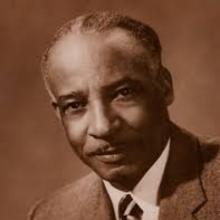
William Levi Dawson was composer, who used the rich vitality of his musical heritage as a basis for all types of music, including arrangements of folk songs and original compositions.
He was named to the Alabama Arts Hall of Fame in 1975, and received the Alumni Merit Award from Tuskegee Institute in 1983.
He was elected to the North Carolina House of Commons (now called the House of Representatives) in 1791 and was a member of the committee which was appointed to choose a site for the new state capital, Raleigh, that same year.