Background
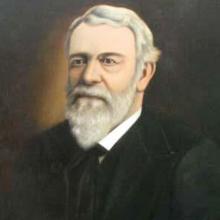
William Dortch was born on August 23, 1824, in Nash County, North Carolina about 5 miles from the town of Rocky Mount, North Carolina. His parents were William and Drusilla Bunn Whitfield Dortch.
William Dortch was born on August 23, 1824, in Nash County, North Carolina about 5 miles from the town of Rocky Mount, North Carolina. His parents were William and Drusilla Bunn Whitfield Dortch.
Dortch attended the local schools, then entered the Bingham School in Hillsborough. After completing his studies he read law in Halifax under Bartholomew F. Moore.
William Dortch was elected county attorney of Nash County in 1844 and served until 1848.
In 1849, he moved to Goldsboro, North Carolina, where he was elected county attorney for Wayne County and, in 1852, was elected to the lower house of the North Carolina legislature. With the exception of 1856-1857, Dortchserved in the legislature from 1852 until 1861. For the last ten months of his final term he was speaker of the House.
He defeated four opponents for election to the Confederate Senate in 1861, and he contended that he remained in the Senate throughout the war to avoid conscription.
He served on the Accounts, Commerce, Naval Affairs, Engrossment and Enrollment, and Special Committees. Dortch supported revisions in the conscription laws, served in the most important role of explaining the president’s actions to Governor Zebulon Vance, and tried unsuccessfully to persuade President Davis to propose some plan for peace negotiations in order to gather moderate support from North Carolina for the final efforts of the Confederacy. In late 1864, Governor Vance helped elect Thomas S. Ashe, a moderate, over Dortch.
The war ended before Dortch's term expired. After the war he farmed and practiced law. By 1866, he was negotiating for the purchase of river land to build a cotton factory, and he aspired for a gubernatorial appointment to a railroad board. which he never received.
In 1879, he was elected to the state Senate, where he was chairman of the Judiciary Committee for two years. He served in the state Senate from 1879 until 1885. In 1881, he was a member of the Code Commission.
He continued his law practice and dropped from public view.
Dortch was a member of the Episcopal church.
William was a member of the Democratic party. He supported Stephen A. Douglas for the presidency but voted for John C. Breckinridge when he thought that Douglas could not win. Dortch claimed that he opposed secession. He did not attend the state secession convention.
Dortch was a supporter of the Davis administration. He is said to have persuaded President Davis not to arrest W. W. Holden for treason.
Quiet and reserved in temperament, Dortch was conservative and slow to change. His pleadings before the bar were precise, thorough, and straight to the point; his delivery was smooth and almost conversational.
Dortch's first wife was Mary Elizabeth Pittman. Their children were Corinne, Fitzhugh, Harrod Pittman, Isaac Foote, William T., Annie Laurie, and Mary D. Scholfield. Dortch's second wife was Harriet Williams; to them were born Allan W., Helen W., James Tyson, and Selene.
1827-1870
1844-1928
1846-1915
1848-1926
1849-1910
1862-1918
1860-1931
1877-1922
1883-1962

Dortch was a personal friend of Judah P. Benjamin and often acted as an intermediary between him and Governor Zebulon B. Vance.