

Background
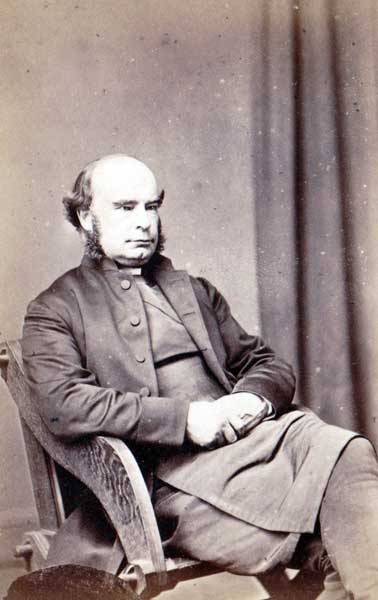
William Magee was born on December 17, 1821, in Cork, Ireland.
(Excerpt from The Church's Fear and the Church's Hope: A S...)
Excerpt from The Church's Fear and the Church's Hope: A Sermon, Preached in the Cathedral Church of Wells, at the Annual Meeting of the Bath and Wells Diocesan Societies, on Tuesday, October 4th, 1864 These words are few and simple. The fact which they relate does not seem at first sight a very striking or impor tant one. They tell us how St. Paul in his first journey to Rome was comforted and cheered on his landing in Italy, by finding that brethren from Rome had come so far to meet him on his way. This account of their meeting seems interesting and even touching, but nothing more. And yet these words are of inestimable value. We could better afford to lose nearly the whole of the rest of this story of the voyage of St. Paul than this account of his meeting with his brethren. For while the rest of the story tells us what St. Paul did, or what happened to him, this tells us what he thought and felt. In all the rest of the voyage we see the outer life of St. Paul; here we see his inner life, the very man himself. We have here revealed to us the very innermost heart of a great man, in a great crisis of a great life. And we have him revealed to us in quite a new and unexpected light. About the Publisher Forgotten Books publishes hundreds of thousands of rare and classic books. Find more at www.forgottenbooks.com This book is a reproduction of an important historical work. Forgotten Books uses state-of-the-art technology to digitally reconstruct the work, preserving the original format whilst repairing imperfections present in the aged copy. In rare cases, an imperfection in the original, such as a blemish or missing page, may be replicated in our edition. We do, however, repair the vast majority of imperfections successfully; any imperfections that remain are intentionally left to preserve the state of such historical works.
http://www.amazon.com/gp/product/0243313748/?tag=2022091-20
(This is a reproduction of a book published before 1923. T...)
This is a reproduction of a book published before 1923. This book may have occasional imperfections such as missing or blurred pages, poor pictures, errant marks, etc. that were either part of the original artifact, or were introduced by the scanning process. We believe this work is culturally important, and despite the imperfections, have elected to bring it back into print as part of our continuing commitment to the preservation of printed works worldwide. We appreciate your understanding of the imperfections in the preservation process, and hope you enjoy this valuable book.
http://www.amazon.com/gp/product/128971360X/?tag=2022091-20
(Unlike some other reproductions of classic texts (1) We h...)
Unlike some other reproductions of classic texts (1) We have not used OCR(Optical Character Recognition), as this leads to bad quality books with introduced typos. (2) In books where there are images such as portraits, maps, sketches etc We have endeavoured to keep the quality of these images, so they represent accurately the original artefact. Although occasionally there may be certain imperfections with these old texts, we feel they deserve to be made available for future generations to enjoy.
http://www.amazon.com/gp/product/1313203378/?tag=2022091-20
(This scarce antiquarian book is a facsimile reprint of th...)
This scarce antiquarian book is a facsimile reprint of the original. Due to its age, it may contain imperfections such as marks, notations, marginalia and flawed pages. Because we believe this work is culturally important, we have made it available as part of our commitment for protecting, preserving, and promoting the world's literature in affordable, high quality, modern editions that are true to the original work.
http://www.amazon.com/gp/product/1166611876/?tag=2022091-20

( This work has been selected by scholars as being cultur...)
This work has been selected by scholars as being culturally important, and is part of the knowledge base of civilization as we know it. This work was reproduced from the original artifact, and remains as true to the original work as possible. Therefore, you will see the original copyright references, library stamps (as most of these works have been housed in our most important libraries around the world), and other notations in the work. This work is in the public domain in the United States of America, and possibly other nations. Within the United States, you may freely copy and distribute this work, as no entity (individual or corporate) has a copyright on the body of the work. As a reproduction of a historical artifact, this work may contain missing or blurred pages, poor pictures, errant marks, etc. Scholars believe, and we concur, that this work is important enough to be preserved, reproduced, and made generally available to the public. We appreciate your support of the preservation process, and thank you for being an important part of keeping this knowledge alive and relevant.
http://www.amazon.com/gp/product/1361691123/?tag=2022091-20
( This work has been selected by scholars as being cultur...)
This work has been selected by scholars as being culturally important, and is part of the knowledge base of civilization as we know it. This work was reproduced from the original artifact, and remains as true to the original work as possible. Therefore, you will see the original copyright references, library stamps (as most of these works have been housed in our most important libraries around the world), and other notations in the work. This work is in the public domain in the United States of America, and possibly other nations. Within the United States, you may freely copy and distribute this work, as no entity (individual or corporate) has a copyright on the body of the work. As a reproduction of a historical artifact, this work may contain missing or blurred pages, poor pictures, errant marks, etc. Scholars believe, and we concur, that this work is important enough to be preserved, reproduced, and made generally available to the public. We appreciate your support of the preservation process, and thank you for being an important part of keeping this knowledge alive and relevant.
http://www.amazon.com/gp/product/1297243439/?tag=2022091-20

( This is a reproduction of a book published before 1923....)
This is a reproduction of a book published before 1923. This book may have occasional imperfections such as missing or blurred pages, poor pictures, errant marks, etc. that were either part of the original artifact, or were introduced by the scanning process. We believe this work is culturally important, and despite the imperfections, have elected to bring it back into print as part of our continuing commitment to the preservation of printed works worldwide. We appreciate your understanding of the imperfections in the preservation process, and hope you enjoy this valuable book. ++++ The below data was compiled from various identification fields in the bibliographic record of this title. This data is provided as an additional tool in helping to ensure edition identification: ++++ Growth In Grace: And Other Sermons William Connor Magee, Charles S. Magee Isbister and Company, 1892 Sermons, English
http://www.amazon.com/gp/product/1279625082/?tag=2022091-20
(This is a reproduction of a book published before 1923. T...)
This is a reproduction of a book published before 1923. This book may have occasional imperfections such as missing or blurred pages, poor pictures, errant marks, etc. that were either part of the original artifact, or were introduced by the scanning process. We believe this work is culturally important, and despite the imperfections, have elected to bring it back into print as part of our continuing commitment to the preservation of printed works worldwide. We appreciate your understanding of the imperfections in the preservation process, and hope you enjoy this valuable book.
http://www.amazon.com/gp/product/1149947012/?tag=2022091-20

(Excerpt from The Bishop of Peterborough at Kettering, May...)
Excerpt from The Bishop of Peterborough at Kettering, May 20-22, 1882: I. Address to Church Workers at S. Andrew's Church, on Saturday Evening, May 20; II. Sermon Preached in the Parish Church on the Evening of Sunday, May 21; III. Address to the Confirmation Candidates on Monday, May 22 There had been two sad mistakes all along the history of the Church. One was that of the laity thinking that Christ's work in a parish was to be done by the clergy alone, and that the laity had nothing to do but to go to church, and perhaps subscribe something to the collection. That was the old notion of the laity 1n years that were happily passed by, he trusted never to come back. The laity were beginning to understand that they had their work to do; and, what was more, that it was commissioned and appointed work, and that it was just as true that the laity had a mission and commission as that the clergy had a mission and commission from Christ. Another mistake was that sometimes when the laity woke up to the thought they had their work. About the Publisher Forgotten Books publishes hundreds of thousands of rare and classic books. Find more at www.forgottenbooks.com This book is a reproduction of an important historical work. Forgotten Books uses state-of-the-art technology to digitally reconstruct the work, preserving the original format whilst repairing imperfections present in the aged copy. In rare cases, an imperfection in the original, such as a blemish or missing page, may be replicated in our edition. We do, however, repair the vast majority of imperfections successfully; any imperfections that remain are intentionally left to preserve the state of such historical works.
http://www.amazon.com/gp/product/0243420927/?tag=2022091-20
( This work has been selected by scholars as being cultur...)
This work has been selected by scholars as being culturally important, and is part of the knowledge base of civilization as we know it. This work was reproduced from the original artifact, and remains as true to the original work as possible. Therefore, you will see the original copyright references, library stamps (as most of these works have been housed in our most important libraries around the world), and other notations in the work. This work is in the public domain in the United States of America, and possibly other nations. Within the United States, you may freely copy and distribute this work, as no entity (individual or corporate) has a copyright on the body of the work. As a reproduction of a historical artifact, this work may contain missing or blurred pages, poor pictures, errant marks, etc. Scholars believe, and we concur, that this work is important enough to be preserved, reproduced, and made generally available to the public. We appreciate your support of the preservation process, and thank you for being an important part of keeping this knowledge alive and relevant.
http://www.amazon.com/gp/product/1360288740/?tag=2022091-20
William Magee was born on December 17, 1821, in Cork, Ireland.
Young Magee was educated at Kilkenny College and entered Trinity College, Dublin with a scholarship at thirteen.
He was ordained to the curacy of St Thomas's, Dublin, but, being threatened with consumption, went after two years to Malaga. On his return he took a curacy at Bath, and was speedily appointed to the Octagon Chapel, Where his fame both as preacher and platform speaker continued to spread. Some years afterwards he was made prebendary of Wells Cathedral. In 1860 the delicate state of his health caused him to accept the living of Enniskillen. In 1864 he was made dean of Cork and chaplain to the lord lieutenant. Here he manifested those great gifts which ultimately raised him to high office; a powerful grasp of mental, moral and political problems, combined with eloquence of a high order, and illuminated with brilliant flashes of wit. In 1868 the question of the disestablishment of the Irish Church came to the front, and Magee threw himself into the task of its defence with his usual energy and vivacity. The success of his orations caused Disraeli to offer him the bishopric of Peterborough. He justified his appointment by his magnificent speech when the Disestablishment Bill reached the House of Lords in 1869, and then plunged into diocesan and general work in England. He preached three remarkable sermons on Christian Evidence in Norwich Cathedral in 1871. Magee took up the temperance question, and declared in the House of Lords that he would rather see "England free than England compulsorily sober, " an utterance which the extreme advocates of total abstinence misquoted and attacked. He was also a supporter of the movement for abolishing the recitation of the Athanasian Creed in the public services of the Church of England. The project was laid aside in consequence of the hostility of a large body of the clergy, reinforced by the threat of Dr Pusey and Canon Liddon to abandon their offices if it were carried. Magee took a prominent part in the Ritual controversy, opposing what he conceived to be womanizing excess in ritual, as well as the endeavour of the opposite party to "put down Ritualism, " as Disraeli expressed it, by the operation of the civil law. Unfortunately for the Church, he was not elevated to the see of York until his energies were exhausted.
William Connor Magee died on May 5, 1891, about four months after his appointment.
(Excerpt from The Church's Fear and the Church's Hope: A S...)
(Unlike some other reproductions of classic texts (1) We h...)
( This work has been selected by scholars as being cultur...)
( This work has been selected by scholars as being cultur...)
( This work has been selected by scholars as being cultur...)
(Excerpt from The Bishop of Peterborough at Kettering, May...)
(This scarce antiquarian book is a facsimile reprint of th...)
(This is a reproduction of a book published before 1923. T...)
( This is a reproduction of a book published before 1923....)
(This is a reproduction of a book published before 1923. T...)
Quotations:
"The man who makes no mistakes does not usually make anything. "
"I should say it would be better that England should be free than that England should be compulsorily sober. "
In 1851 William Connor Magee married Anne Smith.

