

Background
Hawes, William Kenneth was born on March 6, 1931 in Grand Rapids, Michigan, United States. Son of William Kenneth and Cora Elizabeth (Tibble) Hawes.
(Book by Hawes, William)
Book by Hawes, William
http://www.amazon.com/gp/product/081730276X/?tag=2022091-20
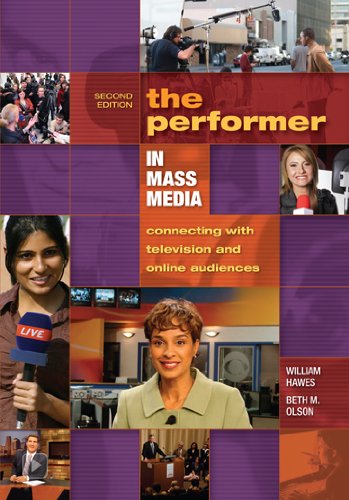
(The Performer in Mass Media: The Performer in Mass Media:...)
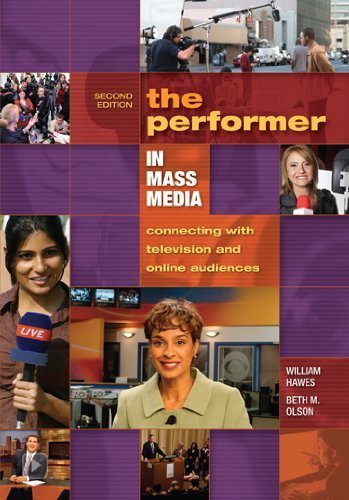
The Performer in Mass Media: The Performer in Mass Media: Connecting with Television and Online Audiences, Second Edition, is a concise guide written by two individuals who have been there--under the lights and in front of the camera. Its no-nonsense approach offers readers practical advice about on-camera performance, including key aspects of voice, movement, communication and appearance. It gives them a foundation for working in the studio, in the field, and in front of an audience; it is ideal for media performers of any type, including those who work as reporters, company spokespersons, or community advocates. Recommendations include how to properly position oneself for a shot, how to improve articulation, how to deal with stress and how to best perform on the Internet. Try-It-Out exercises help students put what they learned into practice and prepare to be on camera. Key terms are bolded in the chapters and are collected in a book-end Glossary for easy reference.
http://www.amazon.com/gp/product/1890871990/?tag=2022091-20
http://www.amazon.com/gp/product/B01181MNF4/?tag=2022091-20
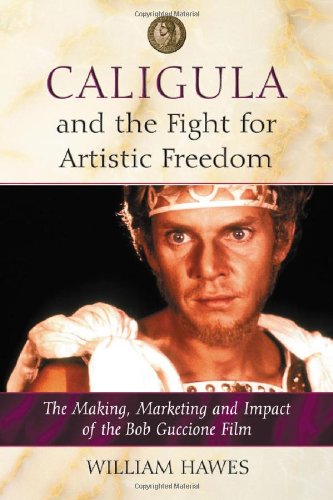
(Incest, explicit violence, homosexual rape--all presented...)
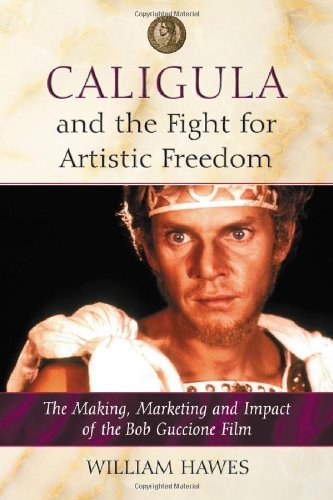
Incest, explicit violence, homosexual rape--all presented in graphic clarity for general movie audiences. The fight for artistic freedom in Hollywood movies reached a boiling point when Bob Guccione combined traditional and adult filmmaking values in 1979's controversial Caligula. Guccione, the publisher of Penthouse, was passionate about taking his First Amendment battles out of the bedroom and into the courtroom. Through his determination and four-year legal battle, the film was distributed worldwide and now celebrates its 40th anniversary while achieving cult status. This is the story of the making of the film, its distribution, and its social and cultural impact.
http://www.amazon.com/gp/product/0786439866/?tag=2022091-20
(This work examines the change from live to filmed televis...)
This work examines the change from live to filmed television dramas during the period 1952-1958 and the characteristics and programs that are most associated with filmed television drama. Along with many technical changes that had to be made in the industry in order to convert live television to filmed television came an interesting social one. The American society in general was developing a growing interest in the lives of ordinary people, and television moved with them, offering more programs that concentrated on the middle and lower classes. Because of the inherent qualities of filming, television began to feature more documentary-like realism, began to broaden its interpretation of traditional romantic escapism to include more outer space and supernatural science fiction, began to better fulfill materialistic desires through well-designed, enjoyable commercials, and began to offer the best dramas and most popular personalities, often leading viewers to greater self-appreciation and richer lives. This work focuses on the important anthology programs and specials that were on the air from 1952 to 1958 such as Kraft Television Theatre, Philco Television Playhouse, and The Hallmark Hall of Fame, filmed serials like Colgate Theatre, Amos 'n' Andy, and I Love Lucy, and the challenges of converting from live to filmed television drama.
http://www.amazon.com/gp/product/0786411325/?tag=2022091-20
http://www.amazon.com/gp/product/B012HU86YW/?tag=2022091-20
(Second)
Second
http://www.amazon.com/gp/product/B00YZMY0MI/?tag=2022091-20
(This work examines the change from live to filmed televis...)
This work examines the change from live to filmed television dramas during the period 1952-1958 and the characteristics and programs that are most associated with filmed television drama. Along with many technical changes that had to be made in the industry in order to convert live television to filmed television came an interesting social one. The American society in general was developing a growing interest in the lives of ordinary people, and television moved with them, offering more programs that concentrated on the middle and lower classes. Because of the inherent qualities of filming, television began to feature more documentary-like realism, began to broaden its interpretation of traditional romantic escapism to include more outer space and supernatural science fiction, began to better fulfill materialistic desires through well-designed, enjoyable commercials, and began to offer the best dramas and
http://www.amazon.com/gp/product/B002DFCS3C/?tag=2022091-20
http://www.amazon.com/gp/product/B00Y4G94SK/?tag=2022091-20
Hawes, William Kenneth was born on March 6, 1931 in Grand Rapids, Michigan, United States. Son of William Kenneth and Cora Elizabeth (Tibble) Hawes.
AB, Eastern Michigan U., 1955; Master of Arts, University of Michigan, 1956; Doctor of Philosophy, University of Michigan, 1960.
Teaching assistant University Michigan, Ann Arbor, 1956-1957. Instructor English and speech Eastern Michigan University, Ypsilanti, 1956-1960. Assistant professor, manager KTCU Texas Christian University, Fort Worth, 1960-1964.
Visiting associate professor, manager WUNC University North Carolina, Chapel Hill, 1964-1965. Associate professor, manager KUHF University Houston, 1965—1970, professor, since 1976. Admissions board biomedical Program, School Allied Health Sciences, University Texas Health Science Center, Houston, 1974-1995.
Professor University Houston program, London, 1984, 94. J. William Fulbright lecturer National Chenghi University, Taipei, Taiwan, 2001. Resident Rockefeller Foundation, Bellagio, Italy, 2003.
(The Performer in Mass Media: The Performer in Mass Media:...)
(This work examines the change from live to filmed televis...)
(This work examines the change from live to filmed televis...)
(Incest, explicit violence, homosexual rape--all presented...)
(Book by Hawes, William)
(Second)
Active Houston Public television, Fulbright Foundation. Established William Hawes Family scholarship University Michigan, 2006, University Houston, 2007. Member of American Civil Liberties Union, Academy television Arts and Sciences, Museum of Fine Arts Houston, American Film Institute.
Married Ella Margaret Plant, August 13, 1961 (deceased 1998). Children: William III, Robert Ernest.
