Background
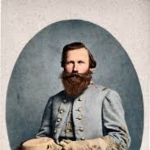
Williams Carter Wickham was the son of William Fanning Wickham, an Episcopal clergyman, and his wife Ann Carter was born on September 21, 1820, in Richmond, Virginia, United States.


Charlottesville, VA, United States
Wickham studied law at the University of Virginia in the early 1840s.
Charlottesville, VA, United States
Wickham studied law at the University of Virginia in the early 1840s.
businessman lawyer military planter politician
Williams Carter Wickham was the son of William Fanning Wickham, an Episcopal clergyman, and his wife Ann Carter was born on September 21, 1820, in Richmond, Virginia, United States.
Wickham studied law at the University of Virginia in the early 1840s and was admitted to the Virginia bar in 1842.
Williams Carter Wickham developed a good law practice and also farmed his father’s estate in Hanover County.
He was elected in 1849 to the Virginia House of Burgesses. In the late 1850s, he left the Virginia legislature to become a presiding judge of the county court of Hanover. In 1859, he was elected to the state Senate.
As a member of the Virginia secession convention, he opposed secession and voted against the Ordinance of Secession. But when the Civil War began, he formed a cavalry company which fought at First Manassas. While a colonel of cavalry in May 1862, he was wounded in the Williamsburg Peninsula campaign.
Upon his recovery, he fought under General James Ewell Brown Stuart at the battles of Second Manassas, Sharpsburg, Fredericksburg, Boonsboro, Chancellorsville, and Gettysburg. On September 1, 1863, he was promoted to brigadier general of cavalry, and he went on to participate in the battles of Brandy Station, Spotsylvania Court House, Cold Harbor, and Yellow Tavern. After he was elected to the second Confederate Congress from Virginia's Third Congressional District, he resigned from the army in 1864.
While in Congress, he worked for the success of the Hampton Roads Peace Conference. He served well on conferences and special committees and, as a member of the Military Affairs Committee, was especially sensitive to securing military promotions for deserving leaders.
At the end of the war, he wanted to restore friendly relations between the sections, to reorganize labor in the South, and to persuade the South to accept its defeat. Wickham moved to Richmond in May 1865 in order to develop a law practice.
He was president of the Virginia Central Railroad in 1865 and of the Chesapeake and Ohio Railroad in 1868, the year he worked for the election of United States Grant. In 1880, he refused Rutherford B. Hayes' offer to become secretary of the navy. An opponent of the Readjusters, Wickham served in the Virginia Senate from 1883 to 1888, retaining his political independence throughout.
Williams Carter Wickham participated in the battles of Second Manassas, Boonsboro and was wounded at Sharpsburg. Recovering from this wound, he took part in the battle of Fredericksburg and Chancellorsville. In 1863, he was with the Army of Northern Virginia at the Battle of Gettysburg and was promoted to Brigadier General. In 1864, he skillfully led his corps in engagements at Fishers Hill and Waynesboro, until resigning his commission when elected to the Second Confederate Congress.
Wickham served as the President of the Chesapeake and Ohio Railway company. In 1891 his "comrades in the Confederate Army and employees in the Chesapeake and Ohio Railway Company" presented to the City of Richmond a memorial statue. Fashioned in bronze by noted Richmond sculptor Edward Virginius Valentine, the monument was erected in Richmond’s Monroe Park.
Wickham became interested in politics and was elected in 1849 to the Virginia House of Burgesses, where he became an influential Whig leader. He generally opposed the Davis administration.
On April 23, 1865, in an open letter, he aligned himself with the Republican party. This step estranged very many of his old associates from him.
Wickham married Lucy Penn Taylor on January 11, 1848. They had four children.
1793-1880
1797-1868
1822-1847
1830-1913

1849-1943
1851-1939
1859-1873
1860-1900