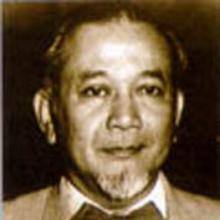
Achmad Soebardjo was an Indonesian lawyer, diplomat, and nationalist leader who became the country's first foreign minister after the proclamation of independence. A participant in the independence movement, BPUPKI, and the drafting of the proclamation, he later served again as foreign minister and as ambassador to Switzerland.
Background
Ethnicity:
His family background included Acehnese, Javanese, and Sundanese ancestry.
Achmad Soebardjo was born on March 23, 1896, in Teluk Jambe, Karawang Regency, West Java, then part of the Dutch East Indies. His father, Teuku Muhammad Yusuf, was an Acehnese patrician from Pidie and served as a colonial police official in Teluk Jambe; his mother, Wardinah, came from a Javanese and Sundanese family background. His childhood connected the social traditions of Java with the historical identity of Aceh.
His birth name was Abdul Manaf. Family accounts describe the use of the names Ahmad or Achmad Subardjo, while Djojoadisoerjo was later added by Soebardjo after his imprisonment in connection with the July 3, 1946 Incident. The several forms of his name reflect the changing conventions of personal identity during the transition from colonial rule to Indonesian independence.
Education
Soebardjo attended the Hogere Burger School in Batavia, completing his secondary education in 1917. The HBS was a selective Dutch colonial secondary-school system that provided advanced instruction for students preparing for higher education and professional careers. Its curriculum and social setting exposed Indonesian students to European academic institutions while also making the inequalities of colonial education visible.
He studied law at Leiden University in the Netherlands and received the degree Meester in de Rechten in 1933. Leiden, founded in 1575, was one of the Netherlands' principal universities and a major center for the study of law, government, and colonial administration. During his years in Europe, Soebardjo combined legal education with political activity among Indonesian students and nationalists.
Soebardjo entered public life through the Indonesian nationalist movement. He was active in Jong Java and the Perhimpoenan Indonesia, the Indonesian student association in the Netherlands that developed from a cultural association into an organized movement for Indonesian self-determination. In February 1927, he joined Mohammad Hatta and other Indonesian delegates at the founding congress of the League Against Imperialism in Brussels and subsequently took part in related international political activity in Germany and the Soviet Union.
After returning to Indonesia in 1934, Soebardjo worked as a lawyer and continued his involvement in nationalist politics. He later became a member of the Badan Penyelidik Usaha-usaha Persiapan Kemerdekaan Indonesia, known in English as the Investigating Committee for Preparatory Work for Independence. The committee discussed the constitutional and institutional foundations of a future Indonesian state during the final phase of Japanese occupation.
In the days surrounding the proclamation of independence on August 17, 1945, Soebardjo helped mediate between older nationalist leaders and younger activists who demanded immediate action. At the house of Admiral Tadashi Maeda, he worked with Sukarno and Mohammad Hatta on the wording of the proclamation. Following independence, he became Indonesia's first minister of foreign affairs in the Presidential Cabinet, serving from August 19 to November 14, 1945.
Soebardjo returned to the foreign ministry in the Sukiman-Suwirjo Cabinet from 1951 to 1952. His second tenure took place while the new republic was consolidating its diplomatic relations and international legal position. From 1957 to 1961, he served as Indonesia's ambassador to Switzerland, representing the republic during a period of active state-building and expanding diplomatic recognition.
In later life, Soebardjo held a professorship in Indonesian constitutional history and diplomacy at the Faculty of Letters of the University of Indonesia. The university, established in 1949 from earlier higher-education institutions, became one of the principal centers of Indonesian scholarship and public administration in the postcolonial period.
Soebardjo helped mediate between Indonesian nationalist leaders and younger activists immediately before the proclamation of independence and participated in the preparation of the proclamation text in August 1945.
He contributed to the constitutional and institutional preparations for Indonesian independence as a member of BPUPKI.
He helped establish Indonesia's early diplomatic service as the first minister of foreign affairs after the proclamation of independence.
(A work attributed to Soebardjo that examines the role of ...)
Religion
Soebardjo was Muslim and grew up in a family environment shaped by Islamic religious tradition in Java and by his father's Acehnese heritage. Islam was an important part of the social and cultural setting in which Indonesian nationalist politics developed during the late colonial period.
His public career unfolded within a predominantly Muslim society whose political movements included both religious and secular approaches to nationalism. His documented political work is most clearly associated with Indonesian independence, constitutional development, and diplomacy rather than with the leadership of a specifically religious movement.
Politics
Soebardjo's political life was rooted in Indonesian nationalism and opposition to Dutch colonial rule. He participated in the Perhimpunan Indonesia and in international anti-imperialist activity before independence, later becoming associated with Masyumi, an important Islamic political party in the early Indonesian republic.
Masyumi brought together several Muslim organizations and advocated parliamentary politics, constitutional government, and a public role for Islamic social and ethical principles. Soebardjo's service as a diplomat and cabinet minister also reflected the broader nationalist effort to establish the sovereignty and international standing of the Republic of Indonesia.
Views
Soebardjo's writings and political activity expressed a commitment to Indonesian self-determination, constitutional government, and the creation of a sovereign state able to conduct its own diplomacy. His account of the independence movement emphasized the importance of political ideas, organization, and international connections in overcoming colonial rule.
His work also reflected a belief that Indonesian independence required both national unity and engagement with international law and diplomacy. As a lawyer, constitutional participant, foreign minister, and ambassador, he connected the struggle for independence with the practical construction of state institutions.
Membership
Soebardjo participated in several organizations that connected Indonesian students and nationalists across the Netherlands and Europe. His involvement with Jong Java and Perhimpoenan Indonesia placed him within the organizations through which young Indonesians developed cultural solidarity, political education, and opposition to colonial rule.
He also took part in the League Against Imperialism and Colonial Oppression, an international movement that brought together activists opposed to imperial domination. His membership and delegate work connected Indonesian independence advocacy with wider Asian, African, and European anti-colonial networks.
Participated in the Indonesian youth organization during the formative period of his nationalist activity.
Jong Java
,
Indonesia
Participated in the Indonesian student association and its anti-colonial political activities.
Perhimpoenan Indonesia
,
Netherlands
1919 - 1933
Represented Indonesian nationalists at the founding congress in Brussels and took part in related international activity.
League Against Imperialism and Colonial Oppression
,
Belgium
February, 1927
Served as a member of the committee that examined preparations for Indonesian independence.
Badan Penyelidik Usaha-usaha Persiapan Kemerdekaan Indonesia
,
Indonesia
1945 - 1945
Personality
Soebardjo was described in historical accounts as a political intermediary who could communicate across generational and ideological divisions within the independence movement. His documented conduct during the days before the proclamation shows a willingness to negotiate between younger activists demanding immediate independence and senior leaders proceeding more cautiously.
Interests
Indonesian constitutional history, diplomacy, nationalist history, and political writing
Politicians
Soebardjo worked closely with Sukarno and Mohammad Hatta during the final preparation of the proclamation of independence.
Connections
Soebardjo was the son of Teuku Muhammad Yusuf and Wardinah. His family background joined an Acehnese paternal lineage with Javanese and Sundanese maternal connections.
He married Raden Ayu Pudji Djoyoadusuryo, who was buried beside him after her death. Their eldest daughter, Pujiwati Soebardjo Effendi, later recalled aspects of the family's life and the role of the Soebardjo residence in the early period of Indonesian diplomatic activity.
Father:
Teuku Muhammad Yusuf
An Acehnese patrician from Pidie who served as a police official in Teluk Jambe.
Mother:
Wardinah
Soebardjo's mother, from a Javanese and Sundanese family background.
Wife:
Raden Ayu Pudji Djoyoadusuryo
Soebardjo's wife, who was buried beside him.
Collegue :
Sukarno
Worked with Soebardjo on the preparation of the proclamation of Indonesian independence in August 1945.
Collegue :
Mohammad Hatta
Worked with Soebardjo in the nationalist movement and on the preparation of the proclamation of independence.
References
Pusat Studi Arsip Statis Kepresidenan, Presidenpedia
Documents Soebardjo's birth, education at the Hogere Burger School and Leiden University, service as foreign minister, ambassadorship to Switzerland, and professorship at the University of Indonesia.
Ensiklopedia Ahmad Soebardjo
Describes Soebardjo's role in mediating the events before the proclamation of independence and his participation in the nationalist movement, BPUPKI, and early diplomacy.
Professor of Indonesian Constitutional History and Diplomacy
Awards
National Hero of Indonesia,
Indonesia
Posthumously designated a National Hero of Indonesia by the Government of Indonesia in 2009 for his contribution to the independence movement and the establishment of the republic.
Posthumously designated a National Hero of Indonesia by the Government of Indonesia in 2009 for his contribution to the independence movement and the establishment of the republic.
Bintang Mahaputera Adipradana,
Indonesia
Indonesian state decoration awarded to Soebardjo in 1973 for distinguished service to the nation.
Indonesian state decoration awarded to Soebardjo in 1973 for distinguished service to the nation.
Bintang Republik Indonesia Utama,
Indonesia
Indonesian state decoration associated with his national service; the award was conferred posthumously in 1992.
Indonesian state decoration associated with his national service; the award was conferred posthumously in 1992.
Satya Lencana Peringatan Perjuangan Kemerdekaan,
Indonesia
Indonesian commemorative decoration recognizing participation in the struggle for independence, awarded in 1961.
Indonesian commemorative decoration recognizing participation in the struggle for independence, awarded in 1961.
Order of Merit,
Egypt
Honor presented by the Government of Egypt in 1954.
Honor presented by the Government of Egypt in 1954.