

Background
Walters, Alan Arthur was born in 1926 in Leicester, England, Bachelor of Science in Economics, U. London, 1951.

http://www.amazon.com/gp/product/0198281978/?tag=2022091-20
http://www.amazon.com/gp/product/B012YXJW2M/?tag=2022091-20
http://www.amazon.com/gp/product/0195200926/?tag=2022091-20
( Before Enron, before Arthur Anderson, and before Worldc...)
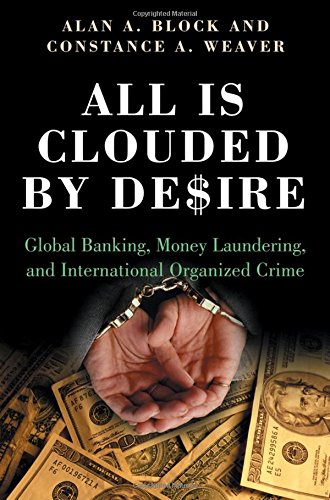
Before Enron, before Arthur Anderson, and before Worldcom, there was the Bank of New York money laundering scandal, which hit headlines in 1999. Promising to be one of the most important books on international organized crime, money laundering, and the complicity between legitimate and illegitimate businesses in both the United States and the former Soviet Union, among other places, during the last decade of the 20th century, All Is Clouded by Desire examines the criminal dealings that led to the revelation that the Bank of New York's Eastern European Division laundered $6 billion for Russian organized criminals and other shady organizations and individuals. In a series of intrigues that involved crooked Geneva banker Bruce Rappaport and high-level members of the Bank of New York, criminal Russian organizations were able to thrive and prosper during a time when the rest of the former Soviet Union crumbled amidst growing corruption and a declining economy. Tracing the financial shenanigans back many years, Block and Weaver illustrate how the underworld of high finance, money laundering, mafia groups, CIA operatives, and legitimate banking institutions can clean dirty money and operate criminal enterprises that span the globe. Block and Weaver carefully assemble a vivid examination of the world of hot money in the arena of international banking and the roles played by Intelligence, the politically connected, and the criminally inclined. Focusing on the intensely private Genava banker Bruce Rappaport and the Bank of New York, the authors show how the two worked together with dodgy Russian banks to move and launder billions through channels that include off-shore banks, shady joint-ventures, and outright criminal organizations. Relying on primary sources from the logs of the institutions involved, interviews with British Intelligence operatives and former CIA officers, secret discussions with private detectives handling the infamous Marc Rich tax case, and material collected by two private detective agencies in London and New York, the book exposes the various machinations that were instrumental in completing the financial schemes that would ultimately cause the downfall of two top Bank of New York executives.
http://www.amazon.com/gp/product/0275983307/?tag=2022091-20
( Before Enron, before Arthur Anderson, and before Worldc...)
Before Enron, before Arthur Anderson, and before Worldcom, there was the Bank of New York money laundering scandal, which hit headlines in 1999. Promising to be one of the most important books on international organized crime, money laundering, and the complicity between legitimate and illegitimate businesses in both the United States and the former Soviet Union, among other places, during the last decade of the 20th century, All Is Clouded by Desire examines the criminal dealings that led to the revelation that the Bank of New York's Eastern European Division laundered $6 billion for Russian organized criminals and other shady organizations and individuals. In a series of intrigues that involved crooked Geneva banker Bruce Rappaport and high-level members of the Bank of New York, criminal Russian organizations were able to thrive and prosper during a time when the rest of the former Soviet Union crumbled amidst growing corruption and a declining economy. Tracing the financial shenanigans back many years, Block and Weaver illustrate how the underworld of high finance, money laundering, mafia groups, CIA operatives, and legitimate banking institutions can clean dirty money and operate criminal enterprises that span the globe. Block and Weaver carefully assemble a vivid examination of the world of hot money in the arena of international banking and the roles played by Intelligence, the politically connected, and the criminally inclined. Focusing on the intensely private Genava banker Bruce Rappaport and the Bank of New York, the authors show how the two worked together with dodgy Russian banks to move and launder billions through channels that include off-shore banks, shady joint-ventures, and outright criminal organizations. Relying on primary sources from the logs of the institutions involved, interviews with British Intelligence operatives and former CIA officers, secret discussions with private detectives handling the infamous Marc Rich tax case, and material collected by two private detective agencies in London and New York, the book exposes the various machinations that were instrumental in completing the financial schemes that would ultimately cause the downfall of two top Bank of New York executives.
http://www.amazon.com/gp/product/0275983307/?tag=2022091-20
http://www.amazon.com/gp/product/0582382262/?tag=2022091-20
http://www.amazon.com/gp/product/0070367868/?tag=2022091-20
Walters, Alan Arthur was born in 1926 in Leicester, England, Bachelor of Science in Economics, U. London, 1951.
Master of Arts, University of Oxford, 1981. Doctor of Letters (honorary), University Leicester, 1981. Doctorate in Society Science (honorary), University Birmingham, 1984.
Doctor of Philosophy Francisco Marroquin, Guatemala.
Lecturer department econometrics and statistics U. Birmingham (England), 1952-1960, professor, 1961-1968, head department, 1961-1968. Sir Ernest Cassel professor economics U. London, London School Economics, 1968-1975.
Professor economics Johns Hopkins University, Baltimore, 1975-1991. Resident scholar American Enterprise Institute, Washington, 1983-1984.
Visiting professor Northwestern University, 1959-1960, University of Virginia, 1966-1967, Massachusetts Institute of Technology, 1967-1968, Monash U. (Australia), 1971.
Past consultant various central banks. Member Commision on London"s Third Airport (Roskill), 1968-1970. Economics adviser World Bank, 1976-1980.
Chief economics adviser to Prime Minister, United Kingdom, 1981-1983, 89.
Director American International Trading Group, Washington, 1991.Author: (with R.W. Clower, G. Dalton and M. Harwitz) Growth Without Development, 1966. Integration in Freight Transport, 1968.
The Economics of Road User Charges, 1968. An Introduction To Econometrics, 1968, second edition, 1969.
Money in Bloom and Slump, 3d edition, 1971.
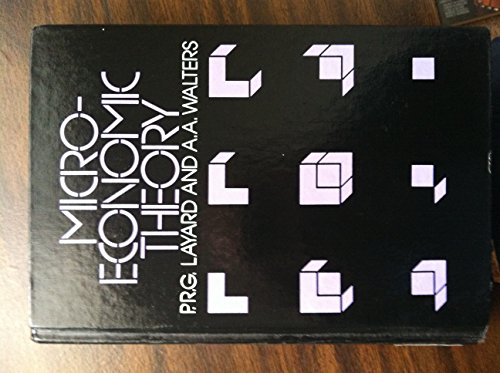
Noise andPrices, 1975. (with P.R.G. Layard, and McGraw Hill) Microeconomic Theory, 1978. (with East. Bennathan) Portuguese Pricing and Investment in Developing Countries, 1979, Britain"s Economic Renaissance, 1986, Sterling in Danger, 1990.
Editor: Money and Banking, 1970.
Contributor articles to profile publications.
He joined the British Army as a private. On leaving Nuffield in 1951, he took up a post to teach statistics at Birmingham University, later becoming professor of econometrics and statistics there in the early 1960s. He was one of the first British economists to argue that money was "of considerable importance" to economic activity, a view that became more widespread during "the Great Inflation" of the 1970s.
He argued forcefully that Britain should maintain strict monetary targets, and that the money supply should not be manipulated for political reasons.
After serving as a professor at the London School of Economics from 1968 to 1976, where he was Sir Ernest Cassel Professor of Economics, Walters became an economic adviser to the World Bank and a professor in the Economics Department at The Johns Hopkins University. One of his most important contributions to economic theory was to demonstrate empirically that, for many industries, the costs at the high-scale end of the long-run cost curve is essentially constant or even declining.
This was established in his article "Production and Cost Functions: An Econometric Survey", published by the journal Econometrica. In 1981, he was asked to become an economic adviser to Margaret Thatcher (Prime minister since 4 May 1979), and advised on that year"s budget, in which taxes were increased during a recession.
This policy produced much criticism and was associated with rioting and high unemployment, but it has been claimed that it enabled the sustained economic growth of the 1990s.
He left this role in 1983 to join the American Enterprise Institute and at least some aspects of monetarist policies were publicly repudiated by Thatcher in 1985. He did however return to advise Thatcher in 1989, but his differences with the policies of the Chancellor of the Exchequer, Nigel Lawson, led to the resignation of both later in that year. Walters supported the controversial and ill-fated poll tax
He opposed the controversial and ill-fated policy of entry into the European Monetary System.
( Before Enron, before Arthur Anderson, and before Worldc...)
( Before Enron, before Arthur Anderson, and before Worldc...)
Author: (with R.W. Clower, G. Dalton and M. Harwitz) Growth Without Development, 1966. Integration in Freight Transport, 1968. The Economics of Road User Charges, 1968.An Introduction to Econometrics, 1968, second edition, 1969, Money in Bloom and Slump, 3d edition, 1971, Noise and Prices, 1975, (with P.R.G. Layard and McGraw Hill) Microeconomic Theory, 1978, (with E. Bennathan) Port Pricing and Investment in Developing Countries, 1979, Britqain's Economic Renaissance, 1986, Sterling in Danger, 1990, The Economics and Politics of Money, 1998. Editor: Money and Banking, 1970. Contributor articles to professional publications.
In 1997, he stood as the Referendum Party candidate for the safe Conservative seat of the Cities of London and Westminster achieving 3% of the vote.
Early work was in economic statistics, particularly the distribution of income, but became more interested in applied economics and econometric testing, particularly in the transport industries. My main contribution here was in the development of pricing principles and practice in industrial and developing countries and in the problem of dealing with urban traffic congestion and public sector pricing generally. I believe that as a result there was a change in professional and official views on pricing.
This led to an interest in the econometrics of production and cost functioning generally. But this was quickly overtaken (in 1959) by my curiosity about monetary policy in the United Kingdom and monetary economics and theory.
The problem was first to establish lines for the quantity of money, then to examine the evidence of money demand and monetary multipliers for the United Kingdom. I became more involved in general discussions about British economic policy and performance but also I continued my work on pricing and costbenefit studies — the latter with my membership of the Commission on London’s Third Airport (1968-1970).
Policy dominated my interests and I was able to bring the experience to the job of advising the Prime Minister on all matters of economic policy. Finally, I have recently been concerned with the state of economics — and particularly macroeconomics — and the advice which economists can, with good conscience, give. A review of the policies and performance of the British economy is under way.
In 1968-1970 he was a member of the Commission on the Third London Airport (the "Roskill Commission").
Married Margaret Patricia Wilson, 1975.
