Background
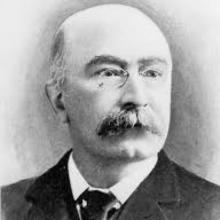
Alfred Boller was born on February 23, 1840, in Philadelphia, Pennsylvania, United States, the son of Henry J. and Anna M. (Pancoast) Boller.

(This is a pre-1923 historical reproduction that was curat...)
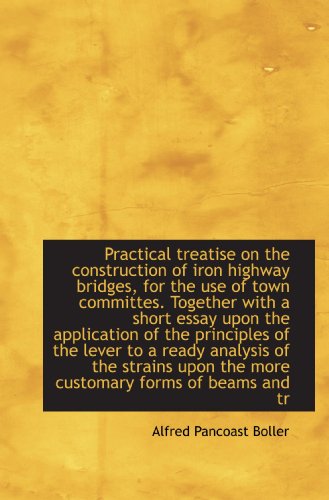
This is a pre-1923 historical reproduction that was curated for quality. Quality assurance was conducted on each of these books in an attempt to remove books with imperfections introduced by the digitization process. Though we have made best efforts - the books may have occasional errors that do not impede the reading experience. We believe this work is culturally important and have elected to bring the book back into print as part of our continuing commitment to the preservation of printed works worldwide. This text refers to the Bibliobazaar edition.
https://www.amazon.com/Practical-treatise-construction-highway-committes/dp/1117032655?SubscriptionId=AKIAJRRWTH346WSPOAFQ&tag=prabook-20&linkCode=sp1&camp=2025&creative=165953&creativeASIN=1117032655
Alfred Boller was born on February 23, 1840, in Philadelphia, Pennsylvania, United States, the son of Henry J. and Anna M. (Pancoast) Boller.
After a preparatory education at the Episcopal Academy, Alfred entered the University of Pennsylvania and was graduated in 1858 with the A. B. degree. Three years later he received his C. E. from the Rensselaer Polytechnic Institute.
After graduation Boller spent several years in bridge and aqueduct construction work for railroads. From 1866 to 1870 he was associated with Samuel Millikin as an agent for the Phoenix Iron Company. From 1871 to 1873 he was vice-president and engineer for the Phillipsburg Manufacturing Company, and in 1874 he opened an independent office in New York City where he soon acquired an important professional practise. A partnership was formed in 1898 with Henry M. Hodge. Later Howard C. Baird became a member of the firm. Boller was consulting engineer for various projects and improvements of the Lake Superior Company at Sault Ste. Marie in Canada and Michigan. He was an expert, too, in the matter of foundations and acted as consulting engineer on a number of deep and difficult foundations in New York City. Some bridges designed and built by Boller and his partners include the bridge over the Monongahela River for the Wabash Railroad at Pittsburgh; the Municipal Bridge over the Mississippi at St. Louis; and the State Bridge over the Connecticut River at Saybrook, Connecticut.
Boller’s firm acted as consulting engineers for the steel framework of the Singer Building and the Metropolitan Life Insurance Building in New York City. Boller was the author of a Practical Treatise on the Construction of Iron Highway Bridges, for the Use of Town Committees (1876). With sound judgment, he designed his structures skilfully and with great daring, and as much as any man of his day was responsible for the great progress during the latter half of the nineteenth century in the art of bridge design and building. Intuitively he was artistic. This fondness for the artistic and an appreciation for architectural symmetry had a marked influence on his work. The 155th Street Bridge in New York City exemplifies his ability to combine technical principles and practical utility with beauty of outline.
Alfred Boller was an expert in bridge engineering and stood in the front rank of structural engineers of his day. Among the remarkable bridge designs made by him and his partners is the draw-span of the Thames River Bridge at New London, Connecticut. This span, 503 feet in length and weighing 1, 200 tons, was the longest ever attempted up to that time. Another famous bridge designed by Boller is the Central Bridge over the Harlem River at 155th St. , New York City, 4, 500 feet long, costing over two million dollars, and having a draw-span weighing 2, 400 tons. It was said at the time of its construction to be the heaviest movable mass in the world.
(This is a pre-1923 historical reproduction that was curat...)
Boller was married on April 28, 1864, to Katherine Newbold of Philadelphia.