

Background
Debus, Allen George was born on August 16, 1926 in Chicago, Illinois, United States. Son of George Walter William and Edna Pauline (Schwenneke) Debus.
http://www.amazon.com/gp/product/B00XTAQECQ/?tag=2022091-20

http://www.amazon.com/gp/product/B000HIIER6/?tag=2022091-20
http://www.amazon.com/gp/product/B011ME274E/?tag=2022091-20
(The far-reaching debates arising from the development of ...)
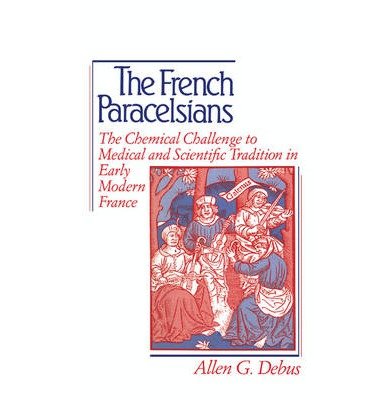
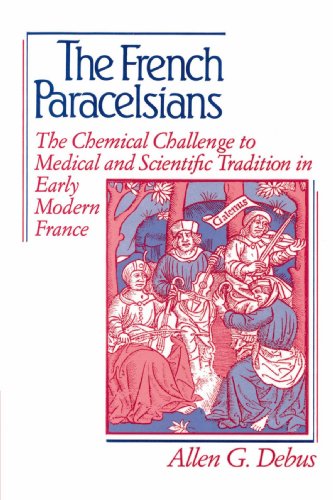
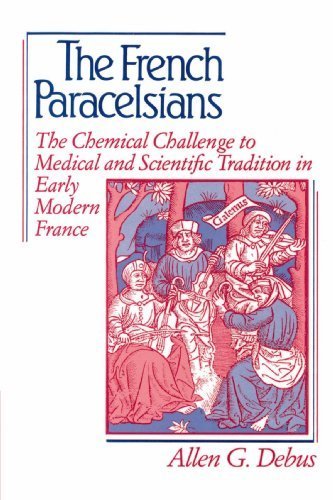
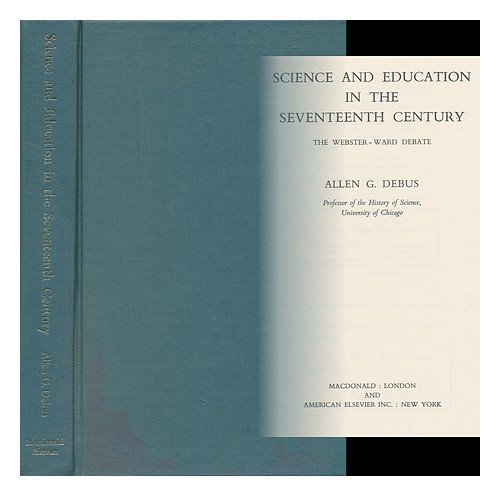
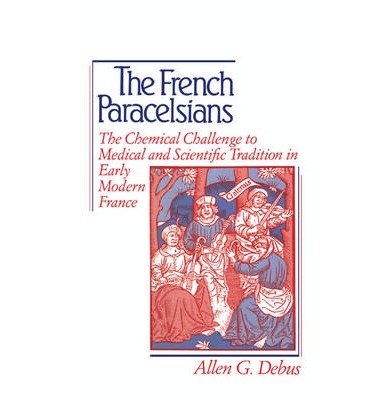
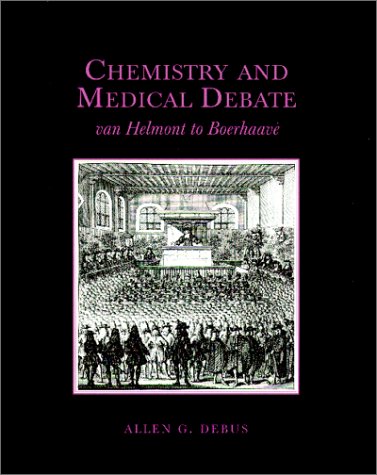
The far-reaching debates arising from the development of chemistry and its application to medicine during the sixteenth and seventeenth centuries are the subjects of this book. Shortly after the medical authority of Galen had been reestablished in the Renaissance, the Swiss-German firebrand, Paracelsus, proposed a new approach to natural philosophy and medicine utilizing chemistry. The resulting arguments between Paracelsians and Galenists lasted for more than a century and affected the medical establishments of every European country. In France, the confrontation was particularly bitter, with the Medical Faculty in Paris determined to block the introduction of chemistry to medicine in any field. The author discusses these issues not only with respect to pharmaceutical chemistry and the chemical cosmology of the Paracelsians, but also the development of chemical physiology and its struggle with the brand of medicine influenced by the mechanical philosophy of the seventeenth century. The academic acceptance of chemistry is revealed, and the triumph of the mechanists in the scientific academies is shown to have been only partial at best, because the learned journals of the early eighteenth century continued to review large numbers of books inspired by medical chemistry. This persistent interest in medical chemistry is shown to be significant to the Chemical Revolution and an aspect of the Scientific Revolution that deserves recognition by historians.
http://www.amazon.com/gp/product/0521894441/?tag=2022091-20
http://www.amazon.com/gp/product/B010WFC3V6/?tag=2022091-20
http://www.amazon.com/gp/product/0444196595/?tag=2022091-20
(There are some who would question the need to republish p...)
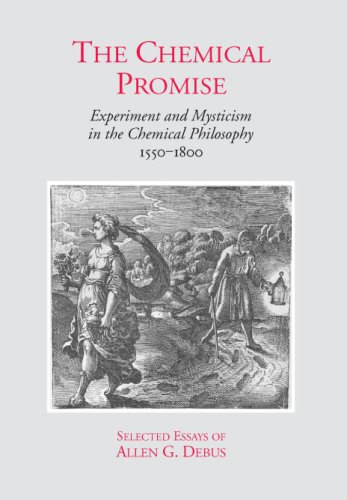
There are some who would question the need to republish papers that have already appeared elsewhere. Walter Pagel once said that scholars should think in terms of books rather than research papers since the latter become lost in the literature. When he told me this years ago I was not entirely convinced...from the Preface
http://www.amazon.com/gp/product/0881352969/?tag=2022091-20
http://www.amazon.com/gp/product/B0087IL114/?tag=2022091-20
http://www.amazon.com/gp/product/0882020374/?tag=2022091-20
http://www.amazon.com/gp/product/B0006BNZS2/?tag=2022091-20
http://www.amazon.com/gp/product/B00VCB5CO0/?tag=2022091-20
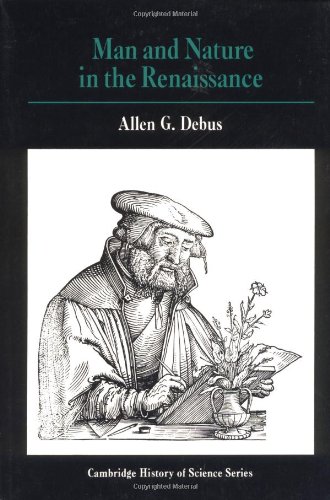
(Man and Nature in the Renaissance offers an introduction ...)
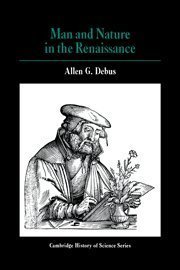
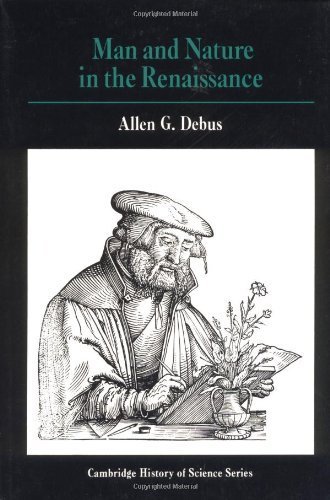
Man and Nature in the Renaissance offers an introduction to science and medicine during the earlier phases of the scientific revolution, from the mid-fifteenth century to the mid-seventeenth century. Renaissance science has frequently been approached in terms of the progress of the exact sciences of mathematics and astronomy, to the neglect of the broader intellectual context of the period. Conversely, those authors who have emphasized the latter frequently play down the importance of the technical scientific developments. In this book, Professor Debus amalgamates these approaches: The exact sciences of the period are discussed in detail, but reference is constantly made to religious and philosophical concepts that play little part in the science of our own time. Thus, the renewed interest in mystical texts and the subsequent impact of alchemy, astrology, and natural magic on the development of modern science and medicine are central to the account. Major themes that are followed throughout the book include the effects of humanism, the search for a new method of science, and the dialogue between proponents of the mystical-occult world view and the mathematical-observational approach to nature.
http://www.amazon.com/gp/product/0521293286/?tag=2022091-20
http://www.amazon.com/gp/product/0520022262/?tag=2022091-20
http://www.amazon.com/gp/product/0306762102/?tag=2022091-20
http://www.amazon.com/gp/product/0852700008/?tag=2022091-20
http://www.amazon.com/gp/product/B010WF4Y0E/?tag=2022091-20
(Book by Debus, Allen G.)
Book by Debus, Allen G.
http://www.amazon.com/gp/product/0881352926/?tag=2022091-20
http://www.amazon.com/gp/product/B00VCAV6NW/?tag=2022091-20
Debus, Allen George was born on August 16, 1926 in Chicago, Illinois, United States. Son of George Walter William and Edna Pauline (Schwenneke) Debus.
Bachelor of Science, Northwestern University, 1947. A.M., Indiana University, 1949. Doctor of Philosophy, Harvard University, 1961.
Postgraduate, University College London, 1960. Doctor of Science honorary, Catholic University Louvain, 1985.
Research chemist, Abbott laboratories, North Chicago, Illinois, 1951-1956;
assistant professor, University of Chicago, 1961-1965;
associate professor of history, University of Chicago, 1965-1968;
professor, University of Chicago, 1968-1978;
Morris Fishbein professor of history science and medicine, University of Chicago, 1978-1996;
Morris Fishbein professor emeritus, University of Chicago, since 1996;
director, Morris Fishbein Center for Study History Science and Medicine, 1971-1977. Distinguished visiting professor Arizona center for medieval and renaissance studies Arizona State University, 1984. Visiting professor Institute Chemistry, U. São Paulo, Brazil, 1990.
Member international advising committee Tel-Aviv U. The Cohn Institute History and Philosophy of Science and Ideas, Center for History and Philosophy of Science of Hebrew University of Jerusalem. Member international advisory board Annali dell'Istituto e Museo di Storia della Scienza di Firenze. Consultant literature and science curriculum Georgia Institute Technology.
(Man and Nature in the Renaissance offers an introduction ...)
(The far-reaching debates arising from the development of ...)
(The far-reaching debates arising from the development of ...)
(Papers read at a series of sessions centered on the histo...)
(There are some who would question the need to republish p...)
(Series; Oldbourne history of science library. Physical de...)
(Will be shipped from US. Brand new copy.)
(Book by Debus, Allen G.)
Fellow American Association for the Advancement of Science (member electorate nominating committee, section L 1974-1977, Chairman of Commission 1974). Member History of Science Society (council 1962-1965, 87-90, program chairman 1972, Pfizer award 1978, Sarton medal 1994, Distinguished lecturer 1996), Society Study Alchemy and Early Chemistry (member of council since 1967), American Association for History Medicine (program committee 1975), British Society for History Science, Internationale Paracelsus Gesellschaft, American Chemical Society (associate member history of chemistry division, Executive Committee 1969-1972, Dexter award 1987), Society Medical History of Chicago (secretary-treasurer 1971-1972, vice president 1972-1974, president 1974-1976, member of council), Académie International d'Histoire de la Medecine, Société Internationale d'Histoire de la Medecine, Academie International d'Histoire des Sciences (correspondent 1971, membre effectif 1991), American Institute History of Pharmacy (Edward Kremers award 1978, advanced.panel history activity 1979-1981, awards committee since 1981), American Society Reformation Research, Association Recorded Sound Collections., Midwest Junto for History of Science (president 1983-1984), Academia das Ciencias de Lisboa.
Married Brunilda Lopez-Rodriguez, August 25, 1951. Children: Allen Anthony George, Richard William, Karl Edward.
