Background
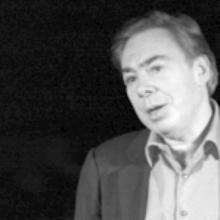
He was born in London, England, United Kingdom on March 22, 1948. Lloyd Webber began writing music while still in his teens.

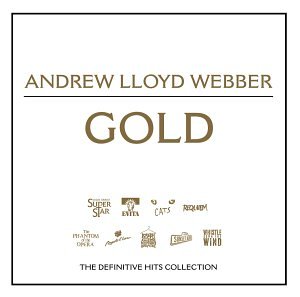
http://www.amazon.com/gp/product/B0000657XY/?tag=2022091-20
He was born in London, England, United Kingdom on March 22, 1948. Lloyd Webber began writing music while still in his teens.
In 1965, Lloyd Webber was a Queen's Scholar at Westminster School and studied history for a term at Magdalen College, Oxford, although he abandoned the course in the winter of 1965 to study at the Royal College of Music and pursue his interest in musical theatre.
In 1967 he joined with lyricist Timothy Rice to compose Joseph and the Amazing Technicolor Dreamcoat, a 25-minute concert-type work that used jazz, French cafe music, calypso, country, and rock tunes to tell the biblical story of Joseph and his brothers. Several school performances were so well received that the collaborators expanded the show into a 90-minute, two-act production that ultimately ran on the London and New York stages.
The next Lloyd Webber-Rice work, the full-length "rock opera" Jesus Christ Superstar, became a best-selling record before beginning a successful Broadway run in 1971. The show, although considered imaginative and daring, elicited criticism for its overamplified score and its irreverent treatment of Jesus's life. Evita (London, 1978; New York, 1979), Lloyd Webber and Rice's work based on the life of Eva Peron, the actress-courtesan who married and then succeeded Argentinean dictator JuanPeron, was elaborately staged by Harold Prince. Entirely sung (or "through composed") in the manner of opera, the show garnered seven Tony awards, including one for Lloyd Webber's multitextured score, which included the haunting "Don't Cry for Me, Argentina. "For Cats (London, 1981; New York, 1982), which featured actors costumed as felines and a score that included the enormously popular "Memory, " Lloyd Webber set his music to lines from T. S. Eliot's Old Possum's Book of Practical Cats. The result was a musical that was more stage magic and dance than conventional story with songs, but the show's success was such that by the late 1980's it was running on some 15 stages throughout the world.
Lloyd Webber's Song and Dance (London, 1982; New York, 1985), a one-act musical linked with an all-dance piece, and Starlight Express (London, 1984; New York, 1987), in which a 27-member cast on roller skates impersonated trains, enjoyed respectable runs, but neither approached the success of his Phantom of the Opera (London, 1986; New York, 1988). Based on Gaston Leroux's tale of a deformed genius inhabiting the bowels of the Paris Opera House while masterminding an ingenue's success, Phantom was both opera and spectacle and had Lloyd Webber's most fully realized score, of which "That's All I Ask of You" and "The Music of the Night" became popular standards. For his adaptation of David Garnett's 1955 novel Aspects of Love (London, 1989; New York, 1990), Lloyd Webber teamed with the lyricist Don Black and the British playwright Christopher Hampton. The same trio put together Sunset Boulevard (London, 1993; New York, 1994), a musical based on the classic 1950 movie about a forgotten silent-film star and a failed screenwriter several years her junior. Lloyd Webber's works also include the concert piece Requiem (1985).
His company, the Really Useful Group, is one of the largest theatre operators in London.
His most successful works - "The Music of the Night" from The Phantom of the Opera, "I Don't Know How to Love Him" from Jesus Christ Superstar and others.
Lloyd Webber was awarded a star on the Hollywood Walk of Fame in 1993 for his contribution to live theatre
Politically, Lloyd Webber has supported the UK's Conservative Party. In 2009, he publicly criticised the Labour government's introduction of a new 50% rate of income tax on Britain's top earners, claiming it would damage the country by encouraging talented people to leave.
In 1992 he set up the Andrew Lloyd Webber Foundation which supports the arts, culture and heritage in the UK.
Quotes from others about the person
In 2001 the New York Times referred to him as "the most commercially successful composer in history".
Lloyd Webber has married three times. He married first Sarah Hugill on 24 July 1971 and they divorced on 14 November 1983. Together they had two children.
He then married singer Sarah Brightman on 22 March 1984 in Hampshire. They divorced on 3 January 1990.
Thirdly, he married Madeleine Gurdon in Westminster on 9 February 1991. They have three children
a composer and organist
a violinist and pianist
a noted solo cellist