Background
Angeliki Evangelos Laiou was born on April 6, 1941, in Athens, Greece, to Evangelos K. and Virginia I. (Apostolides) Laios. Angeliki came to the United States in 1959.


415 South St, Waltham, MA 02453, United States
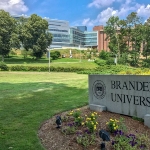
In 1961, Angeliki received a Bachelor of Arts from Brandeis University.

Cambridge, MA 02138
In 1962, Angeliki received a Master of Arts from Harvard University, and a Doctor of Philosophy in 1966.
415 South St, Waltham, MA 02453, United States
In 1961, Angeliki received a Bachelor of Arts from Brandeis University.
Cambridge, MA 02138
In 1962, Angeliki received a Master of Arts from Harvard University, and a Doctor of Philosophy in 1966.


(At the age of twenty-two, Andronicus II became sole ruler...)
At the age of twenty-two, Andronicus II became sole ruler of Byzantium. His father, Michael VIII, had been a dashing figure-a good soldier, brilliant diplomat, and the liberator of Constantinople from its fifty-seven-year Latin occupation. By contrast Andronicus seemed colorless and ineffectual. His problems were immense-partly as a result of his father's policies-and his reign proved to be a series of frustrations and disasters.
https://www.amazon.com/Constantinople-Latins-Andronicus-1282-1328-Historical/dp/0674165357/?tag=2022091-20
1972

(The book description for the previously published "Peasan...)
The book description for the previously published "Peasant Society in the Late Byzantine Empire: A Social and Demographic Study" is not yet available.
https://www.amazon.com/Peasant-Society-late-Byzantine-Empire/dp/0691052522/?tag=2022091-20
1977

https://www.amazon.com/Charanis-Studies-Essays-Honor-Peter/dp/0813508754/?tag=2022091-20
1980

(These seven chapters, originally given as lectures honori...)
These seven chapters, originally given as lectures honoring the fiftieth anniversary of Dumbarton Oaks, cover a wide range of topics, from the relationship of Byzantium with its Islamic, Slavic, and Western European neighbors to the modern reception of Byzantine art.
https://www.amazon.com/Byzantium-Civilization-Dumbarton-Byzantine-Studies/dp/0884022005/?tag=2022091-20
1992

https://www.amazon.com/Society-Economic-Byzantium-Variorum-Collected/dp/0860783227/?tag=2022091-20
1992

https://www.amazon.com/Coercion-Marriage-Societies-Dumbarton-collection/dp/0884022137/?tag=2022091-20
1993

https://www.amazon.com/Law-Society-Byzantium-Ninth-Twelfth-Centuries/dp/0884022226/?tag=2022091-20
1994

https://www.amazon.com/Dumbarton-Oaks-Conversations-United-Nations/dp/0884022552/?tag=2022091-20
1998

(Although ethnicity is a modern concept and would not have...)
Although ethnicity is a modern concept and would not have been recognized by the Byzantines, throughout its history the Byzantine Empire was a multi-ethnic state. The papers in this volume examine questions of the uniformity and separateness of the various Byzantine populations and the degree and mechanisms of acculturation. The cultural uniformity that the Byzantine church and state pursued through Orthodoxy and the Greek language did not erase all distinct traits of different groups--nor was that their intention.
https://www.amazon.com/Studies-Internal-Diaspora-Byzantine-Dumbarton/dp/0884022471/?tag=2022091-20
1998

(A cursory glance at the Byzantine world would show women ...)
A cursory glance at the Byzantine world would show women as illiterate, excluded from prominent political roles and second class citizens when compared to the positions and power held by men. Aside from the female members of the aristocracy, ordinary women are often incidental in both the literature and art of the period. This book and the exhibition that it accompanied attempt to highlight the lives of these ordinary women, discussing their daily activities, their role in civic life, their piety, marriage, wifely and motherly duties, their role as healers and carers. Almost 200 objects, dating from the 4th to 15th century, from collections in North America, accompany the thematic essays, including personal items, luxury goods, utilitarian objects, religious and 'official' objects.
https://www.amazon.com/Byzantine-Women-Their-World-Kalavrezou/dp/0300096984/?tag=2022091-20
2002

(This is a concise survey of the economy of the Byzantine ...)
This is a concise survey of the economy of the Byzantine Empire from the fourth century AD to the fall of Constantinople in 1453. Organised chronologically, the book addresses key themes such as demography, agriculture, manufacturing and the urban economy, trade, monetary developments, and the role of the state and ideology.
https://www.amazon.com/Byzantine-Economy-Cambridge-Medieval-Textbooks/dp/052161502X/?tag=2022091-20
2007

(A tumultuous period in history, the late Byzantine era bo...)
A tumultuous period in history, the late Byzantine era bore witness to bloody power struggles that dramatically changed the geographical, political and social landscape of a region and its people. Among the many shifts during this time of flux was the switch of major artistic production from Constantinople, the capital of the Byzantine Empire, to Candia, the capital of Venetian-occupied Crete. Exploring the life and work of Angelos Akotantos, the most significant artist active in Venetian Crete, The Hand of Angelos provides groundbreaking insights into a key figure and the period in which he worked.
https://www.amazon.com/Hand-Angelos-Painter-Venetian-Crete/dp/1848220642/?tag=2022091-20
2010

(Women, Family and Society in Byzantium, the first of thre...)
Women, Family and Society in Byzantium, the first of three volumes to be published posthumously in the Variorum Collected Studies Series, brings together eight articles published between 1993 and 2009. Demonstrating Professor Laiou's characteristic attention to the relationship between ideology and social practice, the first five articles concern the status of women as evidenced through legal, narrative, hagiographical, and archival sources, while the final three investigate conceptions of law and justice, the vocabulary and typology of peasant rebellions, and the and the form and evolution of political agreements in Byzantine society.
https://www.amazon.com/Society-Byzantium-Variorum-Collected-Studies/dp/1409432041/?tag=2022091-20
2011
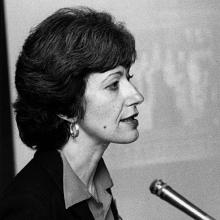
Angeliki Evangelos Laiou was born on April 6, 1941, in Athens, Greece, to Evangelos K. and Virginia I. (Apostolides) Laios. Angeliki came to the United States in 1959.
In 1961, Angeliki received a Bachelor of Arts from Brandeis University. In 1962, she received a Master of Arts from Harvard University and a Doctor of Philosophy in 1966.
Laiou served as an Instructor and Assistant Professor at Harvard before moving to Brandeis and then to Rutgers, where she rose to Distinguished Professor. In 1981, she returned to Harvard, where she taught the history of Byzantium, the Crusades - her commanding presence, penetrating mind, and ferocious dedication to her teaching and her students made her Core course on this topic ever-popular among the undergraduates - and Balkan history. She was a faithful affiliate of Lowell House.
Her career culminated in the massively definitive three volumes of the Economic History of Byzantium for which she recruited the world’s leading specialists and wrote eight of the finest chapters. A benchmark for all future research, this work innovated by being freely available online. Her most recent book, co-authored with her friend the Parisian numismatist Cécile Morrisson, offers a brilliant synoptic view of the Byzantine economy that goes far beyond summarizing the great work.
She was elected as a member of the Hellenic Parliament on the list of the Panhellenic Socialist Movement in April 2000. In May 2000, she was also named as Deputy Secretary of Foreign Affairs charged with relations with the Greek diaspora. Laiou’s diplomatic service entailed fostering better cultural and intellectual relations with Greece’s ancient enemy, an engagement that has no better incarnation than her dedication to her beloved Turkish graduate students. In the end, and to her colleagues’ delight, she happily returned to full-time duty at Harvard in 2001. She resigned the post six months later to resume her academic activities and resigned her Parliament seat as well in 2002.
Angeliki E. Laiou was one of the world’s leading historians of the Byzantine Empire - the successor of the Roman Empire in the Middle East - and of the Crusades. Celebrated for her path-breaking research in Mediterranean economic and women’s history, in 1985 the sole female permanent member of the Department of History pioneered as the first female chair. Born in Athens, Laiou played major roles in the culture and politics of her native land, as Deputy Secretary of Foreign Affairs of the Hellenic Republic (2000) and as a Socialist Member of Parliament. Her career as a historian, diplomat, and educator spanned the continents.
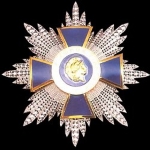
Decorated as a Commander of the Order of Honor of the Hellenic Republic, Laiou was only the second woman selected as a permanent member of the Academy of Athens since the Academy’s founding. Among many honors, she held two Guggenheims; was a Fellow of the Medieval Academy of America and the American Academy of Arts and Sciences; was a member of the Academia Europaea; and was a Corresponding Member of the Académie des Inscriptions et Belles-Lettres (Paris), the Austrian Akademie der Wissenschaften, and the Serbian Academy of Sciences and Arts. Her activities promoting Byzantine studies in the People’s Republic of China led to her being named an honorary professor at Nankai University.
(These seven chapters, originally given as lectures honori...)
1992(Women, Family and Society in Byzantium, the first of thre...)
2011(A tumultuous period in history, the late Byzantine era bo...)
2010(A cursory glance at the Byzantine world would show women ...)
2002(Although ethnicity is a modern concept and would not have...)
1998(The book description for the previously published "Peasan...)
1977(This is a concise survey of the economy of the Byzantine ...)
2007(At the age of twenty-two, Andronicus II became sole ruler...)
1972Angeliki was a member of the American Historical Association, Medieval Academics of America, Societa Ligure de Storia Patria, Greek Community Study of South Eastern Europe.
Laiou had the rare gifts of an original mind, an iron will, and a penetrating intellect. She fearlessly spoke out to correct error or false impressions, but always chose her words judiciously. Even those who sometimes disagreed with her in departmental discussions knew that she shared their highest standards and appreciated her courtly tone.
A very private person, Laiou was a devoted friend and impeccable colleague. She could display, behind the scenes, a gentle attentiveness and humor that would have amazed those who only knew her imposing persona professionally.
On July 14, 1973, Angeliki married Stavros B. Thomadakis. They have one son, Vassili N.

Stavros Thomadakis is a Greek economist who served as chairman of the Hellenic Capital Market Commission, Professor of Finance at the University of Athens and chairman of the Public Interest Oversight Board.

Born on 29 August 1926.
Helene Glykatzi-Ahrweiler is a Greek academic Byzantinologist. She is also a UNICEF Goodwill Ambassador for Greece. In the 2008 show Great Greeks, she was named in the 100 greatest Greeks of all time.

Born on 16 June 1940.
Cécile Morrisson is a French historian and numismatist. She is Director of Research emeritus at the French National Center for Scientific Research and specializes in the study of the Byzantine Empire.