

Background
Catherine Fitzgerald was born on March 27, 1879 to parents who encouraged artistic expression. She was the second of four children of George and Mary Anne Macfarlane, God-fearing middle-class Free Church Glaswegians.


Carswell attended Glasgow University from 1903 to 1907.
Carswell attended Glasgow University from 1903 to 1907.


http://www.amazon.com/gp/product/0860688739/?tag=2022091-20
http://www.amazon.com/gp/product/B004V327XU/?tag=2022091-20
(Joanna Bannerman, capricious, selfish and warm-hearted, p...)
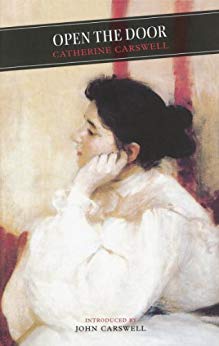
Joanna Bannerman, capricious, selfish and warm-hearted, passionately seeks life and ‘loveliness’. Certainly the bustling streets of Glasgow at the turn of the century promise much greater excitement than the solid evangelical background she has known hitherto. Her studies in the School of Art open up new horizons - of independence and love - and Joanna reaches for them all.
http://www.amazon.com/gp/product/B004V31HS6/?tag=2022091-20

(A man who prepared for death as carefully as he did for l...)
A man who prepared for death as carefully as he did for life… Catherine Carswell was a Scottish novelist, critic, journalist and biographer, as well as leading female figure in the Scottish Renaissance. Just two years after the death of D.H. Lawrence, The Savage Pilgrimage was published. Sympathetic and controversial in equal measure, it paints a detailed and compelling portrait of Lawrence.
http://www.amazon.com/gp/product/B06XWFVF37/?tag=2022091-20

http://www.amazon.com/gp/product/0862416833/?tag=2022091-20
http://www.amazon.com/gp/product/B00NBK0Q6E/?tag=2022091-20
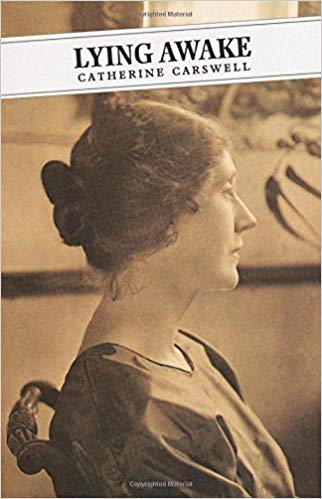
http://www.amazon.com/gp/product/B01HC9KSIK/?tag=2022091-20

http://www.amazon.com/gp/product/B01M7V6AUI/?tag=2022091-20
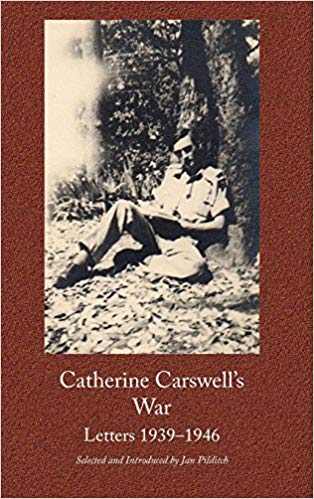
http://www.amazon.com/gp/product/1849211485/?tag=2022091-20
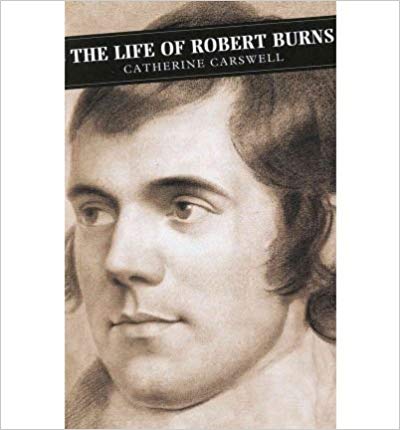
http://www.amazon.com/gp/product/B00L6Z2Y2K/?tag=2022091-20
http://www.amazon.com/gp/product/B0010I9K5C/?tag=2022091-20
Catherine Fitzgerald was born on March 27, 1879 to parents who encouraged artistic expression. She was the second of four children of George and Mary Anne Macfarlane, God-fearing middle-class Free Church Glaswegians.
Catherine was educated at the New Park School for Girls, before spending two years studying music at the Frankfurt Conservatorium. After returning to Scotland she attended Glasgow University, where she studied English literature.
Catherine made her living working as a critic on the Glasgow Herald, meanwhile developing a wide range of literary connections.
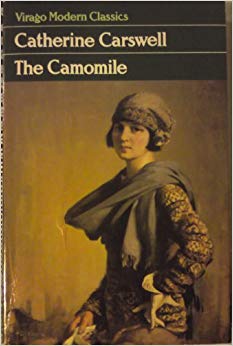
It was in 1915 that Catherine lost her job on the Glasgow Herald after writing a favourable review of D.H. Lawrence's "The Rainbow" against the wishes of the editor. She went to work instead for the Observer. Her own first novel, "Open the Door!" was published in 1920 and had autobiographical overtones, being about a young woman making her way in Glasgow. Her second - and last - novel, "The Camomile", was published two years later.
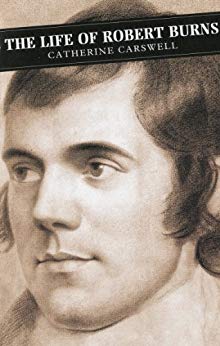
It was when she moved into biography that Catherine Carswell began to make her name. In 1930 she published her "Life of Robert Burns", a book based almost entirely on original source material and owing nothing to the almost saintly image painted of him by most other writers at the time. The result was outrage and uproar as Burns' many fans were confronted with a much more accurate portrait of their hero that revealed his many blemishes as well as his finer qualities. Almost as controversial was her biography of D.H. Lawrence, published in 1932. Her subsequent works on Giovanni Boccaccio and John Buchan were considered more mainstream at the time.
Catherine Carswell lived and worked in London until her death in 1946 at the age of 67.
(A man who prepared for death as carefully as he did for l...)
(Joanna Bannerman, capricious, selfish and warm-hearted, p...)
Catherine was herself a creative person, occasionally stymied by the harsh or indifferent critics in her path.
In September 1904, Catherine Fitzgerald met her first husband, Herbert Jackson, a Second Boer War veteran and artist. She married him after a "whirlwind courtship" only a month later. From him she had a daughter Diana, who was born the following October and died in 1913.
In 1908 Catherine made legal history when her marriage with Herbert Jackson was dissolved after she had established that his mental illness had started prior to their engagement and that he was not aware of what he was doing when he married her.
She married early in 1915 to Donald Carswell. Their son John was born in the following autumn.
He was suffered from paranoid delusions. Thinking that he was sterile, he accused Carswell of betraying him when he heard the news of her pregnancy and threatened to kill her in March 1905. He was taken to a mental institution, where he remained for the rest of his life, being considered too dangerous to be released. He never met his daughter.
In 1940 Donald Carswell was killed in a traffic accident caused by the blackout during London's blitz.
In 1950, he published his mother collected autobiographical notes as "Lying Awake: An unfinished autobiography."


