Background
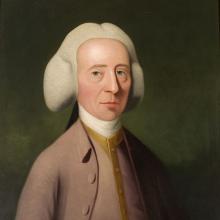
Gray was baptised in 1696, the only son of George Gray, a glazier and local landowner, and his wife Elizabeth.

Gray was baptised in 1696, the only son of George Gray, a glazier and local landowner, and his wife Elizabeth.
He was educated at Colchester Royal Grammar School from 1702, before possibly spending some time at Cambridge University and entering Gray"s Inn to become a lawyer in 1724.
He was called to the bar in 1729 and became a bencher in 1737. Finally, he was elected a fellow of the Royal Society in 1754. Gray"s political career was a long one.
He served in five parliaments from 1742–1755 and 1761–1780, during the reigns of George II and George III. By the end of his term, however, Gray was too ill to attend, being, in 1780, "too infirm and too ill to stand".
"A classical scholar as well as a reformer, he was one of the original trustees of the British Museum."
Likewise, he also purchased a great part of the surrounding land, which was, a hundred and fifty years later, given to the town to become Castle Park. In the castle itself he constructed the Italianate domed tower and the library, and founded in the latter, in 1750, the Castle Society Book Club: among the club"s members was Philip Morant.
The library was to contain the books of Samuel Harsnett, bequeathed to the town, and tended to and documented by Morant. He also roofed the castle in red tile, which survives.
Royal Society; 9th Parliament of Great Britain. 10th Parliament of Great Britain. 12th Parliament of Great Britain.
13th Parliament of Great Britain.
14th Parliament of Great Britain.