Background
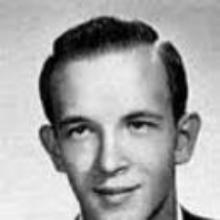
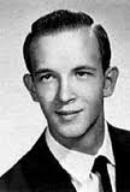
Jackson, Charles was born in 1903. He moved to Newark, New York in 1907, and nine years later his older sister, Thelma, and younger brother, Richard, were killed while riding in a car that was struck by an express train.
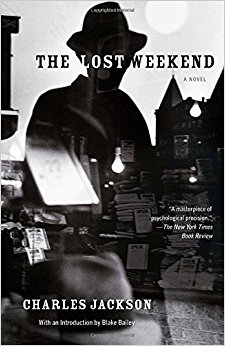
(The classic tale of one man’s struggle with alcoholism, t...)
The classic tale of one man’s struggle with alcoholism, this revolutionary novel remains Charles Jackson’s best-known book—a daring autobiographical work that paved the way for contemporary addiction literature. It is 1936, and on the East Side of Manhattan, a would-be writer named Don Birnam decides to have a drink. And then another, and then another, until he’s in the midst of what becomes a five-day binge. The Lost Weekend moves with unstoppable speed, propelled by a heartbreaking but unflinching truth. It catapulted Charles Jackson to fame, and endures as an acute study of the ravages of alcoholism, as well as an unforgettable parable of the condition of the modern man.
http://www.amazon.com/gp/product/0307948714/?tag=2022091-20
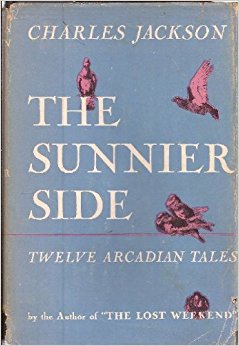
(London published Fiction)
London published Fiction
http://www.amazon.com/gp/product/B0000CI1HL/?tag=2022091-20
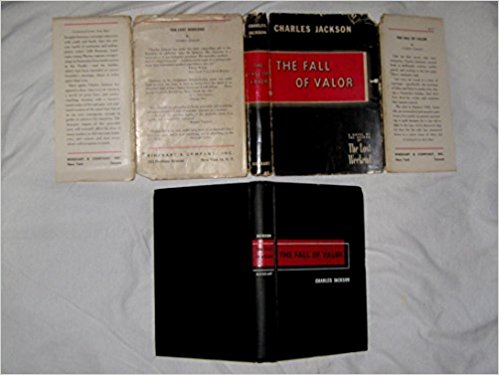
(The second novel by the author of The Lost Weekend. The s...)
The second novel by the author of The Lost Weekend. The story of a man on holiday with his wife when he falls in love with a sailor.
http://www.amazon.com/gp/product/B0007DXTBM/?tag=2022091-20
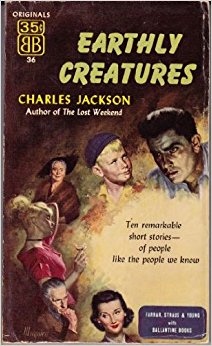
(Vintage paperback)
Vintage paperback
http://www.amazon.com/gp/product/B001E2W2ZY/?tag=2022091-20
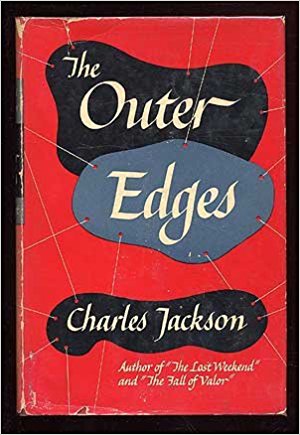
(Excerpt from The Outer Edges The events told in this narr...)
Excerpt from The Outer Edges The events told in this narrative got underway on one of those brilliant mornings in mid-september, the kind of day and time of year that is neither summer nor fall, with white clouds speeding in the wind, the sun blazing, the air bracing and cool, and the countryside at its peak of beauty. From the Chesapeake to upper Vermont the morning was perfect, but in the area where most of this story takes place - Westchester and New York counties - it was as if there could never be such a day again. During these hours and in these counties, nature seemed to reach the ultimate in splendor. About the Publisher Forgotten Books publishes hundreds of thousands of rare and classic books. Find more at www.forgottenbooks.com This book is a reproduction of an important historical work. Forgotten Books uses state-of-the-art technology to digitally reconstruct the work, preserving the original format whilst repairing imperfections present in the aged copy. In rare cases, an imperfection in the original, such as a blemish or missing page, may be replicated in our edition. We do, however, repair the vast majority of imperfections successfully; any imperfections that remain are intentionally left to preserve the state of such historical works.
http://www.amazon.com/gp/product/B0007E6DHI/?tag=2022091-20
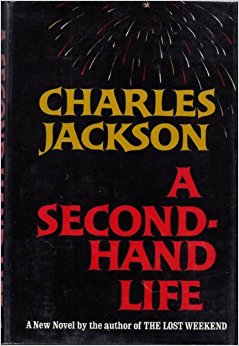
http://www.amazon.com/gp/product/B00005WS2M/?tag=2022091-20
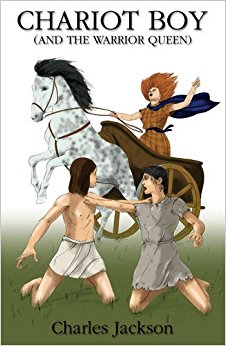
(Chariot Boy: And the Warrior Queen [Charles Jackson] on A...)
Chariot Boy: And the Warrior Queen [Charles Jackson] on Amazon.com. *FREE* shipping on qualifying offers.
http://www.amazon.com/gp/product/1905237863/?tag=2022091-20
Jackson, Charles was born in 1903. He moved to Newark, New York in 1907, and nine years later his older sister, Thelma, and younger brother, Richard, were killed while riding in a car that was struck by an express train.
He graduated from Newark High School in 1921.
He attended Syracuse University, joining a fraternity there, but left during his freshman year after a "furtive sexual encounter with a fellow member of his fraternity, who then spread word of the incident in such a way that only Jackson came in for public disgrace"; a fictionalized version of that experience was later incorporated into "The Lost Weekend".
As a young man he worked as an editor for local newspapers and in various bookstores in Chicago and New York prior to falling ill with tuberculosis. Jackson spent the years 1927-1931 in sanatoriums and eventually recovered in Davos, Switzerland. His successful battle cost him a lung and served as a catalyst for his alcoholism.
He returned to New York at the height of the Great Depression and his difficulty in finding work spurred on his binge drinking. His battle to stop drinking started in late 1936 and was largely won by 1938, the year in which he married. During this time he was a free-lance writer and wrote radio scripts. Jackson's first published story, "Palm Sunday", appeared in the Partisan Review in 1939.
In the 1940s, Jackson wrote a trio of novels, beginning with "The Lost Weekend" published by Farrar & Rinehart in 1944. The 1944 publication of "The Lost Weekend" catapulted his career toward success. He moved briefly to Hollywood in the Summer of 1944 and shortly thereafter to New Hampshire with his growing family, including his two young girls. He lived on and off at his home in New Hampshire for ten years. At the height of his career, Charles R. Jackson lectured at various colleges. In the mid-1950s he began struggling with finances and moved with his family to Connecticut.
Jackson's second published novel of the 1940s, titled "The Fall of Valor", was released in 1946 and takes its name from a passage in Herman Melville's "Moby-Dick".
(Excerpt from The Outer Edges The events told in this narr...)
(The classic tale of one man’s struggle with alcoholism, t...)
(The second novel by the author of The Lost Weekend. The s...)
(London published Fiction)
(Vintage paperback)
(Chariot Boy: And the Warrior Queen [Charles Jackson] on A...)
Children: Sarah Blann, Kate Winthrop.
In 1916 she was killed while riding in a car that was struck by an express train.
In 1916 he was killed while riding in a car that was struck by an express train.