Background
Daniel Barenboim was born on November 15, 1942, in Buenos Aires, Argentina, to Argentinian-Jewish parents. Moved to Israel with parents as a child in 1952. He was the son of Aida Schuster and Enrique Barenboim, both professional pianists.

2008
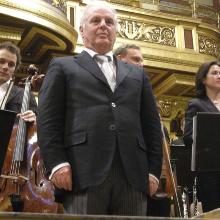
Daniel Barenboim in Vienna

SOAS University of London

Royal Academy of Music

Weizmann Institute of Science

University of Florence

the Hebrew University of Jerusalem

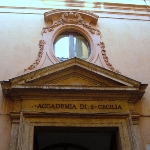
Accademia Nazionale di Santa Cecilia

Vrije Universiteit Brussel

University of Oxford

Paris Orchestra (logo)

English Chamber Orchestra (logo)

London Symphony Orchestra (logo)

Berlin Philharmonic Orchestra (logo)

New York Philharmonic Orchestra (logo)

La Scala (logo)
La Scala (logo)

Chicago Symphony Orchestra (logo)

Harvard University (logo)

Vienna Philharmonic (logo)

Prince of Asturias Award (logo)

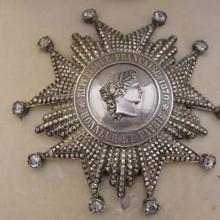
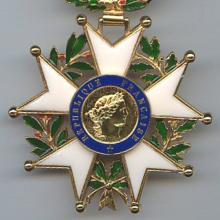
Grand Officier of the Légion d'honneur

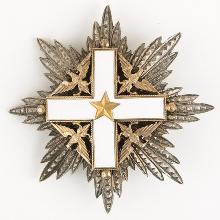
Knight Grand Cross of the Order of Merit of the Italian Republic

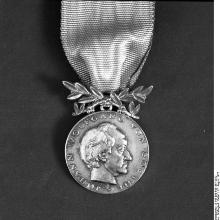
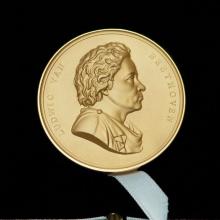
Goethe Medal

Royal Philharmonic Society Gold Medal

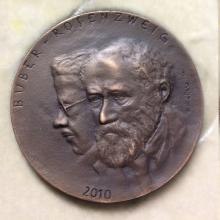
Buber-Rosenzweig-Medal

Commander of the Legion of Honour

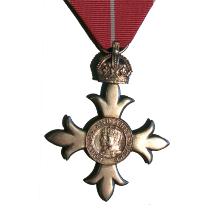
Honorary Knight Commander of the Order of the British Empire

Wolf Foundation (logo)

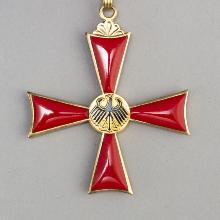
Grand Cross of the Order of Merit of the Federal Republic of Germany

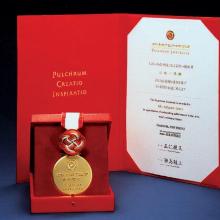
Praemium Imperiale

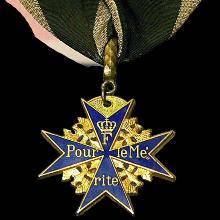
Pour le Mérite for Sciences and Arts
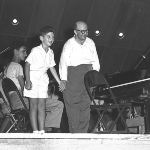
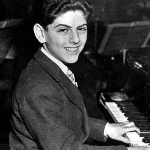
1953
Daniel Barenboim, age 11, with composer Eithan Lustig and the Gadna Youth orchestra
1958
U.S. concert performance at age 15
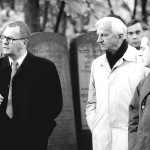
1990
(l-r) President of the East Berlin Jewish Community Peter Kirchner, President of the Federal Republic of Germany Richard von Weizsäcker, and Barenboim visit Jewish cemetery in Berlin-Weissensee
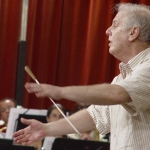
2005
Daniel Barenboim leads a rehearsal of the West-Eastern Divan in Seville, Spain
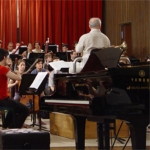
2005
Rehearsal of the West-Eastern Divan under the lead of Daniel Barenboim
Accademia Nazionale di Santa Cecilia
Grand Cross of the Order of Merit of the Federal Republic of Germany
Prince of Asturias Award (logo)
Buber-Rosenzweig-Medal
Wolf Foundation (logo)
Knight Grand Cross of the Order of Merit of the Italian Republic
Goethe Medal
Commander of the Legion of Honour
Praemium Imperiale
Royal Philharmonic Society Gold Medal
Grand Officier of the Légion d'honneur
Honorary Knight Commander of the Order of the British Empire
Pour le Mérite for Sciences and Arts
New York Philharmonic Orchestra (logo)
Berlin Philharmonic Orchestra (logo)
Paris Orchestra (logo)
London Symphony Orchestra (logo)
English Chamber Orchestra (logo)
Chicago Symphony Orchestra (logo)
La Scala (logo)
Harvard University (logo)
Vienna Philharmonic (logo)
the Hebrew University of Jerusalem
Vrije Universiteit Brussel
University of Oxford
SOAS University of London
Royal Academy of Music
Weizmann Institute of Science
University of Florence
Daniel Barenboim winning Dresden Peace Prize
Daniel Barenboim and Jacqueline du Pré

("I waited a very long time to record the Beethoven sympho...)
"I waited a very long time to record the Beethoven symphonies, said Daniel Barenboim when this cycle was first released in 2000. "I waited for the music to mature in me or me in it and to find an orchestra that not only did what I asked it to do but which really felt every detail in the music exactly as I did at the moment we were playing it...This is the greatest joy that a conductor can have."
http://www.amazon.com/gp/product/B071S7YCR1/?tag=2022091-20
2000

http://www.amazon.com/gp/product/B000VA51RG/?tag=2022091-20
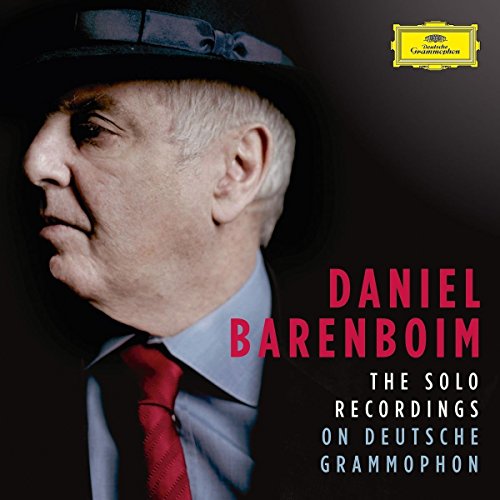
(This 38 CDs + 1 Bonus CD with rare first recordings from ...)
This 38 CDs + 1 Bonus CD with rare first recordings from the 1955 set presents a solo career spanning 60 years and shows his artistic development through very early recordings as a 13-year-old to the present day.
http://www.amazon.com/gp/product/B06ZZYDG1V/?tag=2022091-20

(Ted Libbey: "On the evidence of this 1985 collection, Dan...)
Ted Libbey: "On the evidence of this 1985 collection, Daniel Barenboim sees Mozart's piano sonatas as works for the concert hall rather than the drawing-room, and he treats them, in many cases, merely as opportunities for pianistic sport. To be sure, the virtuosic passages are very athletically done, but Barenboim's steely fingered and unsubtle approach deprives the music of much of its elegance and feline grace. For an idea of just how heavy the weather can get, listen to the opening of the C minor Fantasia, K. 475. The marking is, but Barenboim lands on the octave C's like a safe on a 10-story drop, detonating the B-flats and A-flats that follow as if he were negotiating one of Liszt's nastier potboilers. He does the same with the left-hand octaves in the "Piu Allegro," and so on to the end of the piece. As a demonstration of piano fortitude, it's impressive, but it doesn't sound much like Mozart--unless, of course, you like your Mozart on the strong side. The engineering gives lots of weight and presence to the piano, but several tracks also exhibit a "hot ground" hum (especially noticeable in the slow movements of K. 279, 280, and 284), which may indeed be disturbing for those who are listening on good equipment. For a more sensitive interpretation, you might consider Mitsuko Uchida's traversal, though it lacks the Barenboim set's bargain price tag."
http://www.amazon.com/gp/product/B000002SBQ/?tag=2022091-20

http://www.amazon.com/gp/product/B008DK3QBY/?tag=2022091-20

http://www.amazon.com/gp/product/B00000C2KO/?tag=2022091-20

http://www.amazon.com/gp/product/B01LY1AXTN/?tag=2022091-20
http://www.amazon.com/gp/product/B0030GVNL6/?tag=2022091-20

http://www.amazon.com/gp/product/B0012EGEG2/?tag=2022091-20
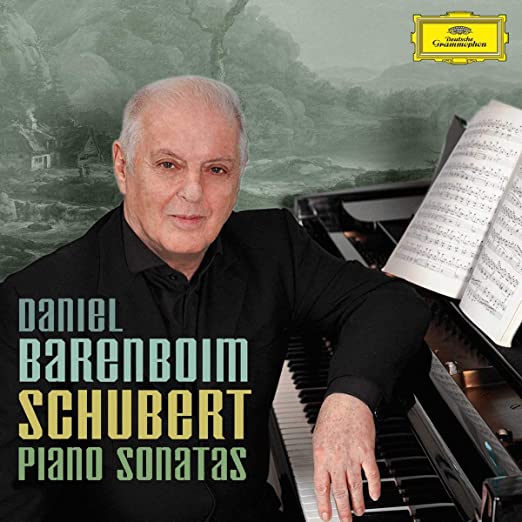
https://www.amazon.com/dp/B00L2TCMVS/ref=ntt_mus_dp_dpt_8

(His parents, both musicians, taught Barenboim to play the...)
His parents, both musicians, taught Barenboim to play the piano at a very early age. When Arthur Rubinstein heard the young prodigy, he was so impressed he immediately brought him to the famous American impresario to the stars, Sol Hurok, who propelled Barenboim onto the world stage. Since then he has performed on virtually every concert stage throughout the world. As both virtuoso pianist and conductor of symphonies and operas, Barenboim has known and worked with many of the most distinguished and exciting musicians of the twentieth century. When in 1967, he married the high-profile, beautiful cellist du Pre, the golden couple made headlines as they traveled the world performing - often together - until Jacqueline's untimely death in 1987. Following in the footsteps of Leonard Bernstein - whose keyboard virtuosity paralleled his brilliant conducting talent - Barenboim, too, achieved this pinnacle of his glorious musical career, in both professions, with equal panache.
https://www.amazon.com/Daniel-Barenboim-Life-Music/dp/0684193264
1992

(This large 27 page stapled booklet discusses Barenboim's ...)
This large 27 page stapled booklet discusses Barenboim's 50-year career and association with Carnegie Hall.
https://www.amazon.com/Perspectives-Daniel-Barenboim/dp/B0017KZKUC/ref=sr_1_15?dchild=1&keywords=Daniel+Barenboim&qid=1612378565&s=books&sr=1-15
2000

(These free-wheeling, often exhilarating dialogues - which...)
These free-wheeling, often exhilarating dialogues - which grew out of the acclaimed Carnegie Hall Talks - are an exchange between two of the most prominent figures in contemporary culture: Daniel Barenboim, internationally renowned conductor and pianist, and Edward W. Said, eminent literary critic and impassioned commentator on the Middle East.
https://www.amazon.com/Parallels-Paradoxes-Explorations-Music-Society/dp/1400075157/ref=sr_1_3?dchild=1&keywords=Daniel+Barenboim&qid=1612378565&s=books&sr=1-3
2004

(Daniel Barenboim's new book vividly describes his lifelon...)
Daniel Barenboim's new book vividly describes his lifelong pursuit of knowledge and understanding, not only of music and of life but of one through the other.
https://www.amazon.com/Everything-Connected-Power-Daniel-Barenboim/dp/0753825945/ref=sr_1_1?dchild=1&keywords=Daniel+Barenboim&qid=1612378565&s=books&sr=1-1
2009

(Bringing together young musicians from Palestine, Israel,...)
Bringing together young musicians from Palestine, Israel, and other countries of the Middle East, the West-Eastern Divan Orchestra is one of the most acclaimed youth orchestras in the world and a rare note of hope in a war-torn region. Founded by Daniel Barenboim and Edward Said in 1999, it aims to promote Arab-Israeli understanding through music. In An Orchestra Beyond Borders, Elena Cheah, a professional musician, and assistant to Daniel Barenboim explore the orchestra’s journey through the remarkable stories of the musicians that comprise it. These youthful testimonies are a window into the life of the region. Together, they communicate the musicians’ ambitions and hopes, their varied and conflicting views on life and politics, and above all the orchestra’s transformative ability to create an atmosphere of musical cooperation away from the implications and hardships of a world full of division and conflict.
https://www.amazon.com/Orchestra-Beyond-Borders-Voices-West-Eastern/dp/1844674088/ref=sr_1_8?dchild=1&keywords=Daniel+Barenboim&qid=1612378565&s=books&sr=1-8
2009
Daniel Barenboim was born on November 15, 1942, in Buenos Aires, Argentina, to Argentinian-Jewish parents. Moved to Israel with parents as a child in 1952. He was the son of Aida Schuster and Enrique Barenboim, both professional pianists.
Daniel Barenboim started piano lessons at the age of five with his mother, continuing to study with his father, who remained his only teacher. Then the family moved to Europe where Barenboim played at the Salzburg Mozarteum and studied conducting with Igor Markevich. The following year, 1952, the family settled in Israel, although Barenboim returned to Europe to study piano with Edwin Fischer. At this time, Daniel Barenboim met the conductor Wilhelm Furtwängler, who influenced Barenboim's conducting.
Daniel Barenboim studied at the Accademia di Santa Cecilia in Rome where, as one of the youngest graduates ever, he received a diploma in 1956. During this period he also took composition lessons from Nadia Boulanger in Paris.
Daniel Barenboim received honored degrees in Hebrew University of Jerusalem (1996, Doctor of Philosophy), Vrije Universiteit Brussel (2003), University of Oxford (2007, Doctor of Music), SOAS University of London (2008, Doctor of Music), Royal Academy of Music (2010, Doctor of Music), Weizmann Institute of Science (2013, Doctor of Philosophy), University of Florence (2020).
Daniel Barenboim made his international debut as a pianist at the age of 10 in 1952 in Vienna and Rome. In 1955 he performed in Paris, in 1956 in London, and in 1957 in New York, where he played Prokofiev's First Piano Concerto under the baton of Leopold Stokowski. Regular concert tours of Europe, the United States, South America, Australia, and the Far East followed thereafter.
The following year Daniel Barenboim played again in New York and gave concerts throughout the world as well. He began conducting in Israel in 1962 and then appeared on the podium in Australia. In 1964, Daniel Barenboim made the first of his appearances with the English Chamber Orchestra, an ensemble he both conducted and performed with as a pianist regularly. He also toured with the English Chamber Orchestra in Latin America and the Far East. In June 1967, Daniel Barenboim and his then-fiancée Jacqueline du Pré gave concerts in Jerusalem, Tel Aviv, Haifa, and Beersheba before and during the Six-Day War.
Daniel Barenboim conducted the London Symphony Orchestra in 1968 in New York and appeared with the Berlin Philharmonic Orchestra in 1969 and with the New York Philharmonic Orchestra in 1970. After 1970, he appeared regularly with the New York Philharmonic Orchestra, the Chicago Symphony Orchestra, and other major orchestras in the United States.
Daniel Barenboim also frequently appeared with the London Philharmonic Orchestra and with the Orchestra de Paris, of which he was named conductor in 1975. He directed London's South Bank Summer Music Festival for two seasons in 1968 and 1970. He conducted Mozart's Don Giovanni at the Edinburgh Festival in 1973. Between 1975 and 1989, he was music director of the Orchestre de Paris, where he conducted much contemporary music.
Since 1992, Daniel Barenboim has been music director of the Berlin State Opera and the Staatskapelle Berlin, succeeding in maintaining the independent status of the State Opera. On 15 May 2006, he was named principal guest conductor of La Scala opera house, in Milan, after Riccardo Muti's resignation. He subsequently became music director of La Scala in 2011.
In the autumn of 2006, Daniel Barenboim gave the Charles Eliot Norton Lectures at Harvard University, entitling his talk "Sound and Thought". In 2009, he conducted the Vienna New Year's Concert of the Vienna Philharmonic for the first time. In his New Year message, he expressed the hope that 2009 would be a year for peace and for human justice in the Middle East. Daniel Barenboim returned to conduct the 2014 Vienna New Year's Concert, and he is scheduled to conduct the 2022 Vienna New Year's Concert.
In 2014, construction began on the Barenboim-Said Academy in Berlin. A joint project Barenboim developed with Palestinian-American scholar Edward Said, the academy was planned as a site for young music students from the Arab world and Israel to study music and humanities in Berlin.
Daniel Barenboim has received many awards and prizes, including an honorary Knight Commander of the Order of the British Empire, France's Légion d'honneur both as a Commander and Grand Officier, and the German Großes Bundesverdienstkreuz and Willy Brandt Award. Together with the Palestinian-American scholar Edward Said, he was given Spain's Prince of Asturias Concord Award. He has won seven Grammy awards for his work and discography.
(Ted Libbey: "On the evidence of this 1985 collection, Dan...)
(This 38 CDs + 1 Bonus CD with rare first recordings from ...)
("I waited a very long time to record the Beethoven sympho...)
2000(These free-wheeling, often exhilarating dialogues - which...)
2004(Bringing together young musicians from Palestine, Israel,...)
2009(Daniel Barenboim's new book vividly describes his lifelon...)
2009(This large 27 page stapled booklet discusses Barenboim's ...)
2000(His parents, both musicians, taught Barenboim to play the...)
1992Daniel Barenboim, a supporter of human rights, including Palestinian rights, is an outspoken critic of Israel's conservative governments and the Israeli occupation of the Palestinian territories.
In an interview with the British music critic Norman Lebrecht in 2003, Barenboim accused Israel of behaving in a manner which was, "morally abhorrent and strategically wrong", and, "putting in danger the very existence of the state of Israel".
In 1967, at the start of the Six-Day War, Daniel Barenboim and du Pré had performed for the Israeli troops on the front lines, as well as during the Yom Kippur war in 1973. During the Gulf War, he and an orchestra performed in Israel in gas masks.
Daniel Barenboim has argued publicly for a Two-state solution for Israel and Palestinians. In November 2014, in an opinion piece in The Guardian, he wrote that the "ongoing security of the state of Israel...is only possible in the long term if the future of the Palestinian people, too, is secured in its own sovereign state. If this does not happen, the wars and history of that region will be constantly repeated and the unbearable stalemate will continue."
Daniel Barenboim is a self-described Spinozist, he is significantly influenced by Spinoza's life and thought.
Daniel Barenboim met English cellist Jacqueline du Pré on New Year's Eve 1966. Shortly after the end of the Six-Day War, they flew to Jerusalem. She converted to Judaism, and they were married on 15 June 1967 at the Western Wall. She was diagnosed with multiple sclerosis in October 1973 and died in October 1987.
In the early 1980s, Daniel Barenboim had an affair with the Russian pianist Elena Bashkirova. The two lived together and had two children and were married in 1988, a year after Jacqueline's death.
Elena Dmitrievna Bashkirova is a Russian-born Israeli pianist and musical director.
Jacqueline Mary du Pré (26 January 1945 - 19 October 1987) was a British cellist. At a young age, she achieved enduring mainstream popularity. Despite her short career, she is regarded as one of the greatest cellists of all time.