Background
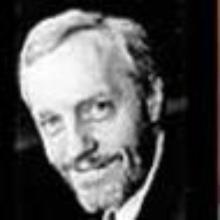
HENDRY, David Forbes was born in 1944 in Nottingham, Nottinghamshire, England.

HENDRY, David Forbes was born in 1944 in Nottingham, Nottinghamshire, England.
He received his PhD from the London School of Economics under the supervision of John Denis Sargan in 1970, and until joining the University of Oxford in 1982, was a Lecturer, then Reader and finally Professor of Economics at the LSE.
Lector, Reader, Professor, London School of Economies and Political Science, London, United Kingdom, 1969-1981. Visiting Professor, Cowles Foundation, Yale University, 1975, University California Berkeley, 1976. Visiting Research Fellow, American National University, 1976.
Visiting Research Professor, Centre for Operations Research and Econometrics, Belguim, Louvain, Belgium, 1980. Visiting Professor, University California San Diego, 1981. Professor of Economics, Fellow, Nuffield College Oxford, England, since 1981.
Joint Managing Editor, Review of Economic Studies, 1971-1975. Econometrica Editor, Economic Journal, 1976-1980. Joint Editor, Bulletin of the Oxford University Institute of Economics and Statistics, since 1982.
Editorial Board, Review of Economic Studies, since 1976. Association Editor, Econometrics.
His work is predominantly on time series econometrics and the econometrics of the demand for money. In recent years he has worked on the theory of forecasting and also on automated model building.
He was elected a Fellow of the British Academy, a Fellow of the Econometric Society, Honorary Member of the American Economic Association and Foreign Honorary Member of the American Academy of Arts and Sciences. He was knighted in the 2009 Birthday Honours. He is a highly regarded time series econometrician.
His most recent book is Hendry, D.F. and B. Nielsen (2007), Econometric Modeling: A Likelihood Approach (Princeton University Press).
"The Methodology and Practice of Econometrics: A Festschrift in Honour of David F. Hendry", edited by Jennifer L Castle and Neil Shephard, was published by Oxford University Press in 2009.
(In this edition which has been reprinted with corrections...)
My research since 1970 has been directed towards writing Dynamic Econometrics, which seeks an integrated approach to the empirical modelling of economic time series. There are six main strands to this effort: firstly, deriving and analysing methods of estimation and inference relevant to time-series data. Next, developing Monte Carlo techinques for investigating the small sample properties of possible methods.
Thirdly, implementing the various tools in appropriate computer programs (the AUTOREG library, summarised in Journal of Econometrics, 1980). Fourthly, exploring the practical usefulness of alternative modelling strategies and ‘methodologies’. Fifthly, analysing concepts and criteria which would provide a viable basis for modelling.
And finally, testing out all of these developments in a series of simulation and empirical investigations of consumption, money demand and the housing market to ascertain what (if
anything) actually works. Although the text is still incomplete, the attempts to write it and to implement the approach continue to highlight the gaps most in need of filling.
At present, the emphasis is on the critical, evaluative role of econometrics rather than its uses as a ‘constructive’ method for obtaining models. Much of this recent work is jointly with JeanFrançois Richard and is summarised in No.
9 noted above. My other main interest is the history of econometric thought because of the insights available from thoughtful earlier analyses when technique was less dominant. Joint research with Mary S. Morgan documenting the progress of the discipline prior to 1950 is nearing completion.