Background
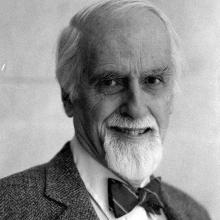
David Clarence McClelland was born on May 20, 1917 in Mount Vernon, New York, United States; the son of Clarence Paul McClelland and Mary Elizabeth McClelland.


1211 N Diamond St, Jacksonville, IL 62650, United States
David McClelland graduated from Jacksonville High School in Illinois in 1933.

45 Wyllys Ave, Middletown, CT 06459, United States
David McClelland received a Bachelor of Arts from Wesleyan University in 1938.

Columbia, MO 65211, United States
David McClelland received a Master of Arts from the University of Missouri in 1939.

New Haven, CT 06520, United States
David McClelland received a Doctor of Philosophy in experimental psychology from Yale University in 1941.
45 Wyllys Ave, Middletown, CT 06459, United States
David McClelland received a Bachelor of Arts from Wesleyan University in 1938.
Columbia, MO 65211, United States
David McClelland received a Master of Arts from the University of Missouri in 1939.
New Haven, CT 06520, United States
David McClelland received a Doctor of Philosophy in experimental psychology from Yale University in 1941.
1211 N Diamond St, Jacksonville, IL 62650, United States
David McClelland graduated from Jacksonville High School in Illinois in 1933.

(This book makes three discrete contributions to the theor...)
This book makes three discrete contributions to the theory of motivation. The first contribution is a theory of motivation; the second large section carefully describes the measurement of the achievement motive through content-analysis of imaginations stories; the rest of the book summarizes a number of experiments with the achievement motive as the dependent variable.
https://www.amazon.com/gp/product/1614278237/ref=dbs_a_def_rwt_bibl_vppi_i3
1953

(This classic book provides a factual basis for evaluating...)
This classic book provides a factual basis for evaluating economic, historical, and sociological theories that explain the rise and fall of civilizations.
https://www.amazon.com/gp/product/B01N07VDMX/ref=dbs_a_def_rwt_hsch_vapi_tkin_p1_i0
1961

https://www.amazon.com/gp/product/0829001018/ref=dbs_a_def_rwt_bibl_vppi_i4
1975

(In this provocative exploration into the nature and value...)
In this provocative exploration into the nature and value of power in organizations, authors David McClelland and David Burnham reveal how the drive for influence is essential to good management. The authors provide a wealth of counterintuitive insights about what using power really means in today's business landscape.
https://www.amazon.com/gp/product/B011OQB6JW/ref=dbs_a_def_rwt_hsch_vapi_tkin_p1_i2
1976

https://www.amazon.com/gp/product/0275912248/ref=dbs_a_def_rwt_bibl_vppi_i7
1984

(Human Motivation offers a broad overview of theory and re...)
Human Motivation offers a broad overview of theory and research from the perspective of a distinguished psychologist whose creative empirical studies of human motives span forty years. David McClelland describes methods for measuring motives, the development of motives out of natural incentives and the relationship of motives to emotions, to values and to performance under a variety of conditions. He examines four major motive systems - achievement, power, affiliation and avoidance - reviewing and evaluating research on how these motive systems affect behaviour.
https://www.amazon.com/Human-Motivation-David-McClelland-dp-0521369517/dp/0521369517/ref=mt_paperback?_encoding=UTF8&me=&qid=
1987
David Clarence McClelland was born on May 20, 1917 in Mount Vernon, New York, United States; the son of Clarence Paul McClelland and Mary Elizabeth McClelland.
David McClelland graduated from Jacksonville High School in Illinois in 1933. He received a Bachelor of Arts from Wesleyan University in 1938, a Master of Arts from the University of Missouri in 1939 and a Doctor of Philosophy in experimental psychology from Yale University in 1941.
McClelland's began his career as an instructor at Connecticut College. Then he was appointed as an instructor at Wesleyan in 1941, in addition to taking a part-time lecturer position at Bryn Mawr College from 1944 to 1945. David became the chairman of the psychology department at Wesleyan in 1946. Over the next ten years, he lectured in social psychology in Saltzburg, Austria, at the Saltzburg Seminar in American Studies, and at Harvard University. In 1956, he left Wesleyan to become a professor of psychology at Harvard. He remained this position till 1986, becoming professor emeritus. In 1963, McClelland and his associate Berlew co-founded McBer Consulting Company.
David McClelland published a series of books on motivation, including Studies in Motivation, The Achieving Society, and The Roots of Consciousness. He continued to publish books on achievement, including Power: The Inner Experience and Human Motivation. His once radical ideas have become standard instruments in many corporations.
David Clarence McClelland has been listed as a noteworthy psychology educator by Marquis Who's Who. He also received a Distinguished Scientific Contribution Award from American Psychological Association in 1987 and a Guggenheim Fellowship in 1958. David is listed at number 15 on the American Psychological Association’s list of the 100 most eminent psychologists of the 20th century.
(In this provocative exploration into the nature and value...)
1976(Human Motivation offers a broad overview of theory and re...)
1987(This classic book provides a factual basis for evaluating...)
1961(This book makes three discrete contributions to the theor...)
1953David McClelland proposed a content theory of motivation based on Henry Murray's theory of personality, which sets out a comprehensive model of human needs and motivational processes. In McClelland's book, The Achieving Society, he asserted that human motivation comprises three dominant needs: The need for achievement (N-Ach), the need for power (N-Pow) and the need for affiliation (N-Affil). The subjective importance of each need varies from individual to individual and depends also on an individual's cultural background. He also claimed that this motivational complex is an important factor in the social change and evolution of societies. His legacy includes the scoring system which he co-developed with John William Atkinson for the Thematic Apperception Test. The TAT is used for personality assessment and in achievement motivation research.
The acquired-needs theory developed by David McClelland, called "McCelland's Theory of Needs" (sometimes as the "Three Need Theory" or the "Learned Needs Theory"), draws on Henry Murray's model of personality. McClelland proposed that an individual's specific needs are acquired over time and are shaped by one's early life experiences. According to McClelland, most of human needs and/or motives can be classified as achievement, affiliation, and power. He found that a person's motivation and effectiveness in certain job functions are influenced by these three needs. Thus, the importance of a particular need depends upon the position.
Quotations:
"Understanding human motivation ought to be a good thing. It should help us to find out what we really want so that we can avoid chasing rainbows that are not for us. It should open up opportunities for self-development if we apply motivational principles to pursuing our goals in life."
"Outstanding American men seem to see power as something you use in order to correct someone who's wrong, to change them, to show them you see more in this situation than the boss does. Outstanding American women, on the other hand, see power as a resource, something you can use to get people together, to gain commitment."
David Clarence McClelland was a member of the American Association for the Advancement of Science, Phi Beta Kappa and Sigma Xi.
David McClelland married Mary Sharpless on June 25, 1938. In December 1980, Mary died. On October 10, 1981, he remarried, to Marian Adams. David had seven children - Mira, Jabez, Catherine, Duncan, Nicholas, Usha and Sarah.