

Background
Rutstein, David Davis was born on February 5, 1909 in Wilkes-Barre, Pennsylvania, United States. Son of Harry and Nellie (Davis) Rutstein.

http://www.amazon.com/gp/product/B0006BRNOO/?tag=2022091-20
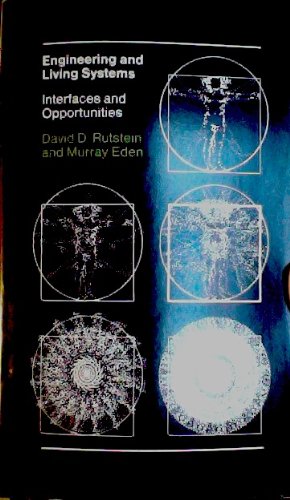
(This book outlines for the first time a sound plan for in...)
This book outlines for the first time a sound plan for interrelating the physical and engineering sciences and mathematics with biology and medicine. The walls of narrowing specialization that have kept these disciplines apart are broken down. The proposed program points up the need for an administrative structure to aid the flow of concepts, ideas, knowledge, and technology among those concerned, both within and without the university. The kinds of experts needed to bridge the existing gap between the two groups of disciplines are defined. Educational programs are outlined for full-time specialists, research participants, and practitioners in both engineering and medicine. A careful description is given of the stepwise process, including interaction with industry to apply development in the engineering sense to biology and medicine. A detailed example of the application of systems analysis and operations research to the development of a specific medical care program is also included. This book is a distillate of the general principles learned during the exploration of a joint program between Harvard University and the Massachusetts Institute of Technology, which was summarized by the authors in a Report to the National Academy of Engineering. The authors recognize the impossibility of providing on their own the authoritative grasp necessary to provide specific recommendations for the future in the many field comprised by engineering and living systems. Cooperation was obtained of outstanding experts on the two faculties, who prepared sixteen task group reports under the following headings: artificial internal organs; bioengineering curricula; biological control systems; continuing education; diagnostic instrumentation; diagnostic processes; image processing and visualization techniques; medical care microsystems; neurophysiology; organ and cell culture and storage; physiological monitoring; physiological systems analysis; regionalization of health services (macrosystems); sensory aids; skeletal prostheses; and subcellular engineering. The task group reports, included in this book, provide the documentation for the general conclusions of the authors. This book supplements existing medical programs with a new research approach to increase fundamental knowledge, and points the way to better medical care through more efficient application of engineering, technology, and systems development.
http://www.amazon.com/gp/product/0262180480/?tag=2022091-20

(Dr. David Rutstein, Ridley Watts Professor of Preventive ...)
Dr. David Rutstein, Ridley Watts Professor of Preventive Medicine at Harvard Medical School, unfolds in this book—written for laymen—a systematic plan for building a sound and functional national medical care program, one in which all the components and modular units are joined into a single structure to provide better-quality and more efficient health care. Although the need for a national medical care program is widely conceded to be urgent, legislation has not been forthcoming for lack of a definitive, detailed program. This book meets just that need. As MIT President Jerome Wiesner writes, "...a major reason for the delay in the enactment of national health care legislation is the lack of a specific professional and technical plan of medical care delivery to serve as a basis of agreement. "I believe that Doctor Rutstein's plan could fill this gap. His blueprint proposes a plan for integrating the individual units of a national health program into a complete system. Most important, it makes provision for critical review, testing, and evaluation so that modification and improvement may be effected without delay as experience and research results are accumulated. The plan incorporates a quality control system that can measure the effect of the operation of the separate units of the program on the health of the population." This quality control system is a significant innovation: it enables medical professionals to design, reorganize, and operate full health care programs in regional centers throughout the country that should yield better health for Americans. As feedback from these centers is monitored by the National Center for Health Statistics and the Center for Disease Control under a proposed Federal Health Board, needed adjustments of policy can be effected. But the book contains numerous other highly specific proposals, dealing with such topics as the creation of a system of national and regional health units that are professionally independent of the federal and state bodies that fund them—the institutional structure of the hospital of the future—areawide emergency medical care—improved ambulatory care—a new method of payment to physicians and new methods of medical care financing—a solution to the medical manpower muddle—needed changes in the curriculum of medical education—and new developments in information processing and medical communications, including consultation at a distance. For all the reliance on computer use and the application of systems theory that the book supports, Dr. Rutstein has by no means lost sight of the personal, human relationships that are an important part of patient care. In urging that the number of medical generalists be increased, he writes that "The heart of the proposed medical care system is a personal physician relationship to offer guidance, reassurance, and support to the patient....As this blueprint unfolds, it will become clear that it is proposed to increase the number of general physicians, to assign them the role of 'captain of the team,' and to allocate to them the responsibility for primary, personal, and continuous care for each individual patient."
http://www.amazon.com/gp/product/0262180650/?tag=2022091-20
Rutstein, David Davis was born on February 5, 1909 in Wilkes-Barre, Pennsylvania, United States. Son of Harry and Nellie (Davis) Rutstein.
Bachelor of Science, Harvard University, 1930. Doctor of Medicine, Harvard University, 1934.
Assistant in bacteriology, research fellow pediatrics, Harvard University Medical School, 1936-1937;
professor preventive medicine and head department, Harvard University Medical School, 1947-1969;
Ridley Watts professor, Harvard University Medical School, 1966-1975;
emeritus, Harvard University Medical School, 1975-1986;
distinguished Physician, VA, 1976-1982. Visiting institute lecturer Massachusetts Institute Technology, 1970-1971. Assistant professor medicine Albany Medical College, 1940-1943.
Associate visiting physician Bellevue Hospital, 1943-1947. Consultant preventive medicine Boston Hospital for Women, Massachusetts General Hospital. Physician Children's Hospital.
Medical consultant pneumonia New York State Department Health, Albany, 1937-1940, chief cardiac bureau, 1940-1942. National director gas protection section Office Civilian Defense, Washington, 1942-1943. Deputy commr.health New York City Department Health, 1943-1946, director bureau laboratories, 1943-1945.
Medical director American Heart Association, American Council Rheumatic Fever, New York City, 1946-1947. Chairman United States-United Kingdom Cooperative Rheumatic Fever Study, 1950-1965, International Conference Hemolytic Streptococcus in Rheumatic Fever, International Children's Centre, Paris, 1956. Chairman expert commission on rheumatic diseases World Health Organization, Geneva,1956, member expert committee cardiovascular diseases and hypertension, 1958, chairman expert commission on prevention of rheumatic fever, 1966.
Corporation visiting committee, medical department Massachusetts Institute Technology, 1964-1970. Member of national advisory council Peace Corps, 1965-1969. Commission on interplay of engineering with biology and medicine National Academy Engineering, 1967-1973.
Member special medical advisory group VA, 1968-1973. Governing board Sante, 1975-1979, Centre National de la Recherche Scientifique (National Center for Scientific Research), France, 1975-1979.
(This book outlines for the first time a sound plan for in...)
(Dr. David Rutstein, Ridley Watts Professor of Preventive ...)
Fellow American Academy Arts and Sciences (council). Member Academie Nationale de Mé decine (Paris) (correspondent), Royal Society Medicine (London) (honorary), American Heart Association (vice president 1954-1957, Gold Heart award 1959), American Society Clinical Investigation, American Public Health Association (governing council), American Epidemiological Society (president 1966-1967), Institute Medicine, National Academy of Sciences, Sigma Xi, Alpha Omega Alpha. Clubs: Aesculapian (Boston), St. Botolph (Boston).
Confrerie des Chevaliers du Tastevin, Nuits-St Georges.
Married Mazie E. Weissman, February 22, 1935. Children: Catherine Ann, David Davis. Married Ruth E. Rickel, August 11, 1951 (deceased 1978).
Married Beverly Bennett, November 3, 1979.
