(This work has been selected by scholars as being cultural...)
This work has been selected by scholars as being culturally important, and is part of the knowledge base of civilization as we know it. This work was reproduced from the original artifact, and remains as true to the original work as possible.
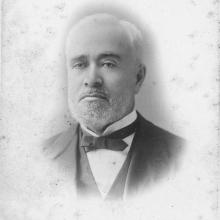
Dexter was an accomplished 19th-century writer, newspaper publisher, and politician. He was known as the husband of women’s rights advocate Amelia Jenks Bloomer.
Background
Dexter was born on July 4, 1816, in Aurora, New York, United States, into a Quaker family. In 1828, when Dexter was 12, the family moved to a farm between Seneca Falls and Waterloo, New York, United States. Three years later his mother died, and for the next few years Dexter spent much of his time with her relatives, wealthy farmers who lived near Waterloo.
Education
As a child Dexter Bloomer gained only a sporadic education.
Career
At 18, Bloomer began to teach school, but after two years, he journeyed west. After a fruitless search for work in Detroit, he returned to New York, settling in Seneca Falls, where he began to study law. Although Bloomer periodically practiced law during his long life, he was best known as a journalist and politician.
Bloomer's publishing career began in 1839, when he and a friend purchased the Seneca County Courier. For the next 15 years, Bloomer edited the biweekly paper, becoming well known in the New York Finger Lakes region for his Whig political views and progressive social ideas. He served as town clerk and clerk for the superintendent of the Erie Canal.
In 1837 Dexter met a young governess and soon set his sights on marrying the independent Amelia Jenks, who had adopted a temperance stance. Amelia was reluctant to marry the newspaperman, whose manners seemed uncouth and who drank alcohol, albeit in moderation. But Dexter persisted, and the couple married on April 15, 1840. Sometime in the winter of 1841–1842, Dexter adopted a temperance attitude, and from that time on he strongly supported his wife’s efforts to rid society of “the curse of intemperance.”
In 1849 Bloomer was appointed Seneca Falls postmaster, a post he held until the couple moved to Ohio, in 1853. He chose Amelia as his deputy, and she ran the office’s daily operations. Bloomer’s paper, the Courier, also published Amelia’s opinion articles. In 1853, after traveling with Amelia on her speaking tour of the Midwest, Dexter sold his interest in the Courier, and the couple moved to Mount Vernon, Ohio. Dexter promptly bought part interest in another newspaper, the Western Home Visitor, which provided him a new outlet for his Whig sentiments. The paper also offered its new assistant editor, Amelia Bloomer, a forum for her advocacy of women’s rights.
Amelia published her own newspaper, the Lily, but when she and Dexter hired a woman typesetter, the male printers working on the Western Home Visitor refused to help her, insisting that “they would not work in an office with or give instruction to a woman.” The men then staged a strike. But Dexter and his male publishing partner refused to back down and hired women to typeset both papers. The April 15, 1854, edition of the Lily was printed 10 days late, but it was printed.
By midyear, the Bloomers had decided to move again this time to Council Bluffs, Iowa. There Dexter and Amelia were smitten by “landrush fever” and speculated heavily. They also encouraged others to move to western Iowa, particularly women, because state law allowed women to own and manage their own property. But the Panic of 1857 burst the real estate bubble, and when the Bloomers’ bank failed, the couple lost all their money. They spent many years trying to recover from their financial losses.
Once settled in present-day Council Bluffs, Dexter wasted no time getting involved in the young town’s social, educational, religious, and political networks. He served as mayor of Council Bluffs, president of the town’s first school board, member of the State Board of Education, receiver of the U.S. Land Office, president of the County Bar Association, and senior warden of the vestry of St. Paul’s Episcopal Church for 40 years. He became a prominent Iowa historian, contributing numerous articles to the State Historical Society of Iowa’s quarterly publication, the Annals of Iowa, including a “History of Pottawattamie County,” which historian Joseph Wall later described as “spun out with Scheherazade longevity over fourteen issues”.
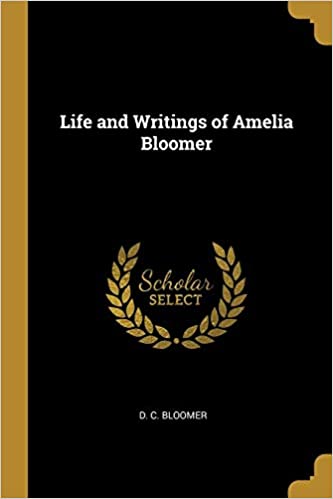
Shortly after Amelia’s death on December 30, 1894, Dexter published The Life and Writings of Amelia Bloomer. Dexter Bloomer died on February 24, 1900, in Council Bluffs, Iowa, United States.
(This work has been selected by scholars as being cultural...)
1895
Connections
On April 15, 1840 Dexter married Amelia Jenks.
Spouse:
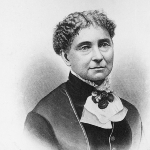
Amelia Jenks Bloomer
Amelia was an American women's rights and temperance advocate.
References
The Biographical Dictionary of Iowa
Iowa has been blessed with citizens of strong character who have made invaluable contributions to the state and to the nation. In the 1930s alone, such towering figures as John L. Lewis, Henry A. Wallace, and Herbert Hoover hugely influenced the nation’s affairs.