Background
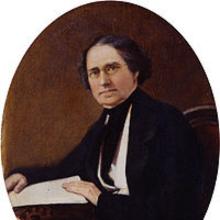
Dionysius Lardner was born at Dublin on the 3rd of April, 1793. His father, a solicitor, wished his son to follow the same calling.

http://www.amazon.com/gp/product/5879904660/?tag=2022091-20
http://www.amazon.com/gp/product/B002A6R1X6/?tag=2022091-20
http://www.amazon.com/gp/product/0332807800/?tag=2022091-20
http://www.amazon.com/gp/product/1290715475/?tag=2022091-20
Dionysius Lardner was born at Dublin on the 3rd of April, 1793. His father, a solicitor, wished his son to follow the same calling.
After some years of uncongenial desk work, Lardner entered Trinity College, Dublin, and graduated with a Bachelor of Arts degree in 1817.
In 1828 Dionysius Lardner became professor of natural philosophy and astronomy at University College, London, a position he held till 1840, when he eloped with a married lady, and had to leave the country.
As a scientific populariser and editor, Dionysius Lardner's greatest achievement was probably the Cabinet Cyclopaedia, 133 vols (1829-49), which included numerous distinguished contributors. Only Railway Economy from amongst his many writings is a contribution to economics. In this work he examined various economic questions both mathematically and graphically in a way which Jevons acknowledged as an influence on his own thinking. This included hints of a profit-maximising theory of the firm and an account of monopoly price discrimination.
Though lacking in originality or brilliancy, Lardner showed himself to be a successful popularizer of science. He was the author of numerous mathematical and physical treatises on such subjects as algebraic geometry (1823), the differential and integral calculus (1825), the steam engind (1828), besides hand-books on various departments of natural philosophy (1854 - 1856); but it is as the editor of Lardner's Cabinet Cyclopaedia (1830 - 1844) that he is best remembered. To this scientific library of 134 volumes many of the ablest savants of the day contributed, Lardner himself being the author of the treatises on arithmetic, geometry, heat, hydrostatics and pneumatics, mechanics (in conjunction with Henry Kater) and'electricity (in conjunction with С. V. Walker). The Cabinet Library (12 vols. , 1830 - 1832) and the Museum of Science and Art (12 vols. , 1854 - 1856) are his other chief undertakings. A few original papers appear in the Royal Irish Academy's Transactions (1824), in the Royal Society's Proceedings (1831 - 1836) and in the Astronomical Society's Monthly Notices (1852 - 1853); and two Reports to the British Association on railway constants (1838, 1841) are from his pen.
In 1840 Lardner eloped with a married lady, and had to leave the country.