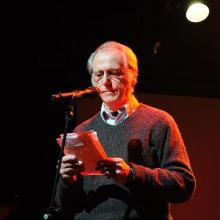
Don DeLillo is an American novelist, essayist, playwright, and screenwriter whose fiction examines media, technology, terrorism, consumer culture, memory, and political power. His major works include White Noise, Libra, Mao II, Underworld, Falling Man, Zero K, and The Silence.
Background
Don DeLillo was born in the Bronx, New York, on November 20, 1936, and grew up there. He attended Cardinal Hayes High School and developed an early interest in literature and cinema. His parents were immigrants who came to the United States as young people, and DeLillo later described their experience as an important part of his family history. He began writing fiction while working in advertising and gradually turned from commercial copywriting to literary writing.
Education
DeLillo graduated from Cardinal Hayes High School in the Bronx in 1954. He then attended Fordham University, where he studied communication arts and received a bachelor's degree in 1958. His university training in communication arts preceded a career that moved from advertising copywriting into fiction, essays, drama, and screenwriting.
Career
After graduating from Fordham University in 1958, DeLillo worked for approximately five years as a copywriter at Ogilvy & Mather in New York. He wrote advertising copy while developing his own fiction, and his first published novel, Americana, appeared in 1971. He subsequently built a wide-ranging literary career as the author of novels, short fiction, essays, plays, and screenplays. His novels include End Zone, Great Jones Street, Ratner's Star, Players, Running Dog, The Names, White Noise, Libra, Mao II, Underworld, The Body Artist, Cosmopolis, Falling Man, Point Omega, Zero K, and The Silence. His fiction frequently connects private experience with mass media, technology, political violence, finance, historical memory, and the pressures of contemporary American culture. He has also written the story collection The Angel Esmeralda: Nine Stories, the plays The Engineer of Moonlight, The Day Room, Valparaiso, Love-Lies-Bleeding, and The Word for Snow, and the screenplay Game 6.
Views
DeLillo's fiction and essays repeatedly explore the relationship between language, technology, media, mass culture, political power, violence, and individual consciousness. His work treats literature as a way of examining how public events and systems shape private experience.