

Background
Davie, Donald Alfred was born on July 17, 1922 in Barnsley, England. Son of George Clarke and Alice (Sugden) Davie.
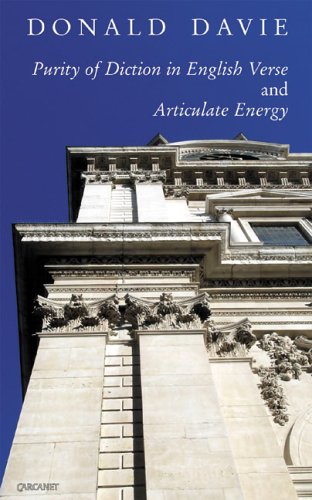
( Two literary criticism pieces that have shaped approach...)
Two literary criticism pieces that have shaped approaches to teaching poetry since the 1950s are now available in one volume with a new foreword. Providing a brilliantly detailed analysis of the workings of English poetry, this collection focuses on the technical workings of poetic language, examining devices such as meter and diction. These explorations use examples from poets including Wordsworth, Coleridge, Eliot, and Yeats.
http://www.amazon.com/gp/product/1857548892/?tag=2022091-20
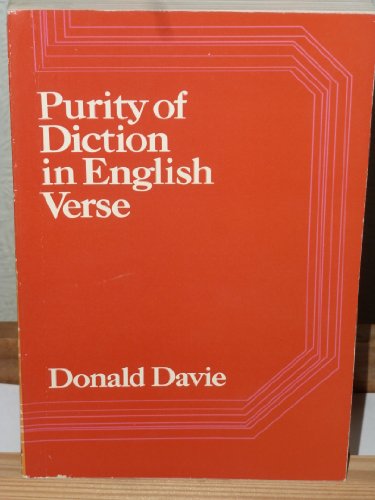
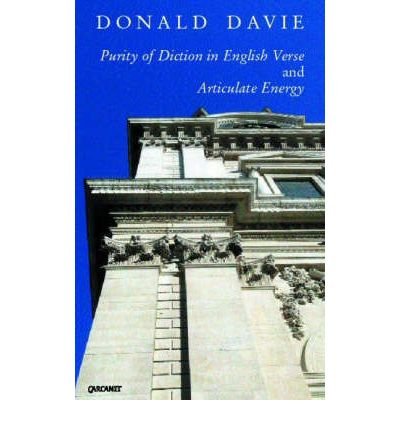
(This combined volume includes Davie's two most influentia...)
This combined volume includes Davie's two most influential critical works, both published in the 1950s. "Purity of Diction" is an examination of diction at work in English verse while "Articulate Energy" is a study of the operations of syntax in English verse.
http://www.amazon.com/gp/product/0710066783/?tag=2022091-20
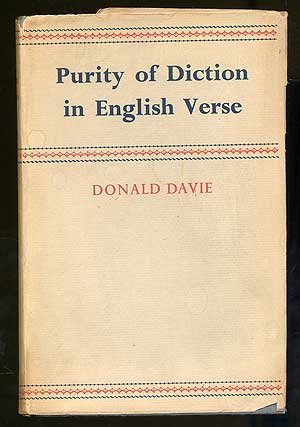
(This combined volume includes Davie's two most influentia...)
This combined volume includes Davie's two most influential critical works, both published in the 1950s. "Purity of Diction" is an examination of diction at work in English verse while "Articulate Energy" is a study of the operations of syntax in English verse.
http://www.amazon.com/gp/product/B0007DWQR0/?tag=2022091-20
http://www.amazon.com/gp/product/B01182VYJ4/?tag=2022091-20
(This combined volume includes Davie's two most influentia...)
This combined volume includes Davie's two most influential critical works, both published in the 1950s. "Purity of Diction" is an examination of diction at work in English verse while "Articulate Energy" is a study of the operations of syntax in English verse.
http://www.amazon.com/gp/product/0710012616/?tag=2022091-20
http://www.amazon.com/gp/product/B00Y2RP5VG/?tag=2022091-20

http://www.amazon.com/gp/product/B00IPNDO84/?tag=2022091-20
http://www.amazon.com/gp/product/B007T3LVKY/?tag=2022091-20

http://www.amazon.com/gp/product/B0007DN7H8/?tag=2022091-20
( Two literary criticism pieces that have shaped approach...)
Two literary criticism pieces that have shaped approaches to teaching poetry since the 1950s are now available in one volume with a new foreword. Providing a brilliantly detailed analysis of the workings of English poetry, this collection focuses on the technical workings of poetic language, examining devices such as meter and diction. These explorations use examples from poets including Wordsworth, Coleridge, Eliot, and Yeats.
http://www.amazon.com/gp/product/1857548892/?tag=2022091-20
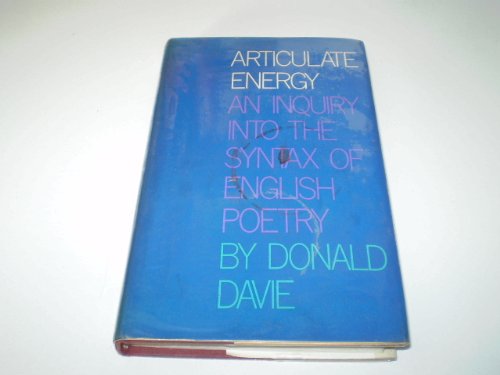
(Seminal work of criticism.)
Seminal work of criticism.
http://www.amazon.com/gp/product/0710081553/?tag=2022091-20
http://www.amazon.com/gp/product/B01182VYJ4/?tag=2022091-20
http://www.amazon.com/gp/product/B00Y2RP5VG/?tag=2022091-20
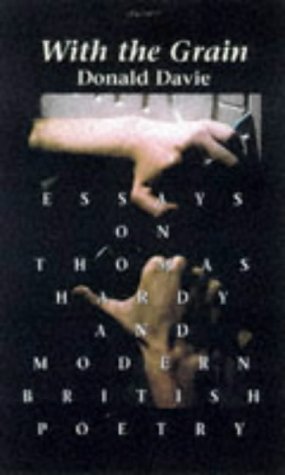
(First published in 1973 as "Thomas Hardy and British Poet...)
First published in 1973 as "Thomas Hardy and British Poetry", this book then represented a challenge to critical orthodoxy. It modified the image of Hardy the nostalgic countryman with that of Hardy the Victorian engineer of language. It also suggested that, far from being a minor poet, Hardy had been a major influence on British poetry in the period since high Modernism. Exploring the wide range of poets who may have learnt from Hardy, Davie associates its influence with a curtailing of ambitions which he states has afflicted modern poetry in Britain. This poetic "loss of nerve" leads Davie to the political malaise of England, its tensions and illusions. This edition contains Davie's study of Hardy, together with his later essays, and also works on modern British poetry and the condition of modern Britain.
http://www.amazon.com/gp/product/1857543947/?tag=2022091-20
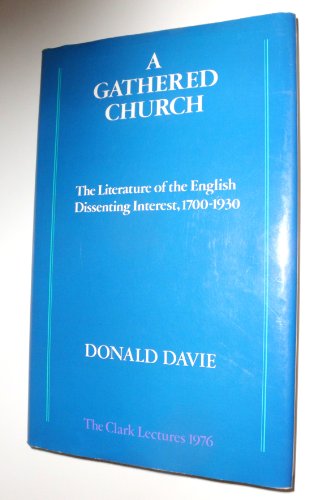
( First published in 1978, this study considers the impac...)
First published in 1978, this study considers the impact of dissenting voices upon literature, religion and politics in order to reassess the nonconformist contribution to English culture from the eighteenth century through to the twentieth. This historical survey takes into the account the contribution of a wealth of seminal literary figures such as the poets Isaac Watts, Charles Wesley and William Blake; and the novelists Elizabeth Gaskell, George Elliot, Mark Rutherford and D. H. Lawrence. However, far from consigning his study merely to literature, Davie also includes important orators like Robert Hall; scientists like Michael Farraday and Philip Gosse; political activists like Joseph Priestly, and soldiers like Orde Wingate. Unitarians, Sandemanians, Wesleyan Methodists and the Plymouth Brethren are considered, as well as the older denominations.
http://www.amazon.com/gp/product/0195199995/?tag=2022091-20

http://www.amazon.com/gp/product/B002DIWXOI/?tag=2022091-20
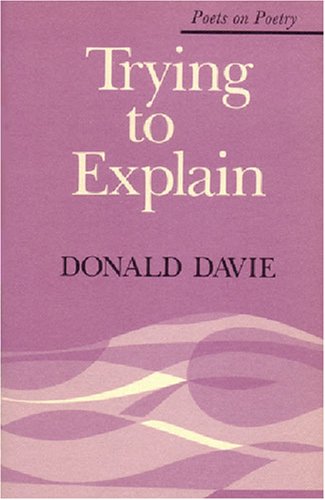
( An analysis of the major voices in the contemporary poe...)
An analysis of the major voices in the contemporary poetic traditions of England, Ireland, and America
http://www.amazon.com/gp/product/0472063103/?tag=2022091-20
(When a European poet becomes an expatriate living in Amer...)
When a European poet becomes an expatriate living in America, what adjustments and sacrifices should he make? What should he resist? By the same token, how should English-speakers modify their expectations when they read his work? Donald Davie considers such questions and others in this first book on the 1980 Polish Nobel laureate who has been living in the United States for twenty-five years. According to Davie, Milosz holds to a conviction that the responsible poet today, whether under totalitarianism or in the free world, cannot afford to write only poetry that is lyrical, because to do so is to give up using language to change society. In this way he raises questions that have to do not only with himself as a Pole and with Polish literature specifically but with poetry generally, including its present status and its foreseeable future. His work, Davie argues, is more ambitious than American and British readers have yet realized and demands that they radically rethink many of their preconceptions.
http://www.amazon.com/gp/product/087049483X/?tag=2022091-20

http://www.amazon.com/gp/product/B011828604/?tag=2022091-20
http://www.amazon.com/gp/product/B00282FGY8/?tag=2022091-20
http://www.amazon.com/gp/product/B002DINI4C/?tag=2022091-20
http://www.amazon.com/gp/product/0900626224/?tag=2022091-20
http://www.amazon.com/gp/product/0195201752/?tag=2022091-20
( Here Davie, a writer attuned to both the changes of the...)
Here Davie, a writer attuned to both the changes of the modern world and a living literary tradition, turns to the lapsed poetic practice of translation and imitation of the Psalms of David. The result is a series of poems that speak powerfully of moral indignation and spiritual discovery within the complex of modernity. "Few modern poets have managed to achieve Donald Davie's sense of human worth."—Times Higher Educational Supplement
http://www.amazon.com/gp/product/0226137554/?tag=2022091-20
http://www.amazon.com/gp/product/B00Y2R5RNW/?tag=2022091-20
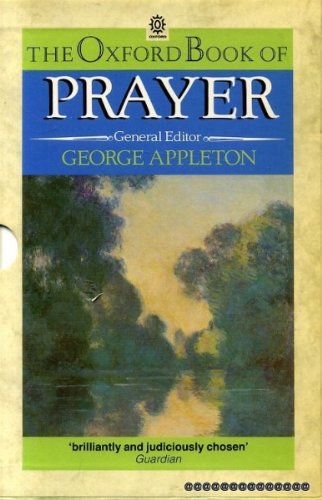
(The Oxford book of prayer and The new Oxford book of Chri...)
The Oxford book of prayer and The new Oxford book of Christian verse [Paperback] [Jan 01, 1988] APPLETON, George & DAVIE, Donald ... B0058SPIGK
http://www.amazon.com/gp/product/B0058SPIGK/?tag=2022091-20
http://www.amazon.com/gp/product/B0006EO024/?tag=2022091-20
http://www.amazon.com/gp/product/0710066317/?tag=2022091-20
http://www.amazon.com/gp/product/0856353639/?tag=2022091-20

http://www.amazon.com/gp/product/B002F6VTAM/?tag=2022091-20
( First published in 1978, this study considers the impac...)
First published in 1978, this study considers the impact of dissenting voices upon literature, religion and politics in order to reassess the nonconformist contribution to English culture from the eighteenth century through to the twentieth. This historical survey takes into the account the contribution of a wealth of seminal literary figures such as the poets Isaac Watts, Charles Wesley and William Blake; and the novelists Elizabeth Gaskell, George Elliot, Mark Rutherford and D. H. Lawrence. However, far from consigning his study merely to literature, Davie also includes important orators like Robert Hall; scientists like Michael Farraday and Philip Gosse; political activists like Joseph Priestly, and soldiers like Orde Wingate. Unitarians, Sandemanians, Wesleyan Methodists and the Plymouth Brethren are considered, as well as the older denominations.
http://www.amazon.com/gp/product/0415500338/?tag=2022091-20
Davie, Donald Alfred was born on July 17, 1922 in Barnsley, England. Son of George Clarke and Alice (Sugden) Davie.
Bachelor, St. Catharine's College, Cambridge, England, 1947. Master of Arts, St. Catharine's College, Cambridge, England, 1948. Doctor of Philosophy, St. Catharine's College, Cambridge, England, 1951.
D.Litt (honorary), University Southern California, 1978.
Lecturer Dublin University, Ireland, 1950-1957. Fellow Trinity College, Dublin, Ireland, 1954-1957. Visiting professor University California-Santa Barbara, 1957-1958.
Lecturer English University Cambridge, 1958-1964. Fellow Gonville and Caius College, 1959-1964. Professor literature University Essex, Colchester, England, 1965-1968, dean comparative studies England, 1964, pro-vice-chancellor England, 1965.
Visiting professor Grinnell College, 1965. Leo S. Bing professor English and American literature University Southern California, 1968-1969. Professor English Stanford University, 1969-1974, Olive H. Palmer professor humanities, 1974-1978.
Andrew W. Mellon professor humanities, professor English Vanderbilt University, Nashville, 1978-1988. Honorary fellow Trinity College, Dublin, 1978.
(When a European poet becomes an expatriate living in Amer...)
( First published in 1978, this study considers the impac...)
( First published in 1978, this study considers the impac...)
( Here Davie, a writer attuned to both the changes of the...)
( Two literary criticism pieces that have shaped approach...)
( Two literary criticism pieces that have shaped approach...)
(The Oxford book of prayer and The new Oxford book of Chri...)
(First published in 1973 as "Thomas Hardy and British Poet...)
(This combined volume includes Davie's two most influentia...)
(This combined volume includes Davie's two most influentia...)
(This combined volume includes Davie's two most influentia...)
(This combined volume includes Davie's two most influentia...)
(This combined volume includes Davie's two most influentia...)
( An analysis of the major voices in the contemporary poe...)
(Seminal work of criticism.)
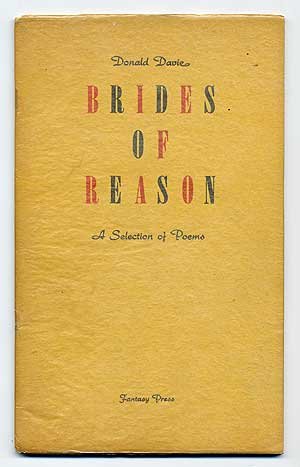
Author: Purity of Diction in English Verse, 1952, second edition, 1976. The Heyday of Sir Walter Scott, 1961. Articulate Energy, 1957.Ezra Pound. Poet as Sculptor, 1964. Thomas Hardy and British Poetry, 1972.Ezra Pound, 1976. A Gathered Church, 1978, The Poet in the Imaginary Museum, 1978. Trying to Explain, 1980.Dissentient Voice, 1982, Czeslaw Milosz and the Insufficiency of Lyric, 1986. These the Companions: Reflections, 1982. (poetry) Brides of Reason, 1955.A Winter Talent, 1957. The Forests of Lithuania, 1960. New and Selected Poems, 1961.Events and Wisdoms, 1965. Essex Poems, 1969. Six Epistles to Eva Hesse, 1970.Collected Poems, 1950-1970, 1972. The Shires, 1974. In the Stopping Train, 1977, Three for Water-Music, 1981.Collected Poems, 1971-1983, 1983, To Scorch or Freeze, 1989. (verse-translations) The Poems of Doctor Zhivago, 1965. Editor: The New Oxford Book of Christian Verse, 1982.
Served with Royal Navy, 1941-1946. Fellow American Academy Arts and Sciences, St. Catharine's College (honorary), London Library.
Married Doreen John, January 13, 1945. Children– Richard Mark, Diana Margaret, Patrick George.
