

Background
Čurčić was born into a prominent family of ethnic Bosniaks who relocated to Sarajevo from Livno in the late 17th century. His father Ragib Čurčić was a statesman in the Ottoman Empire.
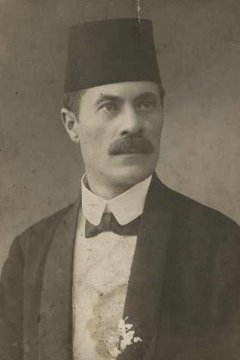
Čurčić was born into a prominent family of ethnic Bosniaks who relocated to Sarajevo from Livno in the late 17th century. His father Ragib Čurčić was a statesman in the Ottoman Empire.
He attended course for officers and became a spare officer
On 28 June 1914, Čurčić was present at the assassination of Archduke Franz Ferdinand of Austria, the event that sparked World War I. He died aged 30 in an Lower Austrian sanatorium. Čurčić was working as a political aspirant in administrative country service. Čurčić, who was repeatedly elected to Sarajevo"s City Council, will go down in history as the last mayor of Sarajevo during the Austro-Hungarian rule over Bosnia and Herzegovina.
Coincidentally, his father Ragib was the last mayor of Sarajevo in the 1870s during Ottoman rule.
Coincidentally the last Bosnian census during Austro-Hungarian rule was conducted in the 1910 election year. Sarajevo at that time had 51,919 inhabitants.
During his tenure, Čurčić opened the Chamber of Education in 1911. A year later the Kino Apolo (Apollo Cinema) was opened.
Also, the city"s main post office was constructed by Josip Vancaš, while the Museum of Sarajevo, as well as the Judicial Palace and the Faculty of Law building at the University of Sarajevo were constructed by Karel Pařík.
Čurčić held post until 1915 when the City representation was dismissed. On 28 June 1914, Mayor Čurčić delivered a keynote address at City Hall (which is today the National and University Library of Bosnia and Herzegovina), where he welcomed the Austrian Archduke Franz Ferdinand to Sarajevo with Governor Oskar Potiorek. The first attempt on the life of the archduke failed.
Čurčić rode in the first car with the Sarajevo Chief of Police Edmund Gerde and was unaware of what had transpired at the bridge.
The noise of the motorcade had drowned out the bomb.

