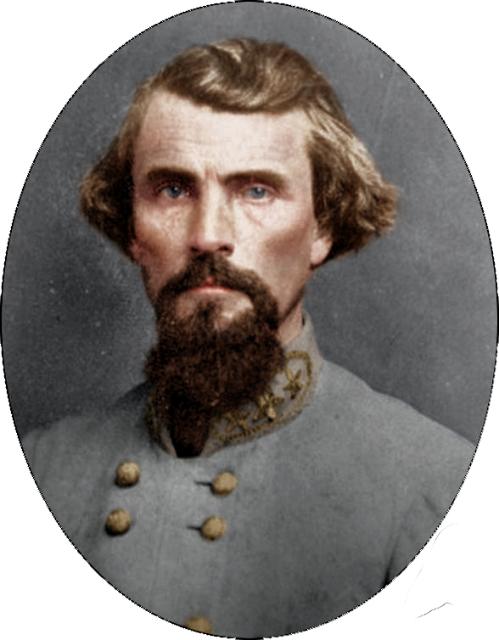
George Gibbs Dibrell was an American merchant, planter, politician, soldier, and industrialist. He served through the Civil War and was a member of the House of Representatives.
Background
George Gibbs Dibrell was born on April 12, 1822, in Sparta, White County, Tennessee, United States. He was descended from Dr. Christopher Du Brey, a French Huguenot, who settled with a colony of refugees on the James River, fifteen years after the revocation of the Edict of Nantes. His son Charles was a patriot soldier in the American Revolution, and the son of this Charles, whose name was Anthony, migrated from Virginia to Kentucky where he married Mildred Carter, who was also from Virginia.
In the meantime, the name Du Brey had been changed to DeBrill and finally to Dibrell. In 1811 Anthony moved his family to White County, Tennessee, and settled in the little town of Sparta, where he became successful as a merchant and presently rose to be a man of some political importance.
Education
George helped his father on the farm and attended the local school. When he was fifteen years old he drove a herd of cattle to market in Virginia, a difficult and responsible job for a lad of his age. During the next year he went for one term to the East Tennessee College (present-day University of Tennessee) at Knoxville. The following year his father was a candidate for Congress and George managed the farm during his absence. The elder Dibrell about this time lost much of his property by indorsing notes for friends, and it became necessary for his son to shift for himself.
Geroge Dibrell's career began in 1840 when, at the age of eighteen, he was elected clerk of the branch of the Bank of Tennessee which had been established at Sparta. He served in this capacity until 1846 and later acted for some years as a clerk of the court of White County.
Four years later, he severed his connection with the Bank of Tennessee and went into business as a merchant. His first venture proved decidedly profitable, and from this time until the outbreak of the Civil War he continued in business on his own account.
Accordingly upon the outbreak of hostilities, he volunteered as a private in the Confederate service, and on August 10, 1861, he was elected lieutenant-colonel of his regiment. He served in Tennessee and Kentucky under General Zollicoffer, but when the army was reorganized at Corinth he was not reelected as lieutenant-colonel.
He thereupon repaired to Richmond to obtain authority to raise a body of cavalry.
Returning to his home at Sparta, he organized the White County "Partisan Rangers," the 8th Tennessee Cavalry Regiment, behind the Federal lines, as a body of independent partisan rangers; but he joined General Forrest at Murfreesboro and his troops were mustered into the service as regular cavalry, with Dibrell as colonel of the regiment. After this time he saw much service under Forrest.
On the death of Colonel Starnes, he was given command of Forrest's "Old Brigade" and continued in command of that organization until the end of the war, being raised to the rank of Brigadier General in July 1864. After having taken part in the battle of Chickamauga, this brigade was detached from Forrest's command and ordered to join Joseph E. Johnston at Dalton, Georgia. It took part in the retreat to Atlanta, and later in the retreat through South and North Carolina. On reaching Raleigh, it was ordered to join Jefferson Davis at Greensboro, from which point it accompanied him to Washington, Georgia, where the military force was disbanded. Dibrell's Tennessee regiment marched home in a body. Debts and desolation awaited them, but Dibrell himself soon restored his fortunes.
In 1865 he again embarked in the mercantile business. His friends aided him, and he prospered as before the war. In 1870 he took part in the convention which drew up the new constitution of the state, and in 1875 he was elected to Congress. For ten years he served diligently in the House of Representatives and retired voluntarily in 1885.
In the meantime, he had ceased to be a merchant and had become a financier. In 1866 the legislature revived the charter of the Southwestern Railroad, which was to connect Sparta with the Nashville-Chattanooga road at Tullahoma. He was immediately made a director of this company, and in 1869 he became its president. The road was completed under his direction and a branch was built to the Bon Air coal mines, where fifteen thousand acres of his land had served as the nucleus around which he had organized Bon Air Coal & Coke Company, a successful mining company.
His last years were spent in the quiet of his Sparta home.
Achievements
George Gibbs Dibrell distinguished himself as a White County's Democratic representative to the Thirty-fourth General Assembly but left after the opening session to join the Twenty-fifth Tennessee Infantry. He organized the White County "Partisan Rangers," which eventually joined Nathan Bedford Forrest's brigade. Dibrell obtained the rank of brigadier general for his military actions.
Dibrell was also a successful industrial entrepreneur. Owner of over fifteen thousand acres in White County, he established the Bon Air Coal & Coke Company, which became one of the county's leading industries and largest employers. He was also a key figure in the development of the Southwestern Railroad, which connected Sparta with the Nashville and Chattanooga line.
Religion
George was a member of the Southern Methodist Church.
Politics
Dibrell followed his father in his loyalty to the Whig party and followed his party in its opposition to secession. He let it be known, however, that, in case of a conflict, his sympathies were with the South.
In the waning days of the war, he joined the fugitive Jefferson Davis, who entrusted to his care the Confederate archives. George became a member of the Democrat Party.
Views
Dibrell opposed railroad regulation and favored the interests of businessmen.
Connections
In 1842, at the age of twenty, Dibrell married Mary Elizabeth Leftwich, whose father also was a merchant of Sparta and a native of Virginia. The couple had eight children, one of whom went on to become a state senator.