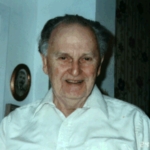
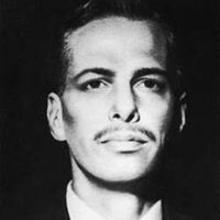
Hannes Bok was an American artist and illustrator, as well as an amateur astrologer and writer of fantasy fiction and poetry.
Background
Hannes Bok (original name: Wayne Francis Woodard; adopted name: Hannes Vajn Bok) was born on July 2, 1914 in Kansas City, Missouri, United States. His parents divorced when he was five; and his father and stepmother, strict disciplinarians, discouraged his artistic efforts.
Education
Hannes attended high school in Duluth, Minnesota, United States. Once he graduated high school, Bok cut off contact with his father and moved to Seattle to live with his mother.
Career
In 1938 Hannes relocated to Seattle - where he worked for the W.P.A. and became acquainted with artists like Mark Tobey and Morris Graves. Late in 1939 Bok moved to New York City in order to be closer to the editors and magazines which would publish his work, and where he became a member of the influential Futurians science fiction fans. Hannes Bok broke into commercial art and achieved initial career success as a Weird Tales artist. Farnsworth Wright, editor of Weird Tales, accepted Bok's art, which debuted in the December 1939 issue of Weird Tales. More than 50 issues of the magazine featured Bok's pen-and-ink work until March 1954. Bok also executed six color covers for Weird Tales between March 1940 and March 1942. Weird Tales also published five of Bok's stories and two of his poems between 1942 and 1951. Once he broke through into professional publications, Bok moved to New York City and lived there the rest of his life. As an author, Bok is best known for his novels The Sorcerer's Ship, originally published in the December 1942 issue of John W. Campell's fantasy magazine Unknown; and The Blue Flamingo/Beyond the Golden Stair. The Blue Flamingo first appeared in the January 1948 issue of Startling Stories. Bok later performed an extensive revision and expansion of this work, published posthumously as Beyond the Golden Stair (1970). Both novels have been re-issued in the Ballantine Adult Fantasy series. Bok also was allowed to complete two novellas left unfinished by A. Merritt at the time of his death in 1943. These were published as The Blue Pagoda (1946) and The Black Wheel (1947).
Achievements
Hannes painted nearly 150 covers for various science fiction, fantasy, and detective fiction magazines, as well as contributing hundreds of black and white interior illustrations. Bok's work graced the pages of calendars and early fanzines, as well as dust jackets from specialty book publishers like Arkham House, Llewellyn, Shasta Publishers, and Fantasy Press. His paintings achieved a luminous quality through the use of an arduous glazing process, which was learned from his mentor, Maxfield Parrish. Bok shared one of the inaugural 1953 Hugo Awards for science fiction achievement (best Cover Artist).
He was a member of Science fiction fandom (SF fandom).
Personality
Bok was also homosexual, according to friends Forrest J Ackerman and Emil Petaja; the erotic fantasy elements of his artwork, especially his male nude subjects, display homoerotic overtones unusual for the time. As the years passed, Bok became prone to disagreements with editors over money and artistic issues; he grew reclusive and mystical, and preoccupied with the occult.
Quotes from others about the person
Petaja: "Perhaps when all is washed down over the dam, my major claim to fame will rest in the fact that it was I who got Hannes down to Los Angeles and I who dragged him, reluctantly, to the meetings of the Los Angeles Science Fiction Society. Where we met Ray Bradbury. . . . It was at Clifton's Cafeteria on Broadway. We couldn't afford to eat there, usually, but we took advantage of the free lime sherbet. In that fabled back room where so many of the s-f elite have sat around the long table chewing the fat, fanwize, Hannes first met Forrie Ackerman, Henry Kuttner, et al. But it was Ray Bradbury who took to Hannes instanter and proved to be such a rare and wonderful friend to him a little later on."
Petaja: "Besides introducing Hannes to Ray Bradbury, I take pride in the fact that this brief Los Angeles period of Bok's life was one of the most productive of his life. He produced a dozen color paintings based on Peer Gynt, as samples to show book publishers what he could do. He painted "The Mermaid" and several Enchanted City themes. He wrote scads of poetry. All of which does indicate that, for all his beefs, he was happy then. He might lash out cruelly about this or that, but nobody I have known had as great a capacity for enjoying and sensating all there was around him."
The science fiction and fantasy author Emil Petaja (1915–2000) was lifelong friend of Bok and collector of his work. After Bok's death, Petaja did as much as anyone to keep the artist's work before the public eye.
Bok and Petaja first met in the summer of 1936. According to Petaja, Bok and his friend Harold Taves were hitch-hiking from Seattle to New York City when they stopped off in Montana, USA, to see the aspiring writer. At first correspondents, Bok and Petaja soon became close friends. The two had much in common – including an interest in fantasy fiction, the Kalevala (the Finnish verse epic), and the music of Sibelius.
Petaja's first book, Brief Candle (1936), contained twelve poems by Petaja and twelve illustrations by Bok. Petaja printed this now rare chapbook by running-off copies on the mimeograph machines at Bozeman Campus, Montana State University, where he was a student in creative writing. According to Petaja, approximately 40 to 50 copies were printed with many "given to friends and well wishers."
Bok and Petaja's friendship continued in Los Angeles, where each had relocated in 1937. Throughout 1937 and 1938, Petaja and Bok shared an apartment, and together they attended fan meetings, haunted second-hand book and magazine shops, went to the movies, and helped each other with their poems and stories. They also immersed themselves in the primordial Los Angeles science fiction scene. Bok and Petaja befriended Ray Bradbury – then still a teenager – as well as Forrest J. Ackerman, and others.