Helena Rubinstein. Australia, 1902. (Photo by Mondadori)
Gallery of Helena Rubinstein
1905
Helena Rubinstein
Gallery of Helena Rubinstein
1930
Helena Rubinstein (Photo by Cecil Beaton)
Gallery of Helena Rubinstein
1930
Helena Rubinstein and son
Gallery of Helena Rubinstein
1932
Helena Rubinstein (Photo by Lusha Nelson)
Gallery of Helena Rubinstein
1933
New York City, NY, USA
Helena Rubinstein (Photo by Lusha Nelson)
Gallery of Helena Rubinstein
1934
Helena Rubinstein
Gallery of Helena Rubinstein
1935
Helena Rubinstein illustrating the shape of the basic lines on the face so that make-up can be applied to flatter individual contours. (Photo by Orlando)
Gallery of Helena Rubinstein
1935
Helena Rubinstein (Photo by Time Life Pictures)
Gallery of Helena Rubinstein
1935
Helena Rubinstein (Photo by Time Life Pictures)
Gallery of Helena Rubinstein
1937
Helena Rubinstein (Photo by Alfred Eisenstaedt)
Gallery of Helena Rubinstein
1940
Helena Rubinstein
Gallery of Helena Rubinstein
1941
Helena Rubinstein, seated at her dressing table. (Photo by Alfred Eisenstaedt)
Gallery of Helena Rubinstein
1941
New York City, NY, USA
Helena Rubinstein
Gallery of Helena Rubinstein
1941
New York City, NY, USA
Helena Rubinstein
Gallery of Helena Rubinstein
1954
Helena Rubinstein
Gallery of Helena Rubinstein
1954
Helena Rubinstein
Gallery of Helena Rubinstein
1955
Helena Rubenstein (R), talking with chemists in perfume blending lab. (Photo by Leonard McCombe)
Gallery of Helena Rubinstein
1956
New York City, NY, USA
Helena Rubinstein mixing formulas for her cosmetics line at Helena Rubinstein Incorporated cosmetics company. New York, NY, 1956. (Photo by Leonard McCombe)
Gallery of Helena Rubinstein
1956
New York City, NY, USA
Helena Rubinstein posing in front of paintings and artwork. New York, NY 1956. (Photo by Leonard McCombe)
Gallery of Helena Rubinstein
1958
Helena Rubinstein
Gallery of Helena Rubinstein
1964
New York City, NY, USA
Helena Rubinstein (1870 - 1965) tests a mixture in a laboratory, New York, 1964. (Photo by Steve Schapiro)
Gallery of Helena Rubinstein
1964
New York City, NY, USA
Helena Rubinstein (1870 - 1965) tests perfume in a laboratory, New York, 1964. (Photo by Steve Schapiro)
Gallery of Helena Rubinstein
1964
New York City, NY, USA
Helena Rubinstein (1870 - 1965) stirs a vat in a laboratory, New York, 1964. (Photo by Steve Schapiro)
Gallery of Helena Rubinstein
1964
New York City, New York, USA
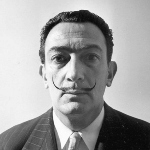
Helena Rubinstein (1872 - 1965) and Spanish artist Salvador Dali (1904 - 1989) as they attend an unspecified exhibition at the Huntington Hartford Gallery of Modern Art, New York, New York, 1964. (Photo by Steve Schapiro)
Helena Rubinstein illustrating the shape of the basic lines on the face so that make-up can be applied to flatter individual contours. (Photo by Orlando)
Helena Rubinstein mixing formulas for her cosmetics line at Helena Rubinstein Incorporated cosmetics company. New York, NY, 1956. (Photo by Leonard McCombe)
Helena Rubinstein (1872 - 1965) and Spanish artist Salvador Dali (1904 - 1989) as they attend an unspecified exhibition at the Huntington Hartford Gallery of Modern Art, New York, New York, 1964. (Photo by Steve Schapiro)
(This book is organized in two parts: Part One, My Life, i...)
This book is organized in two parts: Part One, My Life, is her candid and colorful memoir, and is illustrated with black and white photos; Part Two, For Beauty, is a practical treatise on every aspect of beauty care.
Helena Rubinstein was a Polish-American businesswoman and philanthropist. In 1902, she started her business career in Australia distributing a beauty cream that her mother had used. She soon founded a beauty salon and manufactured cosmetics, working hard to expand her business. Her business grew into a worldwide cosmetics empire, and she eventually created the Helena Rubinstein Foundation in 1953 to fund organizations for children's health.
Background
Ethnicity:
Helena Rubinstein was born to Polish-Jewish parents.
Helena Rubenstein was born on December 25, 1870, in Kraków, Austrian Poland. She was the oldest of eight girls and was raised in an upper-middle-class family. Her father, Naftoli Hertz Rubinstein, was a not very successful wholesale food broker. As the oldest daughter, Helena was often put in charge of her siblings. Since her father had no sons (two boys had died as babies), and since she was good with figures, she helped her father with bookkeeping.
Her mother, Augusta - Gitte (Gitel) Shaindel Rubinstein (née Silberfeld), had a tremendous impact on Helena and her seven sisters. She insisted her daughters would gain power and influence through beauty and love. She advised Helena, "If you want to be really clever, listen well and talk little."
Together, Rubenstein's parents shaped her career as the creator and financial genius of what was to become a multi-million dollar beauty empire.
Education
Rubinstein attended the public schools of Kraków. While Helena was attending academic high school in Kraków, her business instincts awoke. She made her first "good deal" when she went to a business meeting for her ill father. Her father decided that Helena should study medical science. At the age of eighteen, she entered the medical school of the University of Kraków.
She loved the laboratory work, which later proved helpful in her cosmetics business, but found the sickroom so distasteful. In the early years of the twentieth century, she studied with dermatologists in Vienna, Dresden, Berlin, Munich, and Paris. While she enjoyed the laboratory work, the sights and odors of the hospital sickened her. In 1888 she rejected medical school.
After her studies, Rubinstein precipitated a serious family crisis by refusing to marry the man her father had chosen for her. Hoping that a change of scenery would help her settle down, Rubenstein traveled to Coleraine, Australia, to live with relatives. Elegant and fastidious, she introduced the neighbors to a special facial creme, the product of Hungarian chemist Jacob Lykusky. She soon moved to Melbourne and established a small beauty salon to which Australian women came to offset the drying effects of sun and wind. She was swamped with orders for the cream and within a few years had amassed a small fortune from its sale.
She subsequently invented and sold a wide variety of other preparations, marketing at one time as many as 629 different items. Rubinstein always insisted that the key to her success was not just the products she sold but her emphasis on teaching women how to use them properly. Within two years Rubenstein's reputation was assured. She had repaid an original $1,500 loan and was lured by the thought of greater financial success. Returning to Europe, she settled in London and purchased Lord Salisbury's former residence on Grafton Street, a four-story house with 26 rooms. She redecorated it in lavish color schemes influenced by theater designers Leon Bakst and Alexandre Benois. Shortly after she opened the "Salon de Beaute Valaze."
Rubenstein launched her salon at a time when make-up was worn only on stage. But society women once entertained by Lord Salisbury were curious about the Grafton Street establishment. Gradually, Rubenstein found them willing to pay ten guineas (about $50) for 12 beauty treatments. Her special product was a facial creme based on Lykusky's product, but she had developed other items, including face powder and rouge. She planned for the time when conservative attitudes toward facial makeup relaxed and ladies considered it part of their daily toilette.
In London she became one of the first to make the use of makeup widely popular. Her husband played an important role in developing Helena Rubinstein's advertising campaigns, particularly the emphasis on scientific research. For years, no Helena Rubinstein advertisement appeared without a picture of Rubinstein in her white laboratory coat.
In 1909 Rubenstein opened a shop in the Rue St. Honore in Paris, France. In 1914 she threw herself into running the salon. Her ambition was rewarded, and soon society leaders and art and stage personalities crowded the appointment book. Rubenstein was an unqualified success. World War I caused an abrupt, unanticipated change in the business. Due to her husband's nationality, the family moved to the United States in January 1915. There Rubenstein discovered a new market. Most American women were just as reluctant to adopt facial make-up as their European counterparts had been. This untapped clientele represented a potential gold mine. Greenwich, Connecticut, became home for her family. Here Rubenstein planned new products based on the beauty needs of American women.
She began to build in New York what was to become a worldwide corporation, opening salons across the country, each staffed by women trained to demonstrate and sell the growing line of beauty products. In the 1920s the business expanded to include salons in Milan, Vienna, Toronto, and Rome. In 1928 Edward Titus' request for a divorce led Rubinstein to sell a two-thirds interest in her firm for $7.3 million in a dramatic effort to rescue her personal life. The purchasers, Lehman Brothers, a Wall Street banking firm, faced serious difficulty when they tried to convert the company to the production of low-priced cosmetics. As complaints increased, Rubinstein tried to repurchase the business, but her offers were rebuffed until after the stock market crash of 1929 when she was able to buy back controlling interest in the firm for $1.5 million.
During the 1930s the business continued to expand, with increasingly fierce competition between Rubinstein and her arch-rival, Elizabeth Arden. In the 1940's she established New York's first salon for men. World War II forced the closing of most Helena Rubinstein salons in Europe, but new ones opened in Rio de Janeiro (1940) and Buenos Aires (1942). Rubinstein contributed to the war effort by donating her services as a makeup artist in Hollywood and creating cosmetics for disfigured servicemen.
When the war ended, she went immediately to Europe to begin rebuilding her business. In the 1950s Rubinstein opened salons in Japan, and in 1959 she worked personally in her firm's booth at the American Trade Fair in Moscow. In the same year, she concluded an agreement with Israel allowing her to build a cosmetics factory in that country. In return, she contributed $250, 000 for the construction of the Helena Rubinstein Pavilion of Contemporary Art in Tel Aviv.
Rubinstein was also widely known as a collector of art, jewelry, and antiques. At her death, her collections of art and jewelry were each valued at more than $1 million. Her jewelry ranged from priceless gems to costume items purchased at dime stores. Her art collection began with African sculpture, then went on to encompass works by many of the masters of the twentieth century, including Renoir, Picasso, and Degas. These, together with her designer clothing and antiques, were auctioned off after her death. In addition to other wealth, Rubinstein owned as many as seven homes and at the time of her death, in New York City, maintained residences in New York, Paris, London, and Greenwich, Connecticut.
Helena Rubinstein's name was synonymous with women's beauty products worldwide, during the early twentieth century. Starting out with only a few pots of face cream, a little formal education, and high ambitions she built one of the world's first businesses which mass-produced cosmetics. With a personal fortune estimated at $100 million, Rubinstein was prominent in international society and maintained homes in cities around the world.
A patron of the arts, she established the Helena Rubinstein Foundation in 1953 to help fund research and education and to support the America-Israel Foundation. While she did not support Jewish causes, in particular, she did donate five hundred thousand dollars to create the Helena Rubinstein Pavilion at the Tel Aviv Museum.
Rubinstein was not a practicing Jew, but nevertheless faced obstacles throughout her life because of her Jewishness.
Views
In 1953, Rubinstein established the Helena Rubinstein Foundation. Upon its creation, she said, "My fortune comes from women and should benefit them and their children to better their quality of life." Rubinstein’s foundation also established scholarships for young women to pursue their education, which continued until the foundation closed in 2011.
While she did not support Jewish causes in particular, she did donate five hundred thousand dollars to create the Helena Rubinstein Pavilion at the Tel Aviv Museum. Her entire collection of miniature rooms is on display there.
Quotations:
"There are no ugly women, only lazy ones."
"I have never had my face lifted. I prefer to have my spirits lifted. In my opinion, the effect is very nearly the same."
"Listen! Say less rather than more. If you want to be smart, play stupid!"
"I fell in love with beauty a long, long time ago, but what I wanted was to create beauty - not to be blinded by it."
"Men are just as vain as women, and sometimes even more so."
"I can't help from making money, that is all."
Personality
Helena Rubinstein was an avid art collector. The variety of artworks on display in the exhibition ranges from sketches by Pablo Picasso to paintings by Max Ernst, as well as Rubinstein’s vast collection of African and Oceanic art, all of which were displayed in her salons throughout the world. When she began her collection, the traditional sculptures of Africa and Oceania weren’t considered fine art, but rather anthropological artifacts. She sought to raise them to a higher appreciation. While being interviewed in 1964, she simply said of her taste, "I like different kinds of beautiful things and I’m not afraid to use them in unconventional ways."
Interests
Artists
Pablo Picasso, Max Ernst, Degas, Braque, Fernand Léger, Matisse, Van Dongen, Dali
Connections
In 1908 Rubinstein married an American journalist Edward J. Titus. In 1909 she was expecting a child. She and Edward moved out of the Grafton Street apartment where they lived above the salon and purchased a separate residence. Her son Roy was born in late 1909 and another son, Horace, in 1912. In 1914 they all moved to Paris. In 1938 the couple divorced, and later that same year Rubenstein married a Georgian Prince Artchil Gourielli-Tchkonia. He died in 1955.
Father:
Naftoli Hertz Rubinstein
Mother:
Augusta - Gitte (Gitel) Shaindel Rubinstein (Silberfeld)
Augusta - Gitte (Gitel) Shaindel Rubinstein (Silberfeld), had a tremendous impact on Helena and her seven sisters (Pauline, Rosa, Regina, Stella, Ceska, Manka, and Erna). Their mother insisted her daughters would gain power and influence through beauty and love.
Roy was a chairman of the Helena Rubinstein Foundation, served on the boards of the Children's Blood Foundation and the Board of Governors of the Tel Aviv Museum, and was a trustee of the Oil, Chemical & Atomic Workers Union-Industry Pension Fund.