(Set in Latin America (but filmed in the south of France),...)
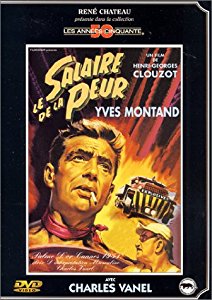
Set in Latin America (but filmed in the south of France), Clouzot’s tensest film follows the journey of four desperate men who are hired to transport highly volatile tanks of nitroglycerine through the mountains to a blazing fire at an oil refinery. This simple conceit is turned into a complex study of masculinity under extreme pressure, with each small moment of their adventure wrung for maximum, nerve-wracking suspense.
(Another unseen menace haunts Clouzot’s second feature, as...)
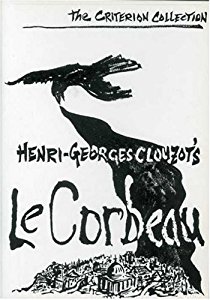
Another unseen menace haunts Clouzot’s second feature, as a small French town is plagued by an anonymous poison-pen writer known only as ‘Le Corbeau’ (‘The Raven’). Tracing the many false trails and the emotional fallout of the letters’ accusations, Clouzot’s film irked many for its negative portrayal of French social mores, and it was allegedly screened in Nazi Germany as evidence of France’s moral degradation.
(When the ban on his filmmaking was lifted, Clouzot return...)
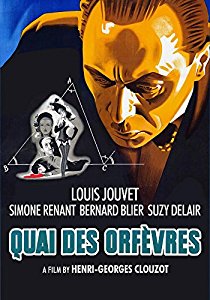
When the ban on his filmmaking was lifted, Clouzot returned with this early police procedural following the investigation into the murder of a lecherous businessman. Renamed Jenny Lamour in America, Quai des Orfèvres mixed a bleak crime story with witty comedy, perhaps to temper the visceral social critiques that had got Clouzot into so much trouble with the authorities.
(This one’s Clouzot’s masterpiece, plunging into darker an...)
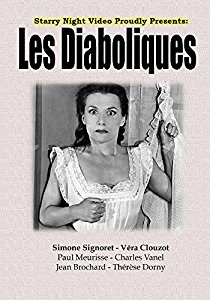
This one’s Clouzot’s masterpiece, plunging into darker and darker territory as the wife (Véra Clouzot) and mistress (Simone Signoret) of a schoolteacher (Paul Meurisse) team up to do away with him. Moving close to the realm of horror after the body mysteriously goes missing, Les Diaboliques had to be issued with an on-screen anti-spoiler message asking audiences not to give away the twist.
(One of Clouzot’s most underrated films, Les Espions is a ...)
One of Clouzot’s most underrated films, Les Espions is a spy movie about the unknowability of intelligence. As a psychiatrist shelters a refugee from both eastern and western spies, the tension comes from the ambiguity as to who is on whose side, rendering virtually every character untrustworthy and potentially treacherous. Unsettling and suspenseful, it’s a film that rewards rediscovery.
Henri-Georges Clouzot was a French film director, screenwriter and producer. He is best remembered for his work in the thriller film genre, having directed The Wages of Fear and Les Diaboliques, which are critically recognized as among the greatest films from the 1950s.
Background
Henri-Georges Clouzot was born on 20 November 1907 in Niort, Pays de la Loire, France to mother Suzanne Clouzot and father Georges Clouzout, a book store owner. He was the first of three children in a middle-class family. Clouzot showed talent by writing plays and playing piano recitals.
Education
In 1922, Clouzot's father's bookstore went bankrupt and his family moved to Brest, where his father became an auctioneer. In Brest, Henri-Georges Clouzot went to Naval School, but was unable to become a Naval Cadet due to his myopia. At the age of 18, Clouzot left for Paris to study political science.
Career
Clouzot's writing talents led him to theater and cinema as a playwright, lyricist and adaptor-screenwriter. The quality of his work led producer Adolphe Osso to hire him and send him to Germany to work in Studio Babelsberg in Berlin, translating scripts for foreign language and directing French versions of German films. In 1934, Clouzot was fired from UFA Studios for his friendship with Jewish film producers.
In October 1940 the German-operated film production company Continental Films was established and Clouzot was offered work to adapt stories of writer Stanislas-André Steeman. Clouzot felt uncomfortable working for the Germans, but was in desperate need of money and could not refuse the offer. Clouzot's first film for Continental was Six Dead Men. He was a scriptwriter for some ten years.
Then Clouzot was hired as the head of Continental's screenwriting division. Clouzot began work on his second Steeman adaptation, which he would also direct, titled The Murderer Lives at Number 21. In 1943, two days before the release of his movie Le Corbeau, Continental films fired Clouzot.
After the liberation of France, Clouzot was tried in court for collaborating with the Germans.For his sentence, Clouzot was forbidden from going on set of any film or from using a film camera for 2 years.
After Clouzot's ban was lifted, he reestablished his reputation and popularity during the late 1940s with films such as Quai des Orfèvres and Manon. In order to gain independence, Clouzot created his own production company called Véra Films, which he named after his wife.
Between 1965 and 1967, Clouzot filmed for French television five documentaries of Herbert von Karajan.
In the 1970s, he wrote a few more scripts without ever filming them. Clouzot's health grew worse and he required open-heart surgery in November 1976. On 12 January 1977 Clouzot died in his apartment. Clouzot is buried beside Véra in the Montmartre Cemetery.
Achievements
For his movies Clouzot was awarded several prizes such as awards for Best Film and Best Actor at the Cannes Film Festival, the Louis Delluc Prize and the New York Film Critics Circle Award for best foreign film.
Released in 1960, La Vérité was the second most popular film in France and was nominated for the Academy Award for Best Foreign Language Film.
(One of Clouzot’s most underrated films, Les Espions is a ...)
1957
Religion
In the 1960s Clouzot converted to Roman Catholicism.
Personality
Clouzot had a consistent vision that is more jaundiced than any other in the French cinema. He was considered to have his own world disintegrating through mistrust, alienation, and a willful selfishness that is like an illness.
Connections
Clouzot met his first wife Vera Clouzot while working as a continuity assistant on Clouzot's Miquette et Sa Mère. Clouzot named his production company after Véra and had her star in all three films made by the company: The Wages of Fear, Diabolique and Les Espions. Véra also contributed to the script of La Vérité. Véra Clouzot died of a heart attack shortly after the filming of La Vérité. Clouzot fell into a depression over her death.
Clouzot met his second wife, Inès de Gonzalez, for the first time at a casting call for a film based on Vladimir Nabokov's Laughter in the Dark. In 1962, Clouzot met de Gonzalez again after she had returned from South America. In December 1963, Clouzot and Inès de Gonzalez married.
Clouzot's movie The Wages of Fear was the second most popular film in France in 1953 and won awards for Best Film and Best Actor at the Cannes Film Festival.
Clouzot's movie The Wages of Fear was the second most popular film in France in 1953 and won awards for Best Film and Best Actor at the Cannes Film Festival.
Louis Delluc Prize,
France
In 1954, Les Diaboliques won the Louis Delluc Prize for best foreign film.
In 1954, Les Diaboliques won the Louis Delluc Prize for best foreign film.
New York Film Critics Circle Award,
New York
In 1954, Les Diaboliques won the New York Film Critics Circle Award for best foreign film.
In 1954, Les Diaboliques won the New York Film Critics Circle Award for best foreign film.