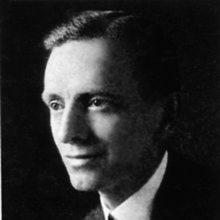
He was born on March 3, 1874 in Hamilton, Minnesota, United States, the oldest of four children, two of whom died in infancy, of Albert and Isabelle (Steele) Plummer. His father, a physician, had come from New Hampshire; his mother was a school teacher and a native of Minnesota. Dr. Albert Plummer was a kind and intelligent man of English descent who had received his schooling at Dartmouth and Bowdoin and had been trained as a military surgeon.
Both Henry and his younger brother, William, were reared in a medical atmosphere, and although Henry wanted for a time to study engineering, his father's example and persuasion turned him to medicine.
Education
After his early education in local schools and the nearby Spring Valley high school, he went to the University of Minnesota for three years and then to Chicago, where he spent three years at Northwestern University Medical School, receiving his M. D. degree in 1898.
He received the honorary degree of D. Sc. from Northwestern University in 1935.
Career
After studies he returned to Racine, Minnesota, to help his ailing father in his practice, and while there his interest in scientific medicine came to the attention of Dr. William J. Mayo; as a result, in 1901 he received and accepted an invitation to join the Mayos and their staff in Rochester, Minnesota. Thenceforth Plummer's interest in mechanical aids to medical practice increased and resulted in important improvements in methods for dilating esophageal strictures, for the relief of cardiospasm, and for removing foreign bodies from the air passages.
As an early partner of the Mayos and later as a member of the governing board of the Mayo Clinic, Plummer devoted much thought to its organization, particularly to its physical facilities, which helped greatly in integrating and coordinating the private medical practice of a group of physicians and surgeons. The concept of private group medical practice that emerged was greatly influenced by his philosophy, which included among other things the desire to make the opinions of many men of different disciplines readily available to each patient. The design of the Mayo Clinic, based largely upon his ideas, became a prototype that was widely copied.
Visiting physicians as well as his students profited greatly from his talks during hospital rounds. Plummer held important offices in several medical societies. He was a professor of medicine in the Mayo Foundation for Medical Education and Research, Graduate School, University of Minnesota, from 1915 until his death.
His medical writings are not voluminous but were prepared with painstaking care and are important contributions to knowledge in their various fields. His Beaumont Foundation Lecture, "The Function of the Thyroid Gland" was a superb and enduring statement of his observations and of his concepts.
On the afternoon of his death, Plummer became ill with cerebral thrombosis. He recognized the nature of his difficulty and accurately predicted the course it would follow. He died in Rochester and was buried in the family plot there.
Achievements
Henry Stanley Plummer was a co-founder of Mayo Clinic in Rochester. He developed an extensive experience in thyroid diseases, and his astute clinical observations resulted in the proposal of a new classification of them. Also it led to the establishment of the value of iodine in the treatment of exophthalmic goiter - a program of treatment that reduced mortality from that disease to very low levels. Besides, his discovery started an upsurge in the investigation of thyroid diseases in many countries, for it not only improved the treatment of exophthalmic goiter but also added an important tool for the study of thyroid function.
Plummer was tall, spare, and stooped. He had learned to avoid distraction so well that he seemed unapproachable. Thus it was surprising, when he had apparently completely disregarded a question, to have him answer it hours or days later. His ability to become fully absorbed in one subject was so great that he appeared to be unmindful of his associates at times when they wanted him to consider other problems, but it was well recognized by those who worked with him that this same characteristic was responsible for some of his great productiveness. He was a kind and considerate man, willing to devote unlimited time to his patients and to his students. His teaching, like his thinking, was directed at the fundamental aspects of physiology and of disease.
Connections
On October 4, 1904, he had married Daisy Berkman, a granddaughter of Dr. William Worrall Mayo. They had no children, but adopted two, Robert and Gertrude, in infancy.