Background
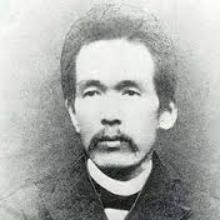
Inoue Kowashi was born on 6 February 1844 in the fief of Kumamoto in Kyushu, he was well versed in Japanese and Confucian studies and noted for his literary skill.

Inoue Kowashi was born on 6 February 1844 in the fief of Kumamoto in Kyushu, he was well versed in Japanese and Confucian studies and noted for his literary skill.
In 1870 he went to Tokyo and entered the Ministry of Justice.
He accompanied Eto Shimpei, the minister of justice, on an inspection tour of France and Germany. Upon returning to Japan, his abilities gained recognition from the statesman Okubo roshimichi, and he was appointed chief secretary in the Ministry of Home Affairs and later in the Executive Council. After Okubo’s death, he became closely associated with Iwakura Tomomi and Ito Hirobmni, and in 1881 was assigned by Iwakura to the group charged with the task of making preparations for the drawing up of a constitution.
With the creation of the Privy Council, an advisory body that consulted on matters pertaining to the promulgation and interpretation of the constitution, he made various proposals concerning its organization and functions and himself became a chief secretary in the Privy Council. He took part in its deliberations and helped to define the interpretation of the constitution and the Imperial House Law.
After serving as an advisor to the Privy Council, he became minister of education in 1893 in the second cabinet of Ito Hirobumi, drawing up regulations for the establishment of public high schools and encouraging industrial education.
In 1886 he joined Ito Miyoji, Kaneko Kentaro, and others working under the direction of Ito Hirobumi in drafting what was to become the Meiji Constitution, strongly German in influence, emphasizing the powers of the sovereign, and known in Japanese as the Dai-Nihonteikoku Kempo. He also played a central role in the drafting of the Imperial House Law. In 1888, with the completion of these two documents, he became chief of the Bureau of Legislation.
In 1890 he joined Motoda Eifu in drafting what was to become the Imperial Rescript on Education, defining the educational principles for the nation, and assisted in the drafting of various other imperial edicts and laws.