Background
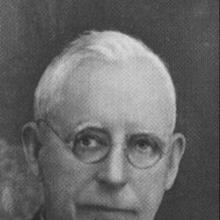
James John Keane was born on August 26, 1857 in Joliet, Illinois, United States, one of the five children of John and Margaret (O'Connor) Keane, immigrants from Ireland. His parents soon moved to a frontier farm near Rochester, Minnesota.

James John Keane was born on August 26, 1857 in Joliet, Illinois, United States, one of the five children of John and Margaret (O'Connor) Keane, immigrants from Ireland. His parents soon moved to a frontier farm near Rochester, Minnesota.
Keane was sent to study at St. John's Seminary, Collegeville, Minnesota, and at the College of St. Francis Xavier, New York City. Deciding to enter the priesthood, young James was assigned to the Grand Seminary at Montreal, where he completed his theological studies under the Sulpicians and was ordained by Archbishop E. C. Fabre, December 23, 1882.
Keane served as a curate at St. Mary's and as pastor of St. Joseph's Church, St. Paul, 1882-1885. Transferred to St. Thomas College as instructor and bursar, he was appointed rector in 1888 by Archbishop Ireland, who thought highly of his executive and financial ability. In 1892, he was given the rectorship of the Church of the Immaculate Conception, the leading parish of Minneapolis, where he won the love of his congregation as a forceful preacher, as a democratic, candid man, and as a builder. Influenced by his archbishop, he played a leading citizen's part in civic affairs, and no small share in the beginning of the Basilica of St. Mary's can be ascribed to his skill as a collector.
With sincere grief mingled with joy, his congregation witnessed his selection as the third bishop of Cheyenne, Wyoming. Consecrated at the St. Paul Cathedral by Archbishop Ireland, October 28, 1902, Keane commenced the arduous labors of the missionary bishop of a huge, sparsely settled area with 7, 000 scattered communicants and only a few priests. Wyoming grew slowly, but under his rule the number of Catholic communicants almost doubled, missions gave way to churches, new stations were established, and funds were gathered for the erection of St. Mary's Cathedral.
On August 11, 1911, Keane was translated to the archepiscopal See of Dubuque, a compact, prosperous diocese. Again, he proved an invigorating leader of priests and people rather than a ruler. Liberal in his views, he lived as simply as a curate and despite ill health carried the burdens of his office. Almost a purely diocesan figure, he attracted little national attention: though in 1908 he gave the opening prayer at the Democratic National Convention; in 1920, he was a member of the Peace Commission on Ireland; and in 1926, he was a speaker at the eleventh annual meeting on the World Alliance for International Friendship, held in Pittsburgh. Aside from an occasional lecture or a sermon, he left no literary remains for he made no pretence of erudition. He was made an assistant at the pontifical throne in connection with the celebration of his episcopal jubilee. Long in precarious health, he died suddenly of apoplexy and was buried from St. Raphael's Cathedral in Mount Olivet Cemetery.
During his tenure in Archdiocese of Dubuque, Keane fostered the Catholic Tribune Weekly, founded in 1899, and the Daily American Tribune, founded in 1920; established a diocesan organ, The Witness, in 1921; built about thirteen churches; reorganized Columbia College, collecting an endowment of a million dollars and erecting nine halls; and created a diocesan bureau of missions and a bureau of education in the hope of standardizing the eight academies and a hundred parochial schools; supported Clarke College for women; established St. Therese's Home for Foundlings; and displayed unusual interest in the charitable institutions and the eleven hospitals with which the diocese was provided.
Keane was known for his patriotic support of the government in the World War and as a strong believer in the League of Nations.