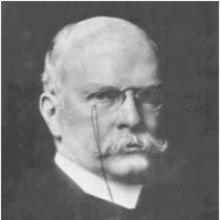
James Lane Allen (December 21, 1849 – February 18, 1925) is the author of many novels and short stories, including his immortal work "A Kentucky Cardinal". Many of his novels and short stories capture the spirit, and dialects, of his native Kentucky in the United States. Allen has been described as "Kentucky's first important novelist."
Background
Allen was born on the 21st of December in the year 1850 in Lexington, Kentucky, United States. Son of Richard and Helen (Foster) Allen. His youth there during the periods of Ante-Bellum, the Civil War and the Reconstruction heavily influenced his writing.
Education
His mother brought him up in an idealistic, romantic world filled with stories of honor and chivalry, where gallant and noble gentlemen courted women of spotless virtue.
Allen graduated from Transylvania University in 1872, giving the Salutatorian address in Latin. He received his Masters degree from Transylvania in 1877. Bachelor of Arts, A.M., Transylvania U. (Doctor of Laws, same. Doctor of Letters, Tulane and Kentucky universities).
Career
Allen graduated from Transylvania University in 1872, giving the Salutatorian address in Latin. He received his Masters degree from Transylvania in 1877. Then he embarked upon a teaching career with took him not only back home to his own school district and his alma mater in Kentucky, but to Missouri and West Virginia as well. In West Virginia he taught at Bethany College where another well-known Kentucky author, Caroline Gordon, was later to be a student. By the 1880s he was publishing regularly in the most prestigious magazines. His fiction pieces were reprinted in book form in 1891. His non-fiction pieces appeared in 1892.
In 1893 James Lane Allen moved to New York City to pursue writing full time. He lived the rest of his life there. In 1894 his novel, A Kentucky Cardinal, was released, making him a commercial as well as a critical success. It was followed by the even more successful novel, The Choir Invisible in 1897. The Reign of Law (1900) also was successful, but because it was one of the first American novels to deal opening with religious doubt and Darwinism, it angered many churchmen and alienated Allen from some of his readership. The Mettle of the Pasture (1903) was his last commercial success. It was followed by almost a dozen lesser novels.
Views
Idealism, Realism
Quotations:
It takes a great deal of history to produce a little literature. (Henry James)