

Background
Bonner, John Tyler was born on May 12, 1920 in New York City. Son of Paul Hyde and Lilly Marguerite (Stehli) Bonner.

http://www.amazon.com/gp/product/B010EV4TWY/?tag=2022091-20

( The description for this book, Size and Cycle: An Essay...)
The description for this book, Size and Cycle: An Essay on the Structure of Biology, will be forthcoming.
http://www.amazon.com/gp/product/B0006BMTLQ/?tag=2022091-20

http://www.amazon.com/gp/product/B000OFXJEU/?tag=2022091-20

( Beginning with the discovery of genes on chromosomes an...)
Beginning with the discovery of genes on chromosomes and culminating with the unmasking of the most minute genetic mysteries, the twentieth century saw astounding and unprecedented progress in the science of biology. In an illustrious career that spanned most of the century, biologist John Bonner witnessed many of these advances firsthand. Part autobiography, part history of the extraordinary transformation of biology in his time, Bonner's book is truly a life in science, the story of what it is to be a biologist observing the unfolding of the intricacies of life itself. Bonner's scientific interests are nearly as varied as the concerns of biology, ranging from animal culture to evolution, from life cycles to the development of slime molds. And the extraordinary cast of characters he introduces is equally diverse, among them Julian Huxley, J. B. S. Haldane, Leon Trotsky, and Evelyn Waugh. Writing with a charm and freshness that bring the most subtle nuances of science to life, he pursues these interests through the hundred years that gave us the discovery of embryonic induction; the interpretation of evolution in terms of changes in gene frequency in a population; growth in understanding of the biochemistry of the cell; the beginning of molecular genetics; remarkable insights into animal behavior; the emergence of sociobiology; and the simplification of ecological and evolutionary principles by means of mathematical models. In this panoramic view, we see both the sweep of world events and scientific progress and the animating details, the personal observations and experiences, of a career conducted in their midst. In Bonner's view, biology is essentially the study of life cycles. His book, marking the cycles of a life in biology, is a fitting reflection of this study, with its infinite, and infinitesimal, permutations.
http://www.amazon.com/gp/product/0674007638/?tag=2022091-20

( The Description for this book, Cells and Societies, wil...)
The Description for this book, Cells and Societies, will be forthcoming.
http://www.amazon.com/gp/product/0691079196/?tag=2022091-20

http://www.amazon.com/gp/product/B010WFJ7M4/?tag=2022091-20

( John Tyler Bonner makes a new attack on an old problem:...)
John Tyler Bonner makes a new attack on an old problem: the question of how progressive increase in the size and complexity of animals and plants has occurred. "How is it," he inquires, "that an egg turns into an elaborate adult? How is it that a bacterium, given many millions of years, could have evolved into an elephant?" The author argues that we can understand this progression in terms of natural selection, but that in order to do so we must consider the role of development--or more precisely the role of life cycles--in evolutionary change. In a lively writing style that will be familiar to readers of his work The Evolution of Culture in Animals (Princeton, 1980), Bonner addresses a general audience interested in biology, as well as specialists in all areas of evolutionary biology. What is novel in the approach used here is the comparison of complexity inside the organism (especially cell differentiation) with the complexity outside (that is, within an ecological community). Matters of size at both these levels are closely related to complexity. The book shows how an understanding of the grand course of evolution can come from combining our knowledge of genetics, development, ecology, and even behavior.
http://www.amazon.com/gp/product/0691084939/?tag=2022091-20

http://www.amazon.com/gp/product/0691023735/?tag=2022091-20

( The enormous recent success of molecular developmental ...)
The enormous recent success of molecular developmental biology has yielded a vast amount of new information on the details of development. So much so that we risk losing sight of the underlying principles that apply to all development. To cut through this thicket, John Tyler Bonner ponders a moment in evolution when development was at its most basic--the moment when signaling between cells began. Although multicellularity arose numerous times, most of those events happened many millions of years ago. Many of the details of development that we see today, even in simple organisms, accrued over a long evolutionary timeline, and the initial events are obscured. The relatively uncomplicated and easy-to-grow cellular slime molds offer a unique opportunity to analyze development at a primitive stage and perhaps gain insight into how early multicellular development might have started. Through slime molds, Bonner seeks a picture of the first elements of communication between cells. He asks what we have learned by looking at their developmental biology, including recent advances in our molecular understanding of the process. He then asks what is the most elementary way that polarity and pattern formation can be achieved. To find the answer, he uses models, including mathematical ones, to generate insights into how cell-to-cell cooperation might have originated. Students and scholars in the blossoming field of the evolution of development, as well as evolutionary biologists generally, will be interested in what Bonner has to say about the origins of multicellular development--and thus of the astounding biological complexity we now observe--and how best to study it.
http://www.amazon.com/gp/product/0691070385/?tag=2022091-20

( Within a single captivating narrative, John Bonner comb...)
Within a single captivating narrative, John Bonner combines an intensely personal memoir of scientific progress and an overview of what we now know about living things. Bonner, a major participant in the development of biology as an experimental science, draws on his life-long study of slime molds for an understanding of the life cycle-the foundation of all biology. In an age of increasing specialization and fragmentation among subfields of biology, this is a unique work of reflection and integration. Originally published in 1993. The Princeton Legacy Library uses the latest print-on-demand technology to again make available previously out-of-print books from the distinguished backlist of Princeton University Press. These paperback editions preserve the original texts of these important books while presenting them in durable paperback editions. The goal of the Princeton Legacy Library is to vastly increase access to the rich scholarly heritage found in the thousands of books published by Princeton University Press since its founding in 1905.
http://www.amazon.com/gp/product/0691033196/?tag=2022091-20

http://www.amazon.com/gp/product/B000M1Q7EU/?tag=2022091-20

( The Description for this book, Cellular Slime Molds, wi...)
The Description for this book, Cellular Slime Molds, will be forthcoming.
http://www.amazon.com/gp/product/0691079218/?tag=2022091-20

http://www.amazon.com/gp/product/B011SK9CAE/?tag=2022091-20

( John Tyler Bonner, one of our most distinguished and cr...)
John Tyler Bonner, one of our most distinguished and creative biologists, here offers a completely new perspective on the role of size in biology. In his hallmark friendly style, he explores the universal impact of being the right size. By examining stories ranging from Alice in Wonderland to Gulliver's Travels, he shows that humans have always been fascinated by things big and small. Why then does size always reside on the fringes of science and never on the center stage? Why do biologists and others ponder size only when studying something else--running speed, life span, or metabolism? Why Size Matters, a pioneering book of big ideas in a compact size, gives size its due by presenting a profound yet lucid overview of what we know about its role in the living world. Bonner argues that size really does matter--that it is the supreme and universal determinant of what any organism can be and do. For example, because tiny creatures are subject primarily to forces of cohesion and larger beasts to gravity, a fly can easily walk up a wall, something we humans cannot even begin to imagine doing. Bonner introduces us to size through the giants and dwarfs of human, animal, and plant history and then explores questions including the physics of size as it affects biology, the evolution of size over geological time, and the role of size in the function and longevity of living things. As this elegantly written book shows, size affects life in its every aspect. It is a universal frame from which nothing escapes.
http://www.amazon.com/gp/product/0691152330/?tag=2022091-20

(The Ideas of Biology by John Tyler Bonner Dover Publicati...)
The Ideas of Biology by John Tyler Bonner Dover Publications, 2002 (Paperba...
http://www.amazon.com/gp/product/B00M3SGPIS/?tag=2022091-20

http://www.amazon.com/gp/product/B010WF0EVM/?tag=2022091-20

( The enormous recent success of molecular developmental ...)
The enormous recent success of molecular developmental biology has yielded a vast amount of new information on the details of development. So much so that we risk losing sight of the underlying principles that apply to all development. To cut through this thicket, John Tyler Bonner ponders a moment in evolution when development was at its most basic--the moment when signaling between cells began. Although multicellularity arose numerous times, most of those events happened many millions of years ago. Many of the details of development that we see today, even in simple organisms, accrued over a long evolutionary timeline, and the initial events are obscured. The relatively uncomplicated and easy-to-grow cellular slime molds offer a unique opportunity to analyze development at a primitive stage and perhaps gain insight into how early multicellular development might have started. Through slime molds, Bonner seeks a picture of the first elements of communication between cells. He asks what we have learned by looking at their developmental biology, including recent advances in our molecular understanding of the process. He then asks what is the most elementary way that polarity and pattern formation can be achieved. To find the answer, he uses models, including mathematical ones, to generate insights into how cell-to-cell cooperation might have originated. Students and scholars in the blossoming field of the evolution of development, as well as evolutionary biologists generally, will be interested in what Bonner has to say about the origins of multicellular development--and thus of the astounding biological complexity we now observe--and how best to study it.
http://www.amazon.com/gp/product/0691070377/?tag=2022091-20

http://www.amazon.com/gp/product/B00LMTGDXQ/?tag=2022091-20

http://www.amazon.com/gp/product/B010EUZOY2/?tag=2022091-20

("I highly recommend this for the biology student who want...)
"I highly recommend this for the biology student who wants to gel all the information you've learned into a coherent narrative. This discussion of what the science of life really *means* is very helpful, and beautifully written. Though the science, being from 1962, is clearly a little behind the bleeding edge, these "big ideas" haven't changed much."
http://www.amazon.com/gp/product/B002OXFT70/?tag=2022091-20

http://www.amazon.com/gp/product/B000VFK4GY/?tag=2022091-20

http://www.amazon.com/gp/product/B000L5PVT4/?tag=2022091-20

http://www.amazon.com/gp/product/B011SJ04Z2/?tag=2022091-20

(Within a single captivating narrative, John Bonner combin...)
Within a single captivating narrative, John Bonner combines an intensely personal memoir of scientific progress and an overview of what we now know about living things. Bonner, a major participant in the development of biology as an experimental science, draws on his life-long study of slime molds for an understanding of the life cycle-the foundation of all biology. In an age of increasing specialization and fragmentation among subfields of biology, this is a unique work of reflection and integration.
http://www.amazon.com/gp/product/0691001510/?tag=2022091-20

( John Tyler Bonner, a major participant in the developme...)
John Tyler Bonner, a major participant in the development of biology as an experimental science, is the author not only of important monographs but also of a wonderfully readable book, Life Cycles, which is both a personal memoir and a profound commentary on the central themes of biology. This volume of essays presents new material that extends the concepts from Life Cycles and his other writings. Its originality lies in comparing key basic biological processes at different levels, from molecular interactions through multicellular development to behavior and social interactions. The first chapter in the book discusses self-organization and natural selection; the second, competition and natural selection; and the third, gene accumulation and gene silencing. The fourth chapter examines the division of labor in organisms at all levels: within the organelles of a cell, within groups of cells in the guise of differentiation, within groups of individuals in an animal society, and within our culturally determined human societies. The work closes with a charming personal history of sixty years of changes in the field of biology, including the transformation in the ways that research work is funded.
http://www.amazon.com/gp/product/0691021309/?tag=2022091-20

http://www.amazon.com/gp/product/B011SK8A9I/?tag=2022091-20

http://www.amazon.com/gp/product/0521042836/?tag=2022091-20
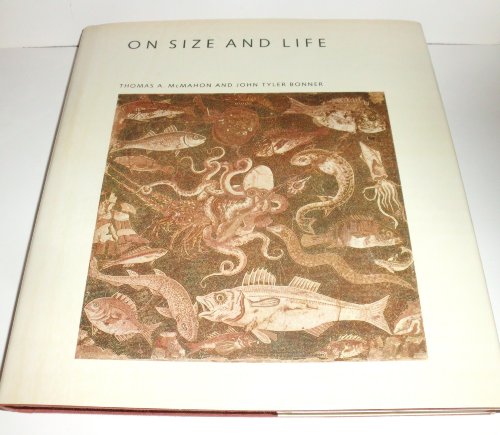
(Hardcover: 255 pages Publisher: Scientific American Books...)
Hardcover: 255 pages Publisher: Scientific American Books - W. H. Freeman & Co.; 1st edition (June 1, 1983) Language: English ISBN-10: 0716750007
http://www.amazon.com/gp/product/0716750007/?tag=2022091-20

( Noted biologist and author John Tyler Bonner has experi...)
Noted biologist and author John Tyler Bonner has experimented with cellular slime molds for more than sixty years, and he has done more than anyone else to raise these peculiar collections of amoebae from a minor biological curiosity to a major model organism--one that is widely studied for clues to the development and evolution of all living things. Now, five decades after he published his first pioneering book on cellular slime molds, Bonner steps back from the proliferating and increasingly specialized knowledge about the organism to provide a broad, nontechnical picture of its whole biology, including its evolution, sociobiology, ecology, behavior, and development. The Social Amoebae draws the big lessons from decades of research, and shows how slime molds fit into and illuminate biology as a whole. Slime molds are very different from other organisms; they feed as individual amoebae before coming together to form a multicellular organism that has a remarkable ability to move and orient itself in its environment. Furthermore, these social amoebae display a sophisticated division of labor; within each organism, some cells form the stalk and others become the spores that will seed the next generation. In The Social Amoebae, Bonner examines all these parts together, giving a balanced, concise, and clear overview of slime mold biology, from molecules to cells to multicells, as he advances some unconventional and unexpected insights.
http://www.amazon.com/gp/product/0691139393/?tag=2022091-20

http://www.amazon.com/gp/product/B001D0H8TW/?tag=2022091-20
Bonner, John Tyler was born on May 12, 1920 in New York City. Son of Paul Hyde and Lilly Marguerite (Stehli) Bonner.
Graduate, Phillips Exeter Academy, 1937. Bachelor of Science, Harvard University, 1941. Master of Arts, Harvard University, 1942.
Doctor of Philosophy (Junior fellow 1942, 46-47), Harvard University, 1947. Doctor of Science, Middlebury College, 1970. Doctor of Science, Princeton University, 2006.
Doctor of Laws, Concordia University, 2003. Doctor of Letters, University College Cape Breton, 2005.
Assistant to associate professor, Princeton University, 1947-1958;
professor, Princeton University, 1958-1990;
emeritus professor, Princeton University, since 1990;
department chairman biology, Princeton University, 1965-1977, 83-84, 87-88. Lecturer embryology Marine Biological Laboratory, Woods Hole, Massachusetts, 1951-1952. Special.lectr. U. London, 1957, Brooklyn College, 1966.
Arnold Bernhard visiting professor Williams College, 1989. Raman professor Indian Academy Sciences, 1990. Trustee Biological Abstracts, 1958-1963.
Member board editors Princeton University Press, 1965-1968, 71, trustee, 1976-1982.
( Noted biologist and author John Tyler Bonner has experi...)
( John Tyler Bonner, a major participant in the developme...)
( John Tyler Bonner, a major participant in the developme...)
( Beginning with the discovery of genes on chromosomes an...)
( Within a single captivating narrative, John Bonner comb...)
(Within a single captivating narrative, John Bonner combin...)
( John Tyler Bonner makes a new attack on an old problem:...)
( John Tyler Bonner makes a new attack on an old problem:...)
( John Tyler Bonner, one of our most distinguished and cr...)
( The enormous recent success of molecular developmental ...)
( The enormous recent success of molecular developmental ...)
("I highly recommend this for the biology student who want...)
( The description for this book, Size and Cycle: An Essay...)
(The Ideas of Biology by John Tyler Bonner Dover Publicati...)
( The Description for this book, Cellular Slime Molds, wi...)
( The Description for this book, Cells and Societies, wil...)
(Hardcover: 255 pages Publisher: Scientific American Books...)
Private to First lieutenant Universal Service Administrative Company, 1942-1946. Staff aero medical laboratory Wright Field, Dayton, Ohio. Fellow American Academy Arts and Sciences, Indian Academy Sciences (honorary).
Member NAS, American Society Naturalists, Society Growth and Development, American Philosophical Society, Phi Beta Kappa, Sigma Xi.
M C.
Married Ruth Anna Graham, July 11, 1942 (deceased 2003). Children: Rebecca, Jonathan Graham, Jeremy Tyndall, Andrew Duncan.
