(This is a reproduction of a classic text optimised for ki...)
This is a reproduction of a classic text optimised for kindle devices. We have endeavoured to create this version as close to the original artefact as possible. Although occasionally there may be certain imperfections with these old texts, we believe they deserve to be made available for future generations to enjoy.
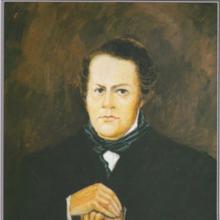
Jonathan Miller was an American sympathizer and anti-slavery advocate.
Background
Jonathan Peckham Miller was born on February 24, 1796, in Randolph, Vermont. He was the son of Heman and Deimia (Walbridge) Miller. Upon his father's death in 1799, he was taken in charge by an uncle, Jonathan Peckham, and on the latter's death, about 1805, by Capt. John Granger of Randolph.
Education
In 1813, having completed his common-school education, young Miller went to Woodstock, Vermont, to learn the tanner's trade, but ill health soon caused him to return to the Granger home where he remained for the next four years. A love of adventure and military life, as well as patriotism, led him to join the town volunteers under Capt. Libbeus Egerton who marched to repel the British invasion that ended at Plattsburg. The Randolph forces arrived too late, however, to take part in the fighting. In 1817, he enlisted as a private in the United States army, in which he served for two years, being stationed on the northern frontier. A recurrence of ill health then caused his return to Randolph, where he attended the local academy and fitted for college. In the fall of 1821, he entered Dartmouth, but a few weeks later removed to the University of Vermont, where he pursued his studies until May 24, 1824, when fire destroyed the college buildings. After his second return from Greece, he settled in Montpelier, Vermont, studied law, and was admitted to the bar.
Career
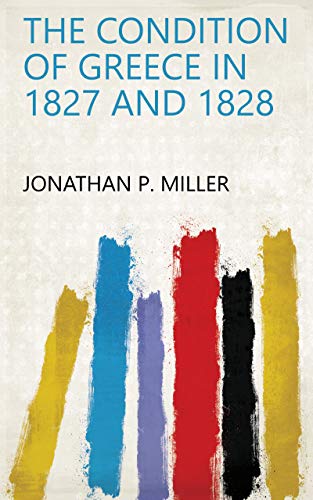
Rather than wait to finish his college course at Vermont, or transfer elsewhere, Miller now determined to offer his services to the Greek revolutionists, inspired, no doubt, by his classical studies, by the wave of sympathy for Greece then at its height in western Europe and the United States, and by his own spirit of adventure. From Governor Van Ness he secured a letter introducing him to the Greek Association of Boston, which in turn gave him letters to the Greek government at Missolonghi, as well as $300 for his expenses. He sailed for Malta August 21, 1824, and from there made his way to Missolonghi, where he reported to Dr. Mayer and Gen. George Jarvis, on whose staff he became a colonel in the Greek service. During the next two years, Miller's military exploits won for him the name of "The American Dare Devil. " He was among those, who took part in the valiant but futile defense of Missolonghi, escaping in the last sortie. A few months later he returned to the United States to lecture throughout the northern and middle states in the Greek cause. In February 1827, he returned to Greece as the principal agent of the New York Greek Committee. In this service, he spent about a year, turning over to the Greeks food and clothing to the value of more than $75, 000. On returning to America, he published The Condition of Greece in 1827 and 1828 (1828), being his journal as kept by order of the Greek Committee. At this time he brought back with him a Greek youth, Lucas Miltiades, whom he adopted and educated. In Montpelier, Vermont, Miller opened a law office in company with Nicholas Baylies. For three years, 1831, 1832, and 1833, he served in the Vermont legislature. He died prematurely on February 17, 1847, in Montpelier as the result of an accidental injury to his spine, leaving a wife and one child.
Achievements
Jonathan Miller brought to the United States the sword worn by Lord Byron in Greece, now in the possession of the Vermont Historical Society. In 1833, he initiated the anti-slavery movement in the legislature by introducing a resolution calling upon the Vermont representatives in Congress to urge the abolition of slavery and the slave trade in the District of Columbia. From this time on, Miller devoted much of his energy and money to the anti-slavery cause, lecturing throughout the state. In 1840, as one of the two Vermont delegates, he attended the World's Anti-Slavery Convention in London where he took a prominent part in the debates.
(This is a reproduction of a classic text optimised for ki...)
Personality
As a public speaker, Miller was off-hand, bold and earnest. His private life was characterized by a fearless utterance of opinion and a straightforward, unstudied frankness. To these qualities, he added a vigorous physical constitution and a soldierly bearing that some thought bordered on roughness. As a citizen, he was public-spirited and benevolent.
Quotes from others about the person
Samuel Gridley Howe, with whom Miller was closely associated, describes Jonathan as "rather superficially than well educated, with an immense deal of good common sense, an acute mind, but self-opinionated, and bigoted in religion, which he reads and argues about rather to confirm his belief than to examine the subject".
Connections
Miller had married Sarah Arms, daughter of Capt. Jonathan Arms, on June 26, 1828.
Father:
Heman Miller
1765 - 18 August 1799
Mother:
Deimia (Walbridge) Miller
Wife:
Sarah Arms Miller
Died on 21 December 1864.
Daughter:
Sarah Miller Keith
24 June 1830 - 18 January 1900
colleague:
Nathaniel Peabody Rogers
June 3, 1794 – October 16, 1846
Was an American abolitionist writer who, from June 1838 until June 1846, served as editor of the New England anti-slavery newspaper Herald of Freedom.
colleague:
William Lloyd Garrison
December 10, 1805 – May 24, 1879
Was a prominent American abolitionist, journalist, suffragist, and social reformer.