

Background
Rykwert, Joseph was born on April 5, 1926 in Warsaw, Poland. Son of Szymon Mieczyslaw and Elizabeth (Melup) Rykwert. arrived in England, 1939.
http://www.amazon.com/gp/product/B010BFOC66/?tag=2022091-20

http://www.amazon.com/gp/product/0375700447/?tag=2022091-20
http://www.amazon.com/gp/product/B00AUR47VQ/?tag=2022091-20
http://www.amazon.com/gp/product/B00Y2UHSRW/?tag=2022091-20
http://www.amazon.com/gp/product/B00GSIT58G/?tag=2022091-20
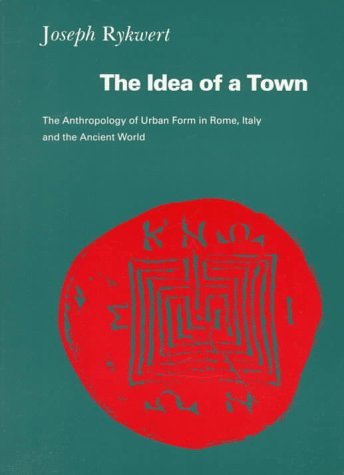
http://www.amazon.com/gp/product/B012YSHHE2/?tag=2022091-20
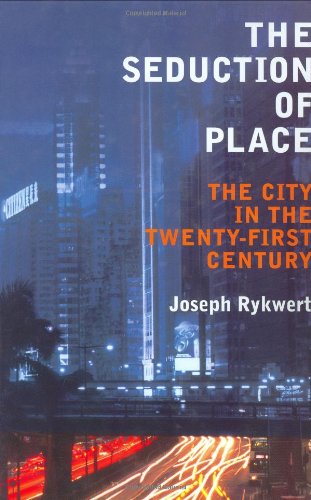
http://www.amazon.com/gp/product/0297819992/?tag=2022091-20
http://www.amazon.com/gp/product/B000X6HANG/?tag=2022091-20
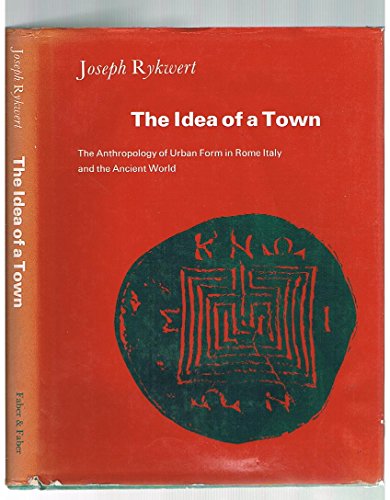
( The Description for this book, Idea of a Town: The Anth...)
The Description for this book, Idea of a Town: The Anthropology of Urban Form in Rome, Italy, and the Ancient World, will be forthcoming.
http://www.amazon.com/gp/product/0691039011/?tag=2022091-20
(What do our cities say about us? What have we made them, ...)
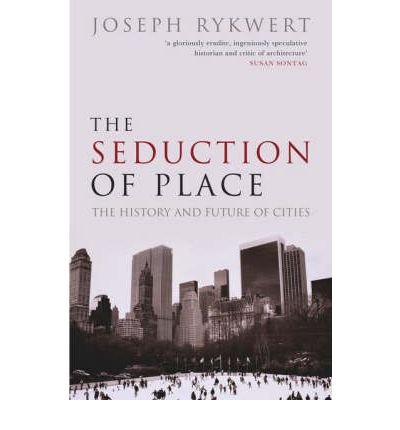
What do our cities say about us? What have we made them, and how ought they to be? How has our vision of the city evolved over time, and can we really influence change and effect improvements? In this vibrant cultural history of the city, Joseph Rykwert explores the great cities of the modern world, examining their fabric and assessing how successfully they have met the needs of their inhabitants. From the teeming city centres of the industrial revolution to the exclusive gated suburbs of the 21st century, from the Parisian boulevards of Haussmann to the 'green' architecture of Emilio Ambasz, Rykwert charts the complex story of the growth of the city, setting architectural development firmly within a political, economic, social, and cultural context. Drawing on examples from Brasilia to Islamabad, Shanghai to Houston, Rykwert presents a fascinating analysis of urban growth, arguing forcefully that as voters and consumers we need to consider the economic, social, and cultural implications of developments and demonstrate our resistance to them if necessary. The arguments over the future of the Ground Zero site in Manhattan encapsulate the conflicting demands of civic pride and public utility set against private gain that vie for dominance in the 21st century, and exemplify the choices that, as citizens, we must all eventually make.
http://www.amazon.com/gp/product/0192805541/?tag=2022091-20
Architecture and art history educator
Rykwert, Joseph was born on April 5, 1926 in Warsaw, Poland. Son of Szymon Mieczyslaw and Elizabeth (Melup) Rykwert. arrived in England, 1939.
Student, Architectural Association, London, 1947. Master of Arts, University Cambridge. Doctor of Philosophy, Royal College Art, London, 1970.
Master of Arts (honorary), University Pennsylvania, 1988. Doctor of Science (honorary), University Edinburgh, 1995. Doctor (honorary), University Cordoba, 1998.
Doctor (honorary), University Bath, England, 2000. Doctor (honorary), University Rome, 2004. Doctor (honorary), University Toronto, 2005.
Library, tutor, Royal College Art, 1960-1967;
professor art, department chairman, U. Essex, Colchester, England, 1967-1981;
Slade professor fine arts, U. Cambridge, 1980;
reader in architecture, U. Cambridge, 1981-1987;
Paul Philippe Cret professor architecture, professor art history, University of Pennsylvania, Philadelphia, since 1988;
also chairman Doctor of Philosophy program in architecture, University of Pennsylvania, Philadelphia. Andrew Mellon professor Cooper Union, New York City, 1977. George Lurcy professor Columbia University, New York City, 1986.
Commissioner Venice (Italy) Biennale, 1974-1977. Member jury Parc de la Villette Competition, Paris, 1982, Wolf Foundation Prize, Jerusalem, 1983. Trustee Cubitt Trust, London, since 1986.
Senior scholar Getty Center for History Art and Humanities, 1992, 93. Co-editor catalogue, curator Alberti Exhibition, Mantua, Italy, 1994.
(What do our cities say about us? What have we made them, ...)
(The idea of a town must be strong enough to survive the i...)
( The Description for this book, Idea of a Town: The Anth...)
Member steering committee United Nations Educational, Scientific and Cultural Organization Conference on Urbanism, since 1989. Member College Art Association, Comite International des Critiques d'Architecture (president), Polish Academy, Savile Club (London).
Married Anne-Marie Sandersley, February 14, 1972. 1 child from previous marriage, Simon Sebastian. 1 stepchild, Marina Joanna Engel.
