

Background
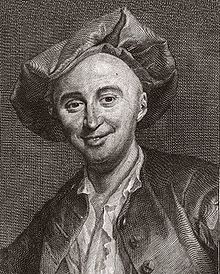
He was born at St. Malo, France, December 25, 1709. He was the son of a prosperous textile merchant.

(This collection of literature attempts to compile many of...)
This collection of literature attempts to compile many of the classic works that have stood the test of time and offer them at a reduced, affordable price, in an attractive volume so that everyone can enjoy them.
http://www.amazon.com/gp/product/1534647112/?tag=2022091-20
He was born at St. Malo, France, December 25, 1709. He was the son of a prosperous textile merchant.
At Paris he studied theology and seemed destined for the clergy in the Jansenist sect. But a doctor at St. Malo aroused in him an interest in medicine and he went to Leiden in 1733 to study under the famous Hermann Boerhaave.
Having attained some fame himself as a physician, he was appointed surgeon to the Royal Guard at Paris. Observation of his own thoughts and sensations when stricken with a fever led him to study the relationship of the soul to the body, and he concluded that the soul is only a function of the heart and the brain. When his views were published in Histoire naturelle de l'âmel'ame (1745; "Natural History of the Soul"), they were attacked by clergy and rival physicians alike.
La Mettrie fled to Leiden where he developed his views into an even more thorough-going materialism. In L'Homme machine (1748; "Man a Machine") he argued that man is but a complex arrangement of matter. Those who maintain that thinking requires a non-corporeal soul have not shown that the body is incapable of thinking. There can be ideas only if the body has first been impressed through the senses. The lower animals also have sense organs and man is only a superior animal. There is no soul that survives the dissolution of the body. Sensuous pleasure is the aim of life, and virtue can have no basis other than self-love. The posthumous L'Art de Jouir (1751; "The Art of Enjoyment") also expounded these views. The storm raised by these unorthodox opinions made it necessary for La Mettrie to leave Leiden. In 1748 he was given a position as court reader by Frederick the Great in Berlin.
(This collection of literature attempts to compile many of...)

