Background
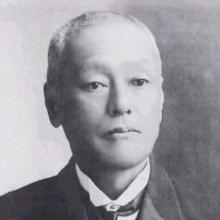
Kenjirō Yamakawa was born on 9 September 1854 in what later became Fukushima Prefecture. He was a son of a samurai of the domain of Aizu.

山川 健次郎
Kenjirō Yamakawa was born on 9 September 1854 in what later became Fukushima Prefecture. He was a son of a samurai of the domain of Aizu.
In 1871 he went to the United State and studied at Yale University.
He returned to Japan in 1875 and the following year became a professorial assistant in Tokyo Kaisei Gakko, which later became Tokyo Imperial University. In 1886 he was appointed a professor in the Science College of Tokyo University and in time was put in charge of the subject of physics. In 1888 he received the degree of Doctor of Science. In 1893 he became head of the Science College and in 1901 was appointed president of Tokyo Imperial University. He left the position in 1905, after which he served as president ot Kyushu Imperial University, as head of Tokyo University once more, and as head of Kyoto Imperial University.
In 1923 he became an advisor to the Privy Council. In his late years he became associated with the Central United Organization of Social Education and the political body known as the Kokuhonsha, working to advance the movement for nationalistic education.
In addition to laying the foundations for the study of physics in Japan, he also contributed to the establishment of higher education through his various academic posts, acting as a leader in the educational field.
In addition to the posts in national universities mentioned above, he also contributed to the advancement of private educational institutions and special schools, heading such private schools as the Meiji Professional School in Tobata in Kyushu and the Musashi High School. He was also very active in the administrative end of scientific affairs, helping to found the Institute of Physical and Chemical Research and the Aviation Research Center.