Background
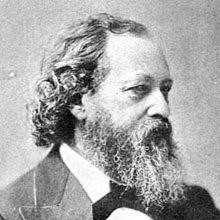
Leopold Eidlitz was morn in Prague, Bohemia (now Czech Republic), into a Jewish family.


(destroyed by fire in 1903.)
destroyed by fire in 1903.
1860

(1854-55, no longer standing)
1854-55, no longer standing

(Leopold Eidlitz, F. L. Olmstead and Henry H. Richardson w...)
Leopold Eidlitz, F. L. Olmstead and Henry H. Richardson were in Advisory Board
Leopold Eidlitz was morn in Prague, Bohemia (now Czech Republic), into a Jewish family.
In New York it was his good fortune to find employment as draftsman with the late Richard Upjohn, and in the office of that noted ecclesiastical architect, leading exponent of the Gothic Revival in America, the young man acquired skill in church design. A few years later he formed a partnership with a young Bavarian by the name of Blesch, and for a time they practiced together. Of their works in New York however there is record only of St. George’s Episcopal Church in Stuyvesant Square, completed in 1848.
During the next two decades Mr. Eidlitz carried on his work independently, with the scope of his work including churches, public buildings and business structures. In planning secular buildings, Mr. Eidlitz achieved equal success. Among the noted examples of his work in various cities, the earliest was the old City Hall at Springfield, Mass., 1854-55, no longer standing. In New York he was architect of the old Produce Exchange in Whitehall, 1860; Continental Bank on Nassau Street, 1856, replaced by a modern building; American Ex¬change National Bank, 1857-59, at the time of its erection the first fireproof commercial structure in New York; the old Academy of Music in Brooklyn, 1860, destroyed by fire in 1903; the Dry Dock Savings Bank, 1870, and finally his last and largest public building, the old New York Court House.
Mr. Eidlitz was also connected with work on the State Capitol at Albany. In 1875 he was appointed, with F. L. Olmstead and Henry H. Richardson to an Advisory Board authorized to pass upon the work already done by Thomas Fuller, the previously appointed architect. Following their decision which disapproved Mr. Fuller's continuation of the work in accordance with his plans, Eidlitz and Mr. Richardson were appointed to supervise the work, commissioned to modify, revise, and enlarge the plans for the building. Mr. Eidlitz’ participation in the work was mainly in re-designing the greater part of the exterior. On the interior, confusion resulting from an attempt to divide the work, brought about the appointment in 1903 of Isaac Perry as State Architect, and the subsequent withdrawal of both Eidiitz and Richardson. Under Mr. Perry's direction the work was expedited and brought to final completion in 1894.
Among his most important ecclesiastical buildings, designed mainly in the German Gothic style he favored, should be mentioned the following: St. Peters Church at Westchester, N.Y., 1851; Holy Trinity in New York built in 1853 at Madison Avenue and 42nd Street (no longer standing); the Broadway Tabernacle at 34th Street and Sixth Avenue, erected 1859, razed in 1865 and replaced by a commercial building; Emanuel Synagogue on Fifth Avenue at 43rd Street, 1868, destroyed in 1928. His most distinguished church, the Episcopal Cathedral in St. Louis, built between 1860 and 1867 as Christ Church was designed in the English Gothic style and built of limestone.
Leopold Eidlitz worker as draftsman with Richard Upjohn, and in the office of that noted ecclesiastical architect, leading exponent of the Gothic Revival in America.
In 1875 Leopold Eidlitz was appointed, with F. L. Olmstead and Henry H. Richardson to an Advisory Board authorized to pass upon the work already done on the State Capitol at Albany.