(A Manual for Cleaning Women compiles the best work of the...)
A Manual for Cleaning Women compiles the best work of the legendary short-story writer Lucia Berlin. With the grit of Raymond Carver, the humor of Grace Paley, and a blend of wit and melancholy all her own, Berlin crafts miracles from the everyday, uncovering moments of grace in the Laundromats and halfway houses of the American Southwest, in the homes of the Bay Area upper class, among switchboard operators and struggling mothers, hitchhikers and bad Christians.
(There are two currents flowing through this story. On the...)
There are two currents flowing through this story. On the surface, it’s an innocent picaresque, but break the roller-skates-and-popsicles surface tension and the issues that lie beneath — racism, poverty, classism, impending war — are anything but sweet. That this is a child’s story makes the dichotomy poignant.
(In 1981, John Martin published Lucia Berlin’s first book ...)
In 1981, John Martin published Lucia Berlin’s first book of stories, and in 1993 her last. With the recent publication of A Manual for Cleaning Women, and the sustained critical acclaim it has received, Berlin has finally been recognized as a master of the short story, allowing her work to reach the broad audience it deserves. These two collections capture distilled moments of crisis or epiphany, placing the protagonists in moments of stress or personal strain, and all told in an almost offhand, matter of fact voice. Weaving through the places she loved - Chile, Mexico, the Southwest, and California - each story delivers a poignant moment that lingers in the mind, not resolved, not decoded, but resonating, as questions of the human condition always do, in the heart of the reader.
(Set mainly in Los Angeles, Lucia Berlin’s gritty working-...)
Set mainly in Los Angeles, Lucia Berlin’s gritty working-class stories bridge the gap between the Americas - rich and poor, North and South, Anglo and Hispanic. While her style has been compared to Raymond Carver’s, and her dream- and drink-addicted characters to Richard Yates’, her fictional territory and fatalistic humor are hers alone.
(Evening in Paradise is a careful selection from Berlin’s ...)
Evening in Paradise is a careful selection from Berlin’s remaining stories - twenty-two gems that showcase the gritty glamour that made readers fall in love with her. From Texas to Chile, Mexico to New York City, Berlin finds beauty in the darkest places and darkness in the seemingly pristine. Evening in Paradise is an essential piece of Berlin’s oeuvre, a jewel-box follow-up for new and old fans.
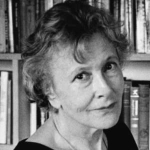
Lucia Berlin was an American educator and writer. She was an assistant professor of English at the University of Colorado and professor emerita of creative writing.
Background
Lucia Brown Berlin was born on November 12, 1936, in Juneau, Alaska, to Wendell Theodore Brown and Mary Emma (Magruder) Brown. Her father was a mining engineer and her mother was the daughter of a wealthy Texas family.
Berlin spent most of her childhood in mining camps, moving an average of once every six months, in Montana, Idaho, Arizona, Kentucky, and other states. She spent the years of World War II in El Paso, Texas, while her father served in the U.S. Navy, and after the war, the family moved to Chile, where her father worked for an American mining company. Lucia's mother died in 1986, a probable suicide.
Education
In 1968, Lucia received a Bachelor of Arts in Spanish and English from the University of New Mexico.
After completing her degree, and, still in Albuquerque, Lucia began to write. In 1959 Berlin moved to New York. In 1961, Berlin left New York and traveled to Mexico. By 1968, Lucia was working on a master’s degree at the University of New Mexico. She was employed as a substitute teacher.
The years 1971-94 were spent in Berkeley and Oakland, California. Berlin worked as a high-school teacher, switchboard operator, hospital ward clerk, cleaning woman, and physician's assistant, while writing, raising her four sons, drinking, and finally, prevailing over her alcoholism. She spent much of 1991 and 1992 in Mexico City, where her sister was dying of cancer. In 1994, Edward Dorn brought Berlin to the University of Colorado, and she spent the next six years in Boulder as a visiting writer and, ultimately, associate professor.
Through the 1980s, Ms. Berlin’s stories were published by very small presses. In the 1990s, three books of new and selected stories were released by Black Sparrow Press, a midsize independent publisher. All in all, she published seventy-seven stories in her lifetime but was never a bestseller. Most of her work can be found in three later volumes from Black Sparrow Books: Homesick: New and Selected Stories (1990), So Long: Stories 1987-92 (1993) and Where I Live Now: Stories 1993-98 (1999). In 2001, in failing health, she moved to Southern California to be near her sons. She passed away in 2004 in Marina del Rey.
In 2013, the writers Stephen Emerson, Barry Gifford and Michael Wolfe, friends and admirers of Ms. Berlin, put together a manuscript of stories in hopes of having it accepted by a high-profile New York publisher. Emily Bell, an editor at Farrar, Straus & Giroux, saw potential in reissuing the work.
Lucia Berlin is known as the prolific author who published 77 short stories during her lifetime. She also was a remarkably popular and beloved teacher, and in just her second year, won the university's award for teaching excellence.
Just in eleven years after her death, Berlin rose to sudden literary fame. Her work Farrar, Straus and Giroux's publication of a volume of selected stories, A Manual for Cleaning Women, edited by Stephen Emerson, hit The New York Times bestseller list in its second week, and within a few weeks, had outsold all her previous books combined. The collection was ineligible for most of the year-end awards, but was named to a large number of year-end lists, including the New York Times Book Review's "10 Best Books of 2015", as well as a finalist for the Kirkus Prize.
Ms. Berlin spoke often of her love for Chekhov and his compassion for people.
Quotations:
"I wrote like him before I ever read him. Our ‘styles’ came from our (similar in a way) backgrounds. Don’t show your feelings. Don’t cry. Don’t let anyone know you ... more than exquisite control blahblahblah."
Personality
Lucia survived childhood abuse and adult alcoholism, an addiction that sent her, in her words, to "jails, hospitals, psych wards." She put much of her roving, rowdy life onto the page in vivid stories that garnered the respect of a modest audience and now could be on the verge of making her posthumously famous.
Physical Characteristics:
Lucia had scoliosis, a painful spinal condition that became lifelong and often necessitated a steel brace.
Quotes from others about the person
"As the case with her fiction, Berlin's pieces here are as faceted as the brightest diamond." - Kristin Iversen, NYLON
"Berlin was a writer of tender, chaotic and careworn short stories. Her work can remind you of Raymond Carver's or Grace Paley's or Denis Johnson's. One thing that makes Berlin so valuable is her gift for evoking the sweetness and earnestness of young women who fall in love. Berlin probably deserved a Pulitzer Prize." - Dwight Garner, The New York Times
"Berlin is not only a soulful chronicler of the lost corners of America, whose semi-autobiographical stories brim with red caliche clay, arroyos, drainage ditches and smelter towns. She is not only a writer of vivid bursts of language. She is also a distinctly female voice, a raspy Marlene Dietrich." - Nadja Spiegelman, The New York Times Book Review
Interests
Writers
Chekhov
Connections
Lucia was married three times. When Berlin was seventeen, she got married to her first husband, but he left her when she was pregnant with their second son. Lucia then married Race Newton, a jazz pianist in 1958. In 1961, Berlin left Newton. Later, she married Buddy Berlin. Buddy was charismatic and affluent, but he also proved to be an addict. During the years 1962-65, two more sons were born. By 1968, the Berlins were divorced. She never remarried.
Father:
Wendell Theodore Brown
Mother:
Mary Emma (Magruder) Brown
Ex-husband:
Race Newton
Ex-husband:
Buddy Berlin
Friend:
Robert Creeley
May 21, 1926 – March 30, 2005
Robert White Creeley was an American poet and author of more than sixty books.
Diane di Prima is an American poet. She is also an artist, prose writer, memoirist, playwright, social justice activist, fat acceptance activist and teacher.
Amiri Baraka, born Everett LeRoi Jones, previously known as LeRoi Jones and Imamu Amear Baraka, was an American writer of poetry, drama, fiction, essays and music criticism.
DLB 130: American Short Story Writers since World War II
The forty short-story writers presented in DLB 130 demonstrate an expanding diversity of writings, which can be divided into three major categories: realists or neorealists; postmodernists or metafictionists; and outsiders.