

Education
He holds an undergraduate degree in neurobiology from the University of Sussex, a Doctor of Philosophy from the University of Brighton and has held fellowships at both schools.

http://www.amazon.com/gp/product/057114506X/?tag=2022091-20
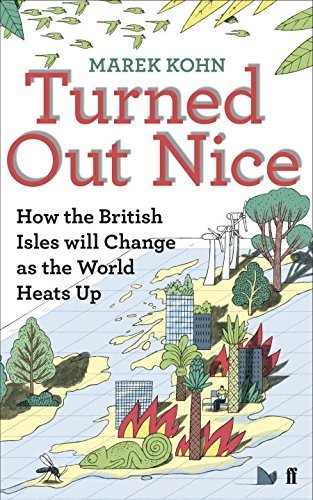
http://www.amazon.com/gp/product/B01N9N0G6J/?tag=2022091-20
(Trust--whether between parents and children, merchants an...)
Trust--whether between parents and children, merchants and shoppers, or citizens and their government--lies at the very heart of our relationships, our society, and our everyday lives. This vividly written compact book reveals how modern thinkers--scientists, social scientists, and philosophers--have shed much light on the nature of trust. Beginning with some fascinating evolutionary puzzles about the origins of trust--for instance, how cooperation can evolve among individuals pursuing their own selfish interests--Marek Kohn incorporates many different perspectives from the fields of science, sociology, economics, and politics, to draw out the wider implications for trust in human society today. The book discusses trust in gods and how people have sought to reinvest this trust as religious faith has diminished; the effect of low social trust on economic development; and the loss of trust between mutually antagonistic communities, each warming itself by the flames of its hostility to the other. He shows how Communism relied on distrust, and devoted much of its energy to seeding it among its subjects, and Liberal democracy is also based on distrust, but in the opposite direction: it is founded upon the suspicion that the powerful will be tempted to abuse their power, and so must be subject to checks and balances. Perhaps most important, he shows that if we understand what makes trust possible, and why it matters, then we will live better lives in a fast-moving, fast-changing, global society. Following in the footsteps of Oxford's highly popular books Happiness and Emotion, this compact book illuminates a precious and elusive quality that serves as the bedrock of a fulfilling life and the good society.
http://www.amazon.com/gp/product/0199217912/?tag=2022091-20
('This book's primary subject is a particular way of think...)
'This book's primary subject is a particular way of thinking and talking about race: the scientific way. But The Race Gallery 's broader theme is that of how we think and talk about race in general. We do so at inordinate length, yet with extreme anxiety: we feel that the subject is covered by a taboo, but we don't know exactly what the rules of the taboo are. It seems important, if not obligatory, to discuss cultural differences, but dangerous even to mention physical differences. At the same time that we feel compelled to do it, we are profoundly uncertain about how to think about race.' - The Race Gallery The Race Gallery: The Return of Racial Science was published in hardback by Jonathan Cape in 1995, and in paperback by Vintage in 1996. Copyright Marek Kohn; artwork copyright Random House. "Masterly ... elegant, timely and devastating ... A book that is unafraid of looking hard at tough questions ... and succeeds brilliantly" - Nicholas Lezard, Guardian, Paperback Pick of the Week "Masterly ... elegant, timely and devastating ... A book that is unafraid of looking hard at tough questions ... and succeeds brilliantly" - Nicholas Lezard, Guardian, Paperback Pick of the Week "Learned, well-written and fresh" - Matt Ridley, Sunday Telegraph "Fair-minded, compact and luminous ... Cool, clear and extremely timely" - Eric Korn, The Guardian "Invaluable" - Tom Nairn, London Review of Books
http://www.amazon.com/gp/product/022403958X/?tag=2022091-20
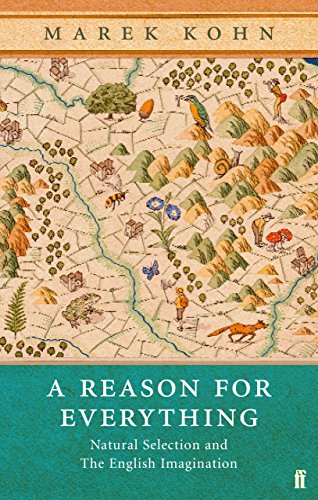
('A marvellous book.' New Scientist 'A real triumph.' Guar...)
'A marvellous book.' New Scientist 'A real triumph.' Guardian A Reason for Everything is a brilliant and surprising fusion of science and biography. It is a very human book about the Englishness of evolutionary theory and the lives and personalities - often eccentric and controversial - of those who made it. 'Marek Kohn has written yet another brilliant book about great debates in science.' Neal Ascherson, Observer 'A well-written and carefully researched account of some of the main British players in the world of evolution. Every evolutionist should read it.' Steve Jones, Nature 'An educative and fascinating tale ...Kohn is a wonderful writer.' A. C. Grayling, Literary Review
http://www.amazon.com/gp/product/0571223931/?tag=2022091-20

( As entertaining as it is enlightening, Dope Girls vivid...)
As entertaining as it is enlightening, Dope Girls vividly records the scandals and moral panics in Britain that followed the end of the First World War, as drug use—especially of morphine and cocaine—was transformed into a national menace. The cast of characters includes Billie Carleton, a West End musical actress, whose highly publicized death from an overdose in 1918 fueled public anxiety; Brilliant Chang, a Chinese restaurant proprietor; and Edgar Manning, a jazz drummer from Jamaica—identified as the villains of the affair and invested with a highly charged sexual menace. Around them swirled a raffish group of seedy and rebellious hedonists. Britain was horrified and enthralled—the drug problem was born, amid a gush of exotic tabloid detail. A cult classic in Britain, Dope Girls remains both timely and instructive.
http://www.amazon.com/gp/product/1862076189/?tag=2022091-20
http://www.amazon.com/gp/product/B01FEMA378/?tag=2022091-20

http://www.amazon.com/gp/product/B012HUZT8S/?tag=2022091-20
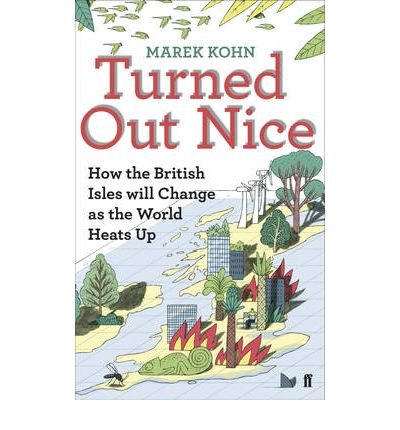
(Deals with what we know about climate change into the fut...)
Deals with what we know about climate change into the future of a small corner of the planet: the islands of Britain and Ireland. This title looks at six landscapes and one city to show how our world may have altered over the course of the century.
http://www.amazon.com/gp/product/B00EQC3T3I/?tag=2022091-20
http://www.amazon.com/gp/product/B01K0V6796/?tag=2022091-20
http://www.amazon.com/gp/product/B00Y31BEIO/?tag=2022091-20
He holds an undergraduate degree in neurobiology from the University of Sussex, a Doctor of Philosophy from the University of Brighton and has held fellowships at both schools.
He is the author of seven books and hundreds of articles He is currently an honorary research fellow with the latter. His writing has appeared in The Independent, New Scientist, Prospect, Financial Times, and The Guardian, and he writes frequently for the New Statesman.
In 1999, Kohn had proposed, together with the archaeologist Steven Mithen, the so-called "sexy hand-axe hypothesis."
Kohn has also written about the possible future effects of climate change on Britain"s landscape and society.
Health inequalities; the evolutionary psychology of trust. And Poles in British society.
Kohn is also the author of a guide to the Wellcome Collection.
( As entertaining as it is enlightening, Dope Girls vivid...)
(Trust--whether between parents and children, merchants an...)
(Deals with what we know about climate change into the fut...)
('This book's primary subject is a particular way of think...)
('A marvellous book.' New Scientist 'A real triumph.' Guar...)
His first two books were on drugs, their cultural history, and their politics. Kohn"s book, A Reason for Everything (2004), has received widespread praise, including Steve Jones" stating in his Nature review that "every evolutionist should read it," and Andrew Brown, author of the Darwin Wars, writing in his Guardian review, "one of the best science writers we have."
Following the publication of his name in a list of persons invited to participate in Steve Sailer"s Human Biodiversity Group discussion pages, Kohn wrote to Lynn Conway to dissociate himself from many of the participants" scientific and political views.
