Background
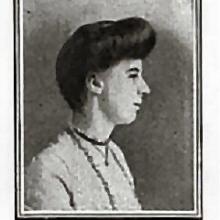
She was born on July 22, 1881, in London, England, to successful and accomplished parents.


http://www.amazon.com/gp/product/B00T564092/?tag=2022091-20
1922

http://www.amazon.com/gp/product/0060282770/?tag=2022091-20
1925

http://www.amazon.com/gp/product/B000UDEP1M/?tag=2022091-20
1926

http://www.amazon.com/gp/product/B004BRHYRK/?tag=2022091-20
1932

http://www.amazon.com/gp/product/0486492907/?tag=2022091-20
1936
She was born on July 22, 1881, in London, England, to successful and accomplished parents.
In 1890 Margery moved with her family to the United States. Over the succeeding years, until 1898, Margery was a student at the Convent School in Sharon Hill, Pennsylvania.
Her ambition to make a living as an author propelled her in 1901, at the age of nineteen, to return to her birthplace and submit to a London publisher her first novel, The Late Returning, which was published in 1902 and aimed at an adult audience. It did not sell well and neither did her subsequent novels, The Price of Youth, and The Bar.
In 1907 she and her family left England, heading first to Paris, where Francesco was head of the rare books department at Brentano's. They later settled in Turin, Italy. In August 1914 Italy, along with the rest of Europe, was plunged into World War I and Francesco Bianco joined the Italian Army. While remaining home with the children, Margery Bianco gained hope and inspiration from the works of the poet she called her "spiritual mentor", Walter de la Mare, who she felt truly understood the mindset of children.
In 1914, Williams wrote a horror novel, The Thing in the Woods, about a werewolf in the Pennsylvania region. The Thing in the Woods was later republished in the US in a slighty revised version under the pseudonym Harper Williams. The Thing in the Woods was known to H. P. Lovecraft, and some commentators think it may have influenced his "The Dunwich Horror". He also wrote a poem entitled "On The Thing in the Woods by Harper Williams."
At the end of 1918 the Great War had ended, but postwar hunger and deprivation became a problem in Europe. Bianco had retained her US residency and by 1921 gained permission to return, along with her family, to the United States. Inspired by the innocence and playful imagination of her children, as well as the inspiration she felt from the magic and mysticism contained in the works of Walter de la Mare, she decided to resume her writing, and gained almost immediate celebrity.
The Velveteen Rabbit or How Toys Become Real was Margery Williams Bianco's first American work, and it remains her most famous. It has remained a classic piece of literature through numerous adaptations in children's theatre as well as on radio, television and in the movies.
After becoming a renowned author, Bianco wrote numerous other children's books, with her son becoming the namesake of one of them, 1925's Poor Cecco: The Wonderful Story of a Wonderful Wooden Dog Who Was the Jolliest Toy in the House Until He Went Out to Explore the World, about the interactions of children's toys with each other and with the human, animal, and toy members of the world beyond the toy cupboard.
Each year, for the remaining two decades of her life, Bianco produced numerous books and short stories. Most of them continued her preoccupation with toys coming to life and the ability of inanimate objects and animals to express human emotions and feelings. There was always melancholy, but in the end the reader emerged spiritually uplifted. 1926's The Apple Tree and The Adventures of Andy, 1927's The Skin Horse, also illustrated by Pamela, 1929's The Candlestick, 1930's Other People's Houses and 1931's The House that Grew Smaller are among some of her works from that period. Final years In her final nine years, Bianco interspersed children's books with novels for young adults. These all featured young people who were in one way or another isolated or alienated from mainstream society and the joy, success, prosperity and social acceptance seemingly enjoyed by their peers.
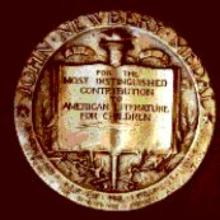
One of those books, Winterbound, about two girls, still in their teenage years, who are called upon to assume adult responsibilities in caring for their young siblings, when the parents have to go away suddenly, was a runner-up for the 1937 Newbery Medal showcasing excellence in youth literature. In 1971, upon the establishment of the Newbery Honor, the work was retroactively distinguished with that prestigious citation. In 1939, as her native Britain entered World War II, Bianco began to include patriotic themes and references to European history in her works, such as 1941's Franzi and Gizi.
Her final book, 1944's Forward Commandos!, was an inspirational story of wartime heroism, which included as one of its characters a black soldier. Acknowledging the contribution of African-Americans to the war effort was extremely rare in literary output of the time and that fact was noted in the book's reviews. Margery Williams Bianco did not live to see World War II come to an end. As Forward Commandos! went on sale, she became ill and, after three days in hospital, died at the age of 63.
Quotes from others about the person
“Bianco has caught that timeless thing, the spirit of boyhood, and with skill and complete understanding.” - Elizabeth B. Spring about Forward, Commandos!, Saturday Review of Literature.
In 1904, Margery (Williams) Bianco was married to Francisco Bianco, who was employed as the manager of one of the book departments. The couple had two children: Cecco (son) and Pamela (Mrs. Robert Schlick).