Background
Mark Abraham Enumah was born on July 26, 1978, in Obiaruku, Nigeria. Son of Isaac and Comfort Enumah.


(The oil and gas industry in Nigeria, a critical driver of...)
The oil and gas industry in Nigeria, a critical driver of the nation’s economy, is inherently exposed to numerous risks that threaten its stability, profitability, and sustainability. This paper explores the multifaceted risks confronting Nigeria’s oil and gas sector and evaluates the effectiveness of current risk management strategies. The analysis categorizes risks into operational, financial, regulatory, environmental, geopolitical, and market-based challenges, each contributing to the sector's volatility. Key risks include oil theft, pipeline vandalism, fluctuating global oil prices, environmental hazards, regulatory inconsistencies, and security challenges in oil-producing regions. These risks not only impact production efficiency and revenue generation but also deter foreign and local investments, further exacerbating the sector's vulnerabilities. The study assesses risk management strategies employed by industry stakeholders, such as regulatory reforms, advanced surveillance technologies, and community engagement programs. Despite these efforts, implementation gaps, corruption, and inadequate funding often hinder their effectiveness. To address these challenges, the paper recommends a holistic risk management framework that integrates proactive measures, such as enhanced technological adoption, improved regulatory consistency, and robust contingency planning. Strengthening collaboration between government agencies, industry players, and host communities is emphasized to ensure a cohesive approach to mitigating risks. Additionally, the adoption of global best practices and diversification into renewable energy sources are highlighted as long-term solutions. By systematically analyzing risks and proposing targeted strategies, this paper aims to contribute to a more resilient and sustainable oil and gas industry in Nigeria, capable of navigating its complex risk landscape.
https://zenodo.org/doi/10.5281/zenodo.14753089
2025

(Nigeria’s oil and gas sector plays a pivotal role in the ...)
Nigeria’s oil and gas sector plays a pivotal role in the country’s economy, accounting for the majority of its export earnings and government revenue. However, the value chain faces significant challenges that undermine its potential to drive sustainable growth and development. This paper examines critical issues in Nigeria’s upstream and midstream subsectors, which encompass exploration, production, transportation, and processing activities. The upstream subsector grapples with challenges such as oil theft, pipeline vandalism, and outdated infrastructure, leading to inefficiencies in production and declining output. Additionally, regulatory uncertainties and security concerns in oil producing regions exacerbate these issues. In the midstream subsector, insufficient pipeline infrastructure, poor maintenance, and limited refining capacity hinder the efficient transportation and processing of hydrocarbons, resulting in high import dependency for refined products. These challenges have profound economic and environmental impacts, including revenue losses, environmental degradation, and reduced investor confidence. This paper identifies a need for targeted solutions, such as policy reforms to enhance regulatory clarity, increased investment in modern infrastructure, and the adoption of advanced technologies to improve operational efficiency. Furthermore, strengthening security measures and promoting public-private partnerships (PPPs) are essential for fostering a more resilient value chain. By addressing these systemic issues, Nigeria can unlock the full potential of its oil and gas resources, promote economic diversification, and improve energy security. This paper concludes with strategic recommendations aimed at fostering long-term sustainability and competitiveness in Nigeria’s upstream and midstream oil and gas subsectors.
https://www.ijmrsti.com/2025/01/31/nigerias-oil-and-gas-value-chain-challenges-impacts-and-solutions-with-focus-on-upstream-and-midstream-subsector/
2025
production chemist Quality control chemist Oil and Gas with Energy Management
Mark Abraham Enumah was born on July 26, 1978, in Obiaruku, Nigeria. Son of Isaac and Comfort Enumah.
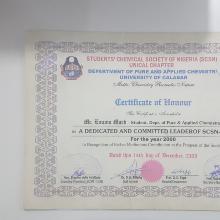
In 1997, Mark Abraham Enumah commenced his academic journey in Applied Chemistry at the University of Calabar, Nigeria. During his undergraduate studies, he was actively involved in academic and cultural organizations, including the Students’ Chemical Society of Nigeria and the Federated Union of Ndokwa Students. He successfully earned his Bachelor of Science degree in February 2001. In pursuit of advanced knowledge and leadership in the energy sector, he began a Master of Science program in Oil and Gas with Energy Management at the University of East London, England, in September 2024.
Mark Abraham Enumah began his professional journey in oil and gas analysis with an internship at Warri Refinery and Petrochemical Company—a division of the Nigerian National Petroleum Corporation (NNPC)—during the 1999/2000 academic year. There, he gained valuable experience in Production Programming and Quality Control. Following the completion of his National Youth Service Corps, he joined Globestar Engineering Company Nigeria Limited, a subsidiary of Stolt Offshore S.A., as a Material Clerk in January 2003.
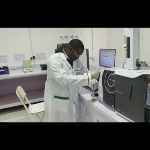
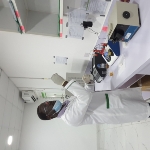
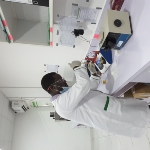
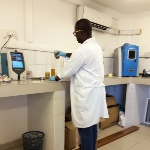
In 2006, he advanced to Intels Nigeria Limited, where he was appointed Fuel Laboratory Technician. Demonstrating strong technical and leadership capabilities, he rose to the position of Laboratory In-Charge in 2014. After more than a decade of impactful contributions, he voluntarily transitioned in February 2018 to Global-Serve Limited as a Senior Laboratory Chemist.
In pursuit of international experience, he relocated to Doha, Qatar, in 2019 to serve as a Chemist – Oil and Lubricant at Accurac Laboratory Analytical Services. There, he led key quality initiatives, including preparing assessment protocols and successfully overseeing the ISO/IEC 17025:2017 audit.
In September 2021, Mr. Enumah moved with his family to Oxford, England. He began his UK-based career as a Process Technician at Lumentum Technology Limited in Towcester and currently serves as a Chemistry Technician at Zero Petroleum in Bicester, where he contributes to innovative research in synthetic fuels.

Mark Abraham Enumah was instrumental in the start-up and commissioning of the Oil Laboratory Section, where he provided strategic leadership and technical guidance throughout the process. He successfully led the laboratory team through the ISO/IEC 17025:2017 accreditation audit, achieving exceptional outcomes across all assessed lubricant parameters. A highlight of his tenure was the awarding of the ISO certification just two months later—an achievement that underscored the team's dedication, operational excellence, and his commitment to quality assurance.
(The oil and gas industry in Nigeria, a critical driver of...)
2025(Nigeria’s oil and gas sector plays a pivotal role in the ...)
2025(Self-motivation is that internal urge or push that propel...)
2024He's a married man and has five children