Background
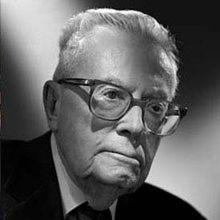
ALLAIS, Maurice Felix Charles was born in 1911 in Paris, France.

ALLAIS, Maurice Felix Charles was born in 1911 in Paris, France.
Born in Paris, France, Allais attended the Lycée Lakanal, graduated from the École Polytechnique in Paris, 1933, and studied at the École nationale supérieure des mines de Paris, 1936. Ingenieur-Dr University Paris, 1949. Dr Honorary University Groningen, Netherlands, 1964.
Director de Recherche, Centre National de la Recherche Scientifique, Paris, France, 1946-1980. Professor d’Economics Théorique, Institut de Statistique de l’University de Paris, 1947-1968. Membre, Comité National, Centre National de la Recherche Scientifique, Paris, France,
1947-1980.
Commission de l’Energie du Conseil Economique et Social, 1960-1961. Près., Comité d’Experts pour l’Etude des Options de la Politique Tarifaire dans les Transport, European Economie Community, 1963-1964. Professor d’Economics, Institute, de Hautes Etudes International de Genève, 1967-1970.
Distinguished Visiting Scholar, Center Thomas Jefferson, University Virginia, 1958-1959. Professor d’Economics, Director, Centre d’Analyse Economique, Ecole Nationale Supérieure des Paris, since 1944. Editorial Boards, Revue d’Economie Politique,
1952-, Econometrica, 1959-1969. Council, Econometric Society, 1960-1965.
His academic and non-academic posts have included being Professor of Economics at the École Nationale Supérieure des Mines de Paris (since 1944) and Director of its Economic Analysis Centre (since 1946). In 1949 he received a Doctor-Engineer title from the University of Paris, Faculty of Science. He also held teaching positions at various institutions, including at the University of Paris X-Nanterre, and the Graduate Institute of International and Development Studies in Geneva.
As an economist he made contributions to decision theory, monetary policy and other areas. He was reluctant to write in or translate his work into English, and many of his major contributions became known to the dominant anglophone community only when they were independently rediscovered or popularized by English-speaking economists. For example, in one of his major works, Économie et Intérêt (1947), he introduced the first overlapping generations model (later popularized by Paul Samuelson in 1958), introduced the golden rule of optimal growth (later popularized by Edmund Phelps) or described the transaction demand for money rule (later found in William Baumol's work).[2] He was also responsible for early work in Behavioral economics, which in the US is generally attributed to Daniel Kahneman and Amos Tversky.
Prix Laplace, Prix Rivot, l’Académie des Sciences de l’Ecole Polytechnique, 1933. Prix Charles Dupin, Académie des Sciences
Morales et Politiques, 1943. Lanchester Prize, Johns Hopkins University.
Oregon Society Amer, for outstanding paper on Oregon, 1957, 1958. Prix Joseph Dutens, Académie des Sciences Morales et Political, 1959. Prix Galabert, Société Française d’Astronautique, 1959.
Laureate, Gravity Research Foundation, United States of America, 1959. Grand Prix, Communauté Atlantique de l’Association Française, 1960. Grand Prix André Arnoux, Association pour la Liberté Economics et le Progrès Social, 1968.
Medaille d’or, Société d’Encouragement pour l’Industrie Nationale, 1970, Centre National de la Recherche Scientifique, Paris, France, 1978. Prix Robert Blanche, Prix Zerilli Marimo, Academie des Sciences Morales et Political, 1983, 1984. Fellow, Society International d’Econometrica, since 1949.
Membre, Institute, Institution Internat, de Statistique, 1951. Fellow, Oregon Society American, 1958. Honorary Member, American Economic Association, 1976.
Officier, Ordre des Palmes Académiques, 1949. Ordre de la Légion d’Honneur, 1977. Chevalier, Ordre de l’Economics National, 1977.
(The role of capital in economic development (Pontificiae ...)
Reformulation of general economic equilibrium maximum efficiency and economic calculus theories without any hypothesis
of convexity. New concepts: distributable surplus and economic loss for the whole economy. First presentation and analysis of the utility possibility curve.
Critical analysis of currently accepted theories. Capital and interest theory reformulation: new concepts. Primary income; characteristic functions.
Maximum capitalistic efficiency. Invariant general model of production as a function of interest rate verified by empirical data. First demonstration of the ‘golden rule of capital accumulation’.
Risk theory: critical analysis of neoBernoullian theories of expected utility — ‘Allais’ Paradox’. Cardinal utility empirical determination. Representation by an invariant function.
Generalisation of expected utility theory by consideration of cardinal utility moments and probability of ruin. Generalisation of general economic equilibrium and maximum efficiency theories. Application to mining research.
Monetary dynamics: hereditary and relativistic unitary formulation of demand for money and of interest rate, which leads to extraordinary empirical verifications over time and space. Monetary dynamic fundamental equation. Generating of limit cycles.
Synthesis of capital and monetary dynamic theories. New concepts: psychological rate of interest, rate of forgetfulness, psychological time, invariant functions of desired cash balances and psychological rate of interest. Time series: Schuster test generalisation for autocorrelated time series.
Test of a quasiperiodic structure. Critical analysis of probability and randomness concepts. Theorem (T); chance simulation by sum of periodic functions.
Numerous contributions: to critical analysis of French economic policy, 1945-1983. To pure and applied theory of international trade, especially of European Economie Community. To basic industries: energy, transportation, and mining research.
To fiscal and monetary policy.
Professional interests: decision theory, monetary policy,theory of games and economic behavior included the development of expected utility theory. Besides his career in economics, Maurice Allais performed experiments between 1952 and 1960 in the fields of gravitation, special relativity and electromagnetism, in order to investigate possible links between these fields
Debreu has read a fundamental work of Morris Allais: la recherche, d'une discipline economique. After the reading Gerard understood economics as a science.
Deem visited lots of Allai's economic seminars and lectures.