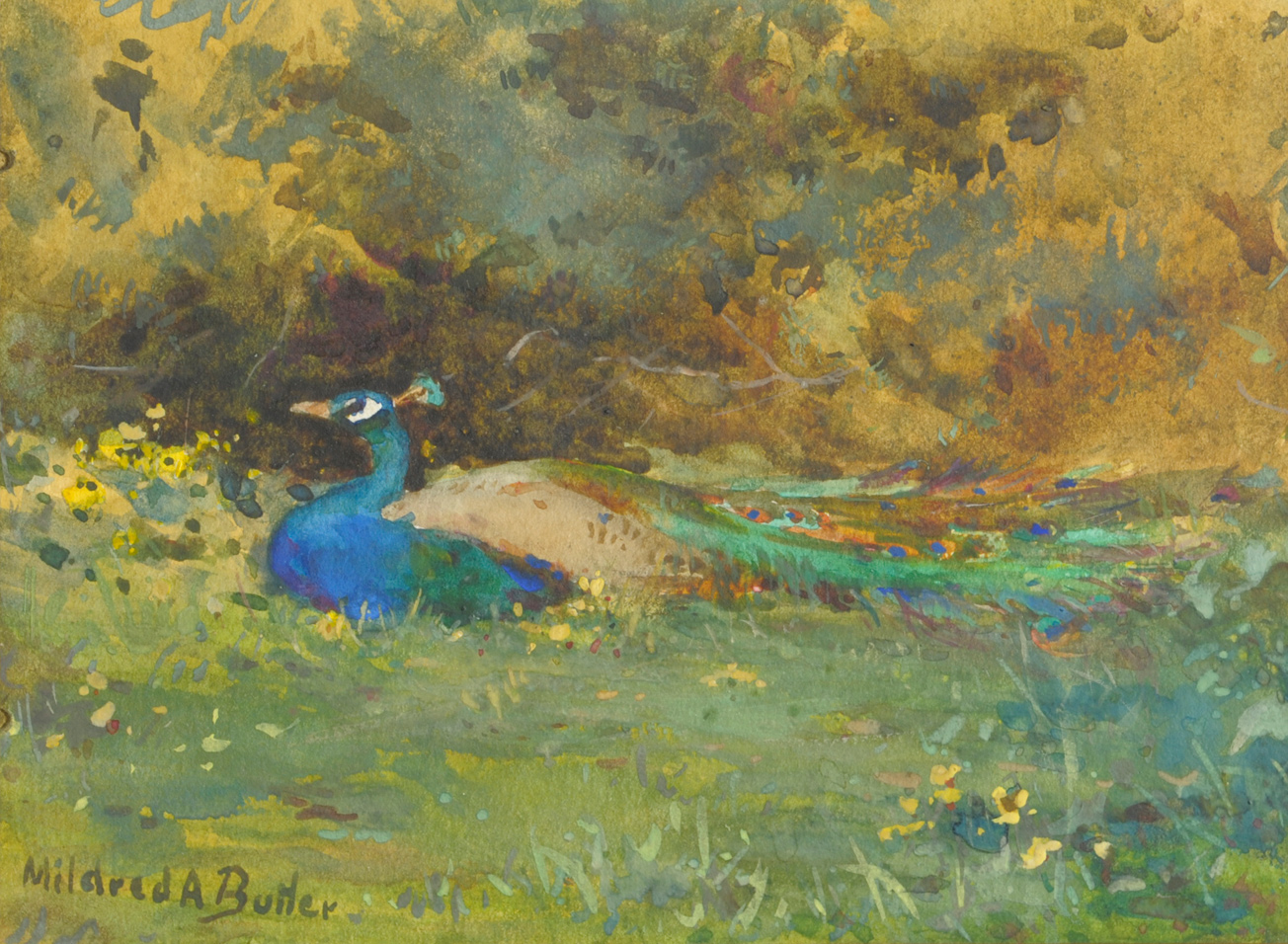
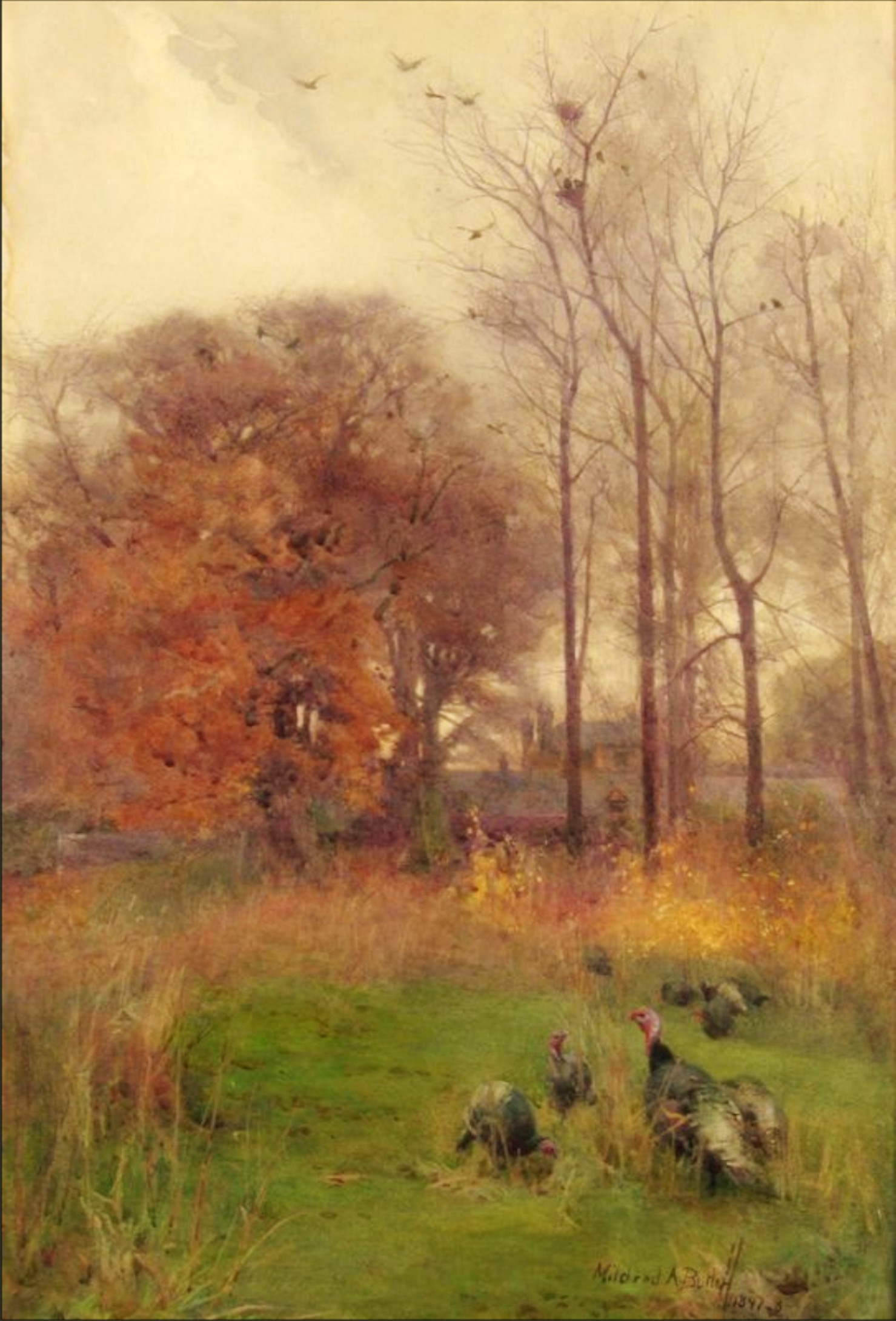
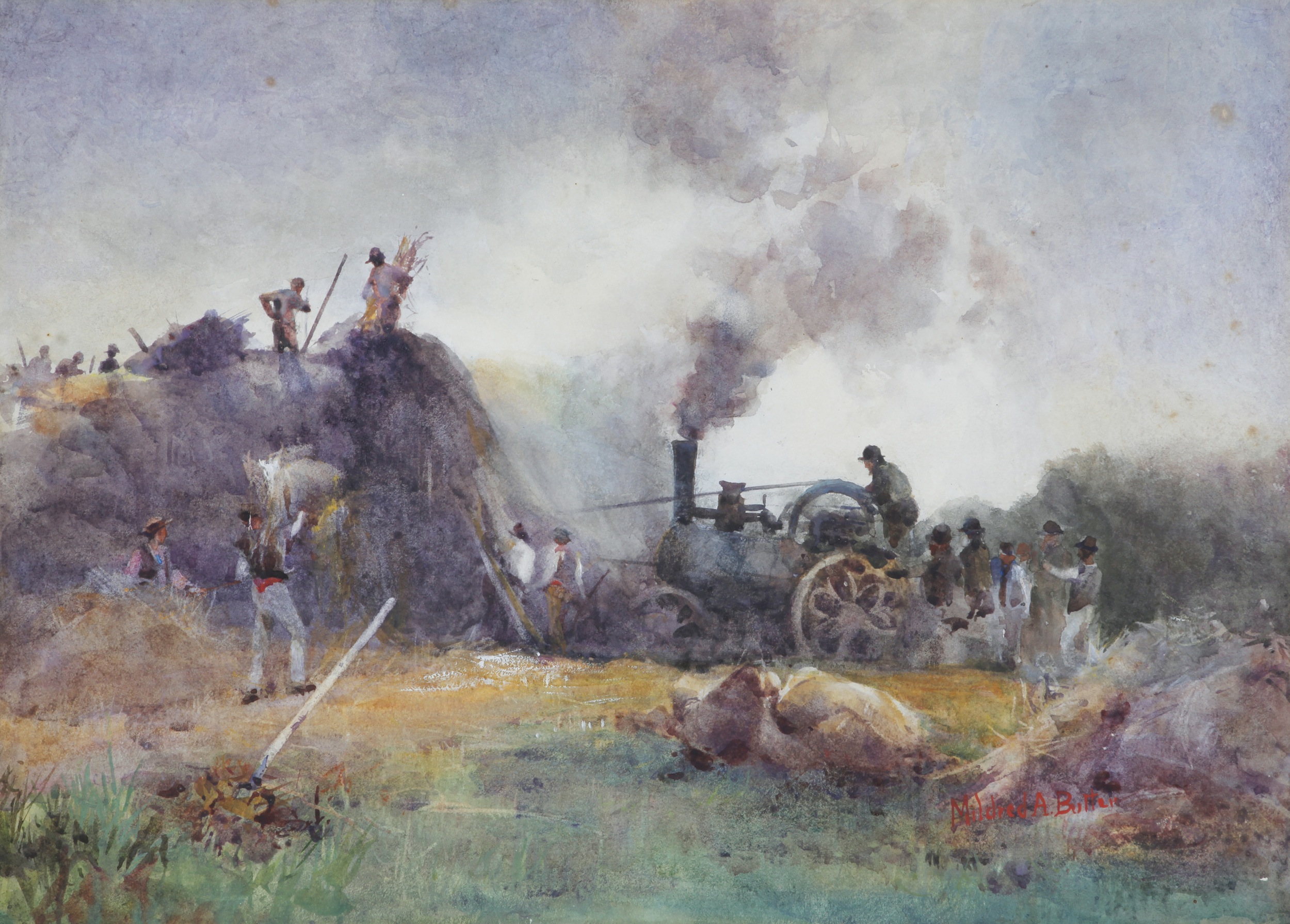
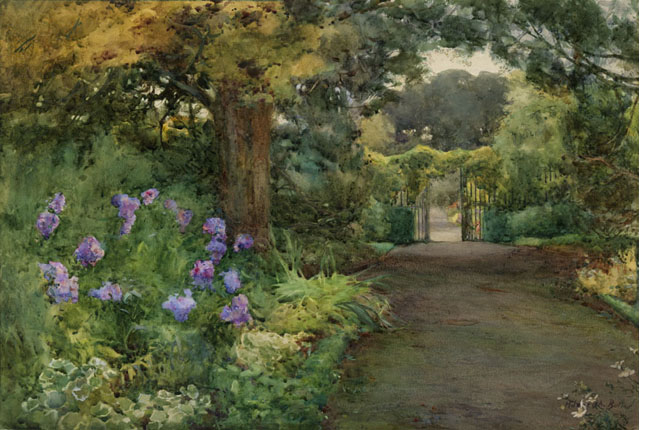
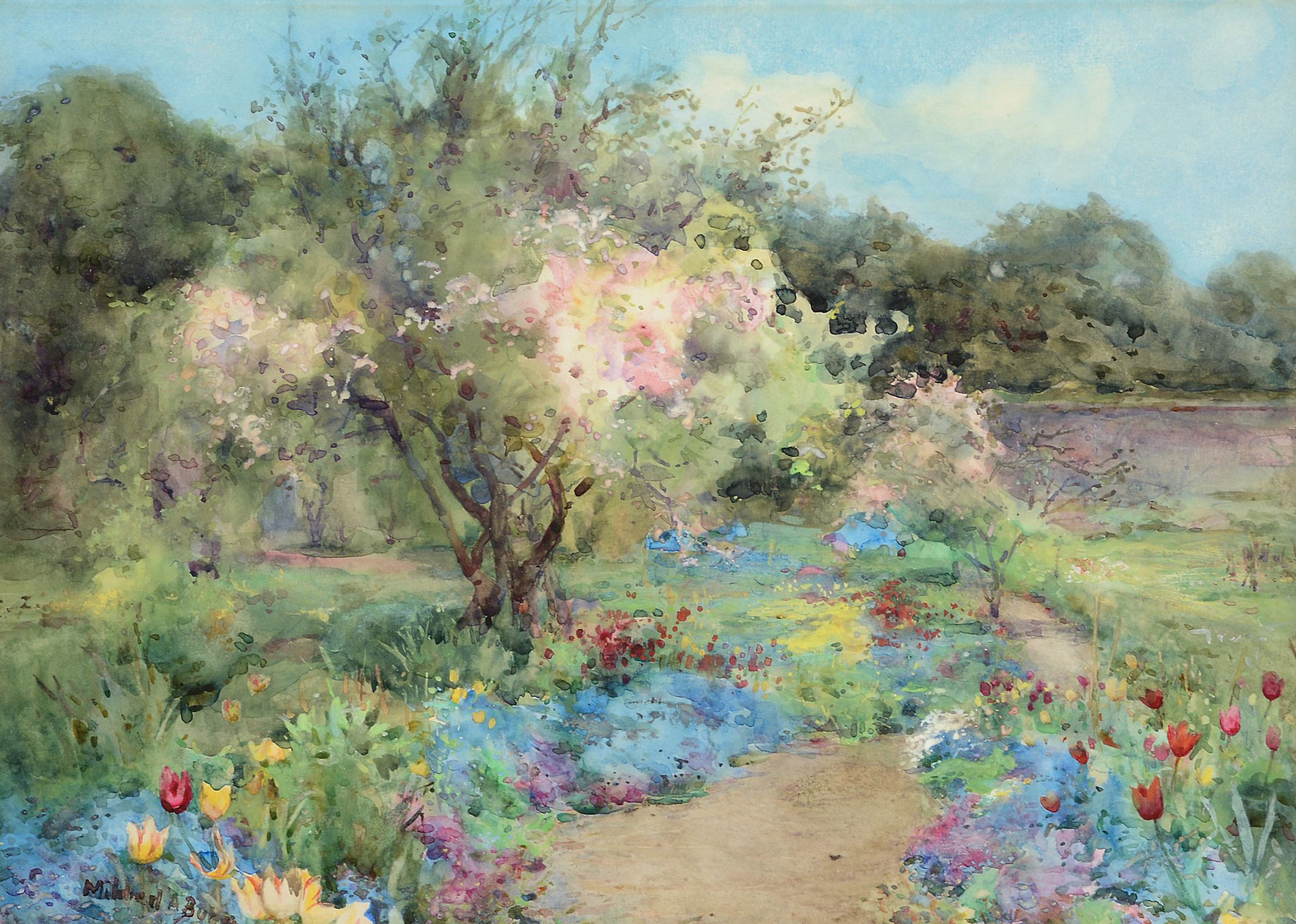
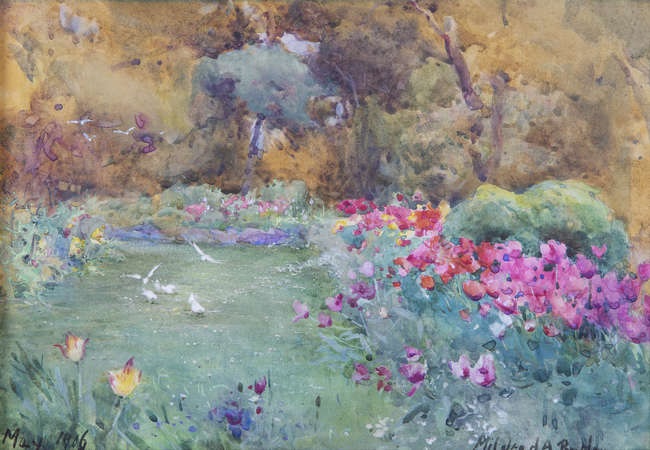
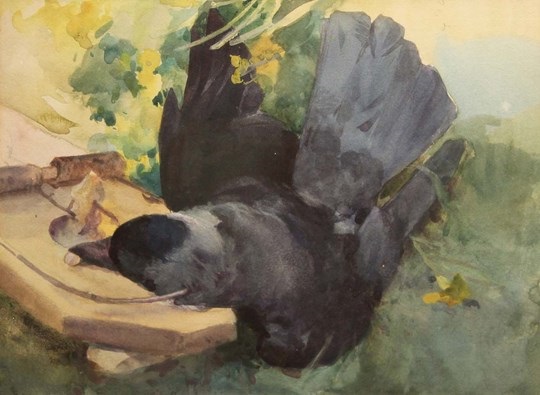
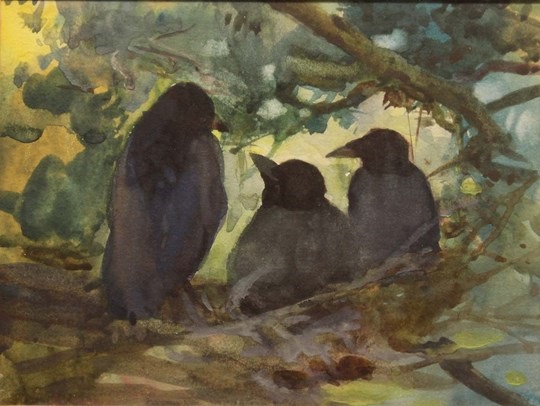
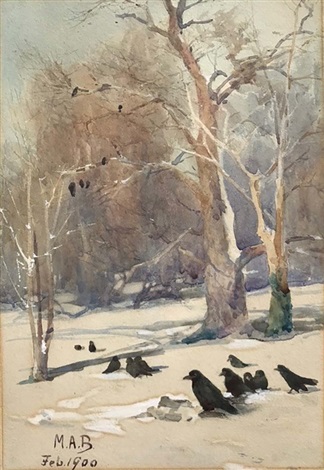
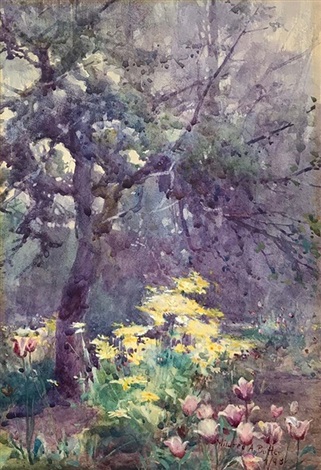
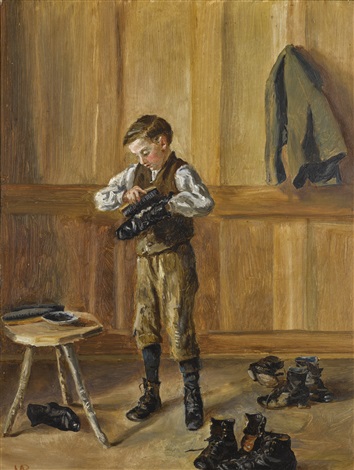
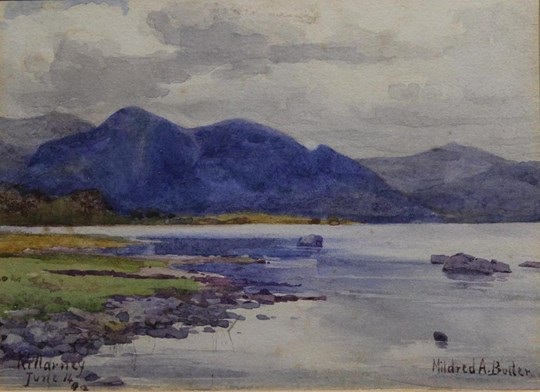
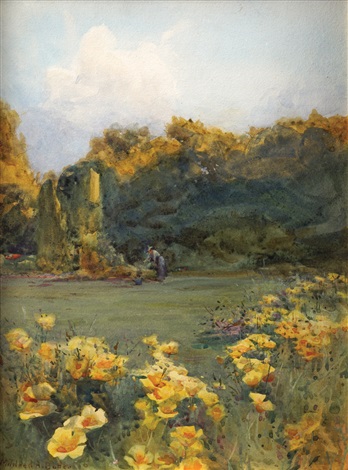
Mildred Anne Butler was an Irish artist. She represented the style of Impressionism. She mainly worked in watercolour and oil. Mildred Anne's en plein air style is dominated by such themes as nature including birds and animals, country landscapes around her Kilmurry home, and scenes of family life.
Background
Butler was born in Thomastown, Kilkenny, Ireland, on January 11, 1858. She was the youngest daughter of Captain Henry Butler, a grandson of the Edmund Butler, 11th Viscount Mountgarret, an Irish peer and politician. Her father was an amateur artist. He mainly depicted subjects from nature which he encountered on his journeys abroad, particularly exotic plants and animals.
Education
It is believed, that it was Mildred Butler's father who may have encouraged her to paint in her youth. But her serious artistic training began in London in the late 1880s, when she studied under the watercolourist Paul Jacob Naftel, whom she credited for her understanding of watercolours.
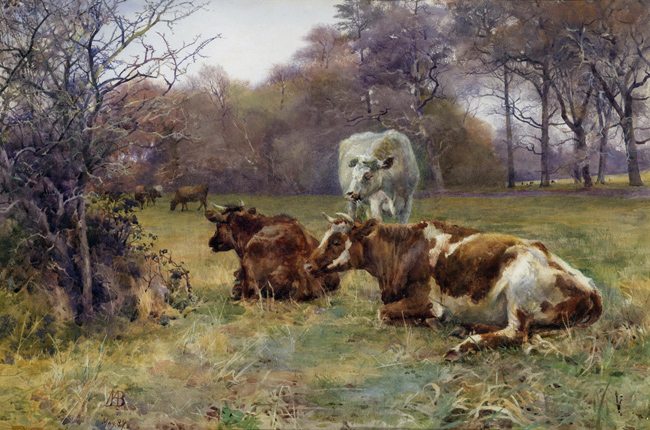
Butler continued her education at the Westminster School of Art under the direction of William Frank Calderon who specialised in animal painting and later established a school of animal painting. At Frank Calderon's School, she learned to paint cows. For these artworks, she was elected to the Old Society, the Royal Academy.
Later on, Mildred Butler went to Paris, where she studied drawing, figure drawing and fine art painting.
Career
In her late twentieths, Butler made annual visits to the continent until the outbreak of war. She made her trips to France, Switzerland, Belgium, and Italy. At the beginning of her artistic career, Butler exhibited at the Dudley Gallery in 1888 and in 1890 with the Royal Water Colour Society of Ireland. Around that time she also displayed her artworks in various galleries and institutions including the Royal Hibernian Academy, the Belfast Ramblers' Sketching Club, the Royal Academy (1889-1902) and the Royal Watercolour Society.
In 1893 her work was included in an album of watercolors presented to the future Queen Mary. The latter later purchased a watercolour by the artist. Soon Butler moved to Paris, where she became associated with the Newlyn school and spent the summers of 1894 and 1895 in Newlyn, Cornwall. At that time Newlyn was the centre for a group of artists who were interested in landscape painting. Many of them had previously studied in France.
Mildred Butler joined the Newlyn School, and Norman Garstin's studio in particular, alongside such contemporaries as Walter Osborne and Sir John Lavery. Garstin like Osborne had been a pupil of Charles Verlat, a Belgian painter from Antwerp. It is quite likely that Norman Garstin, who knew Degas and had written about Manet, introduced Mildred Butler to the work of the Impressionists.
Butler also befriended Luke Fildes and Stanhope Forbes whom she met at Newlyn. As a result, the influence of Garstin, and Forbes, as well as the contact with the Newlyn School informed Mildred Butler's development and became a significant influence on her oeuvre throughout her life.
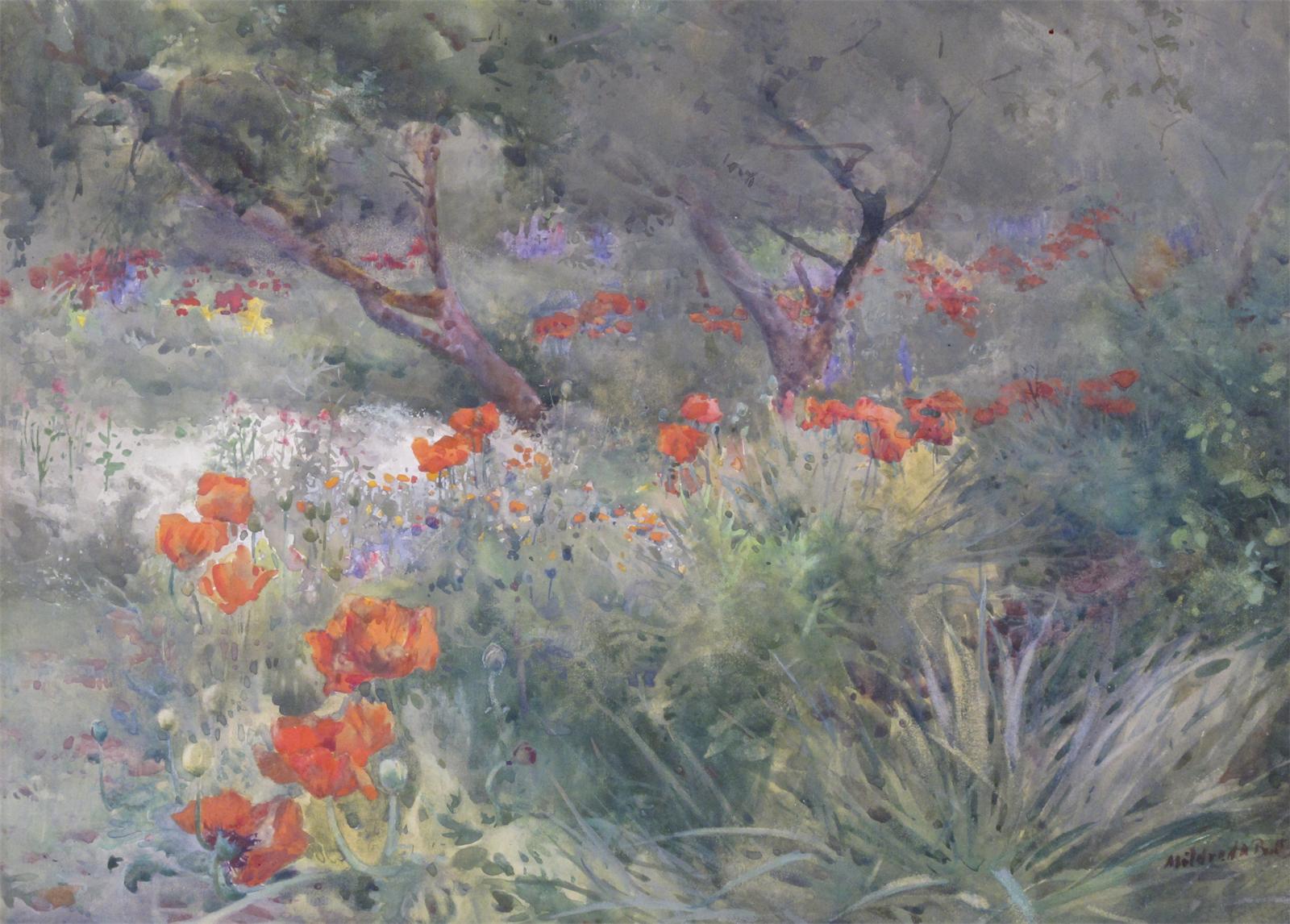
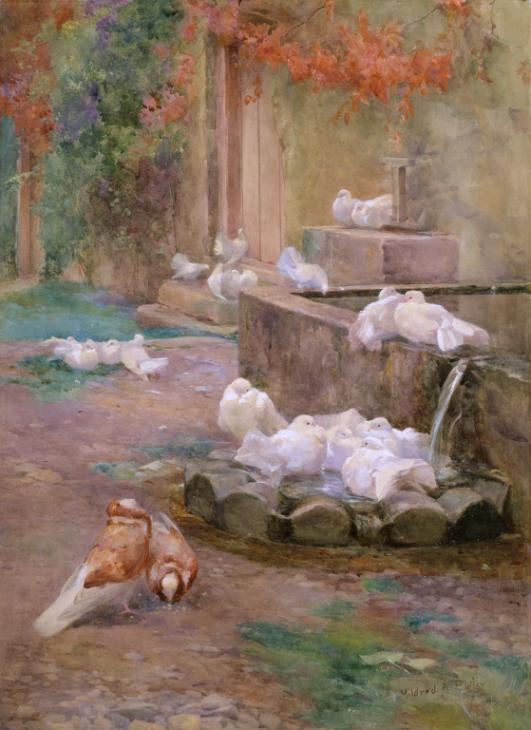
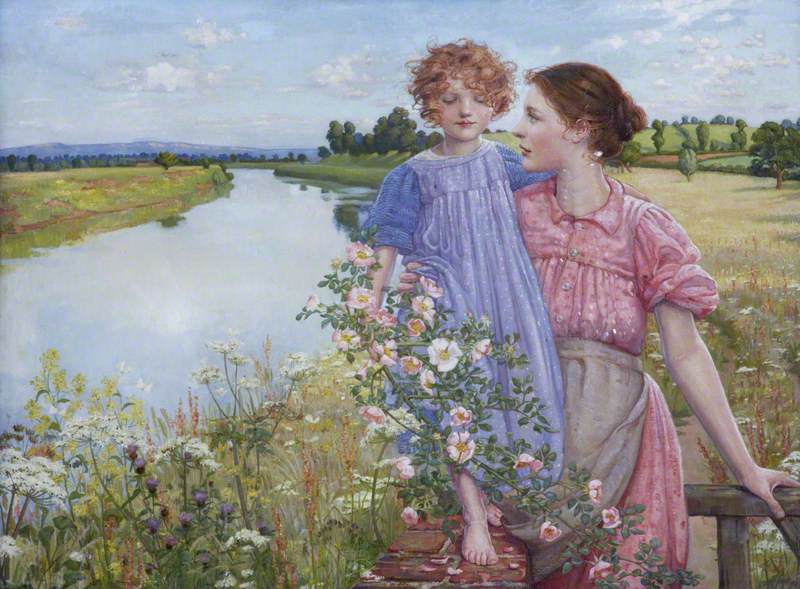
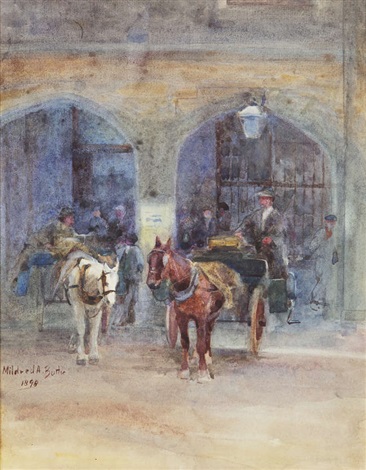
As for her style, Mildred Butler was primarily a painter in oil and watercolour of landscape, genre and animal subjects. Her range of work was dominated by the theme of nature. In addition, her house was a huge source of inspiration throughout her lifetime; its garden and surroundings provided passion for many of her artworks. She also painted genre views of villages and towns on the continent.
Her painting Morning Bath was bought by the Tate Gallery in London in 1896. This was a great honour for a female artist at that time. Mildred Anne's art became more and more popular. Butler continuously exhibited throughout her career and proved herself to be a gifted businesswoman capable of marketing her watercolours successfully with patrons such as Queen Mary of Teck and Louis IV, Grand Duke of Hesse.
Although she rarely painted her works in England, Mildred Butler exhibited there quite often. She was one of the artists selected by Hugh Lane for his exhibition of Irish painters in the Guildhall of London Corporation in 1904. In 1906 she exhibited her paintings at the Watercolour Society of Ireland, in Dublin.
In 1907 she took part in an exhibition at the New Dudley Gallery, London along with Claude Hayes, Percy French, and Bingham McGuinness, where the exhibition included such her pieces as Where the Grass Grows Green. She also exhibited regularly at the Royal Academy. During her career as an artist, she exhibited only five of her works at the Royal Hibernian Academy, the first in 1891 and the last in 1904.
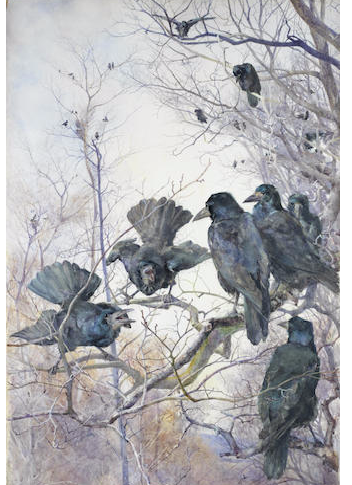
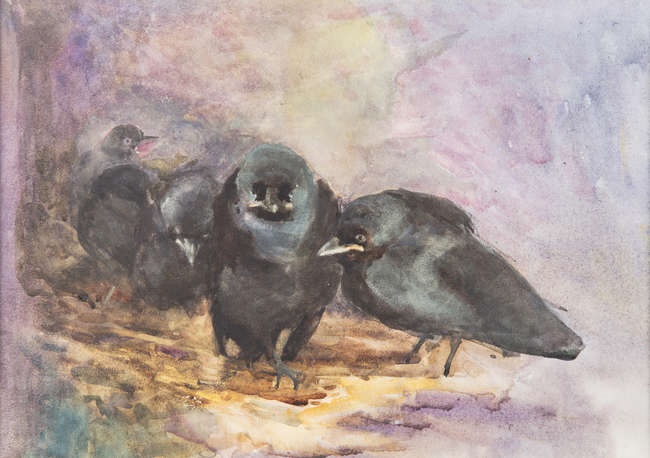
Queen Alexandra of Denmark bought one of Butler's paintings in 1910. In 1924 she also painted a tiny watercolour of rooks for Queen Mary's doll's house.
Butler continued painting in watercolours and oils until the final decade. Towards the end of her life, Mildred Anne had a lot of pain in her hands. Eventually, she had to give up painting.
Achievements
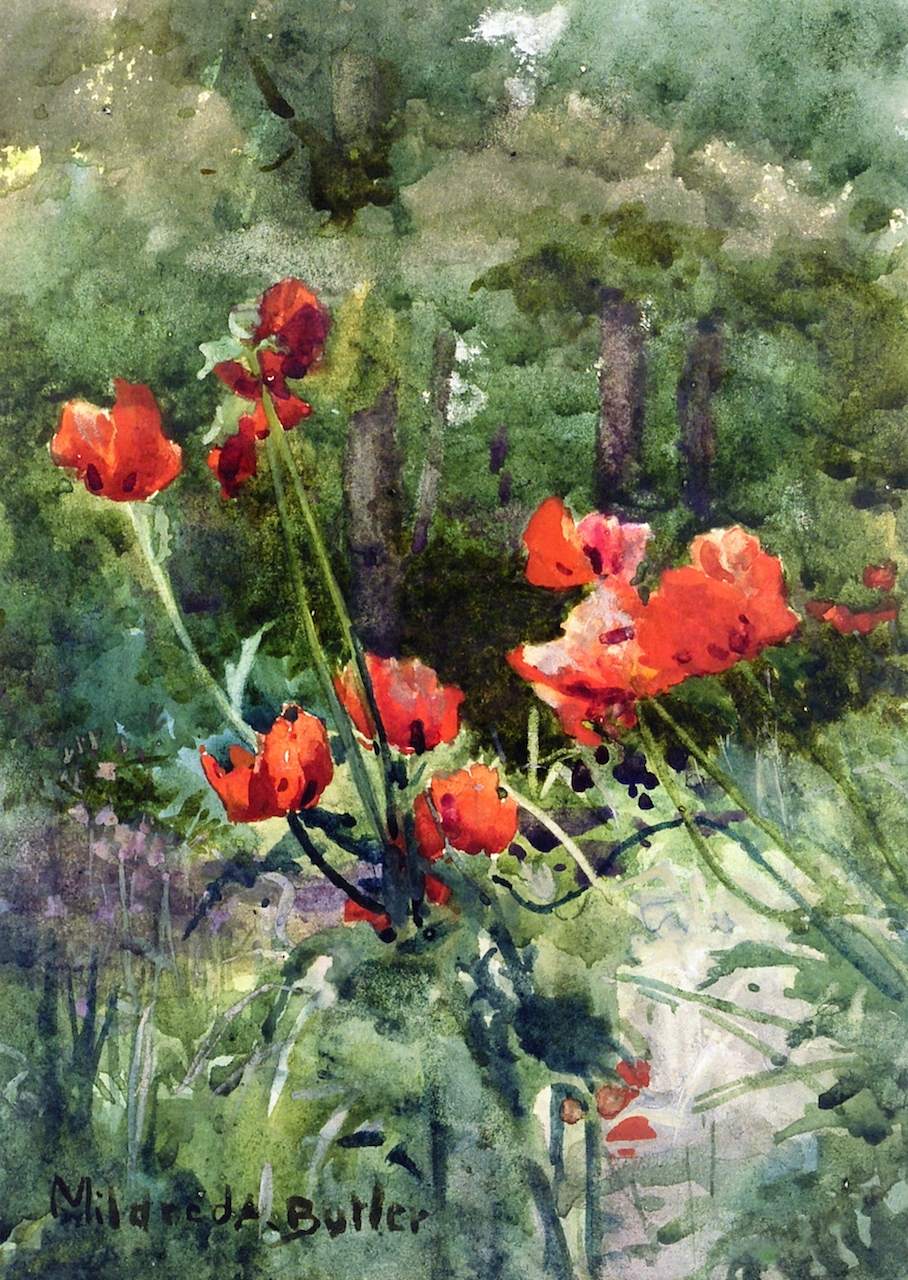
Mildred Butler was one of the first professional female painters in Ireland. Her principal works have been A Sheltered Corner (1891), A High Court of Justice (1892), Green-Eyed Jealousy (1894), The Morning Bath (1896), Raiders from the Rookery (1896), Cead Mile Failte (1898), Poppies (1904), Cats Chasing Birds (1918), Low water, Tramore, Waterford (1919), among others.
In 1980 her watercolours, drawings and sketches, as well as notes, letters and diaries were sold as part of the artist's studio sale. Some were sold in Ireland while others at a studio sale at Christie's in London. For instance, the National Gallery of Ireland bought seven watercolours by Butler for its permanent collection. Fota House in Cork keeps one of her artworks.
An Exhibition of Mildred Butler's paintings was organized by the Kilkenny Art Gallery Society at Kilkenny Castle in June 1981 which included such pieces as Where the Grass Grows Green (1904). It was later exhibited at the Bank of Ireland, Baggot Street, Dublin in August 1981 and at Christie's, King Street, London in September 1981.
In 1987 Kilkenny Art Gallery in Kilkenny presented an exhibition of Mildred Anne Butler's artworks. The show included the work Cats Chasing Birds (1918). Between August-September 1987 the Crawford Municipal Art Gallery, Cork, presented an exhibition "Mildred Anne Butler 1858-1941". And from April to June 1988 the Ulster Museum and Art Gallery, Belfast, presented an exhibition which included the painting Cats Chasing Birds (1918).
Throughout her career, Butler's artworks were exhibited as far abroad as the United States and Japan. Today, some of Mildred Anne Butler's paintings are in the National Gallery of Ireland, the Ulster Museum and the Hugh Lane Municipal Gallery in Dublin.
In addition, she is celebrated on a Postage stamp in An Post collection for female Irish artists.
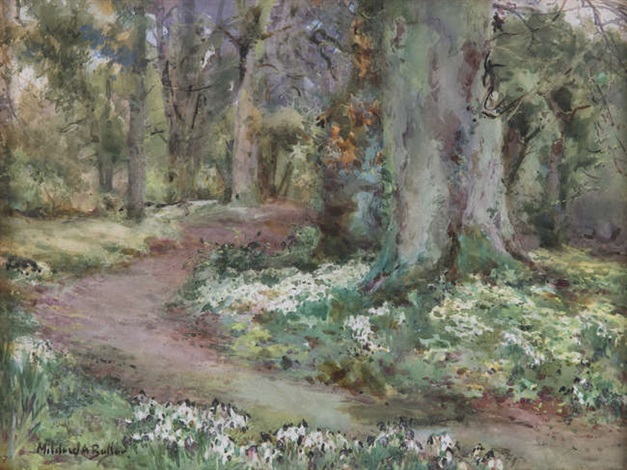
The Snowdrop Walk, Kilmurry, Thomastown, Co. Kilkenny, Ireland
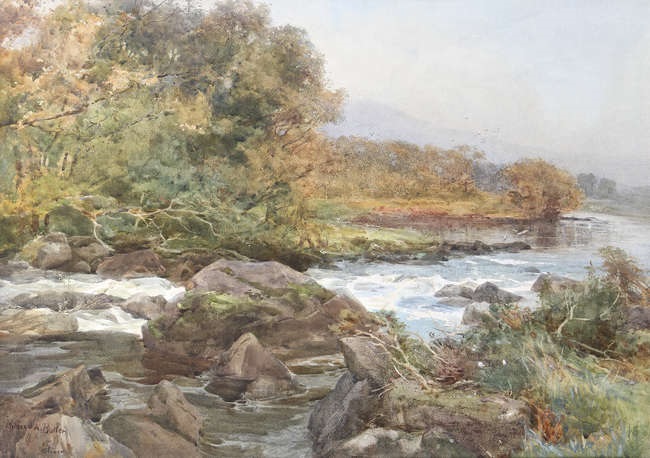
River Landscape, Glencar, Co. Kerry
A view across a Cornish estuary
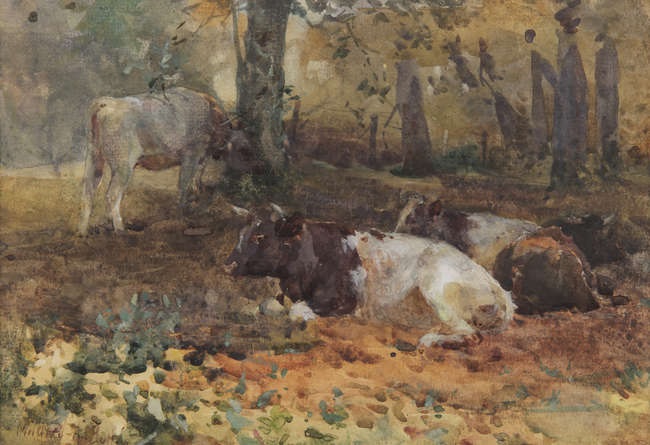
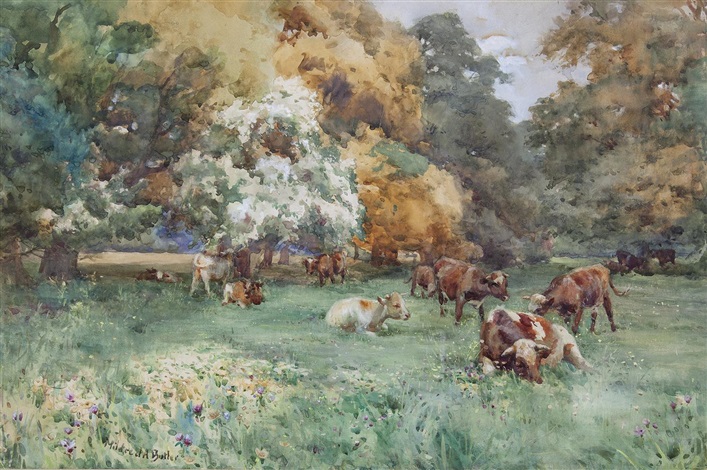
Cattle in a Woodland
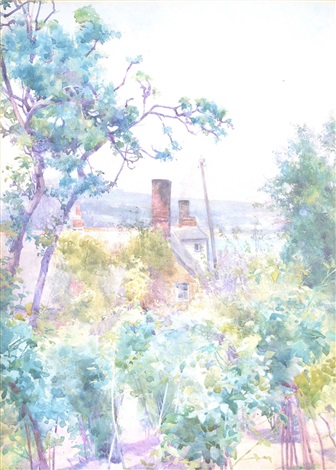
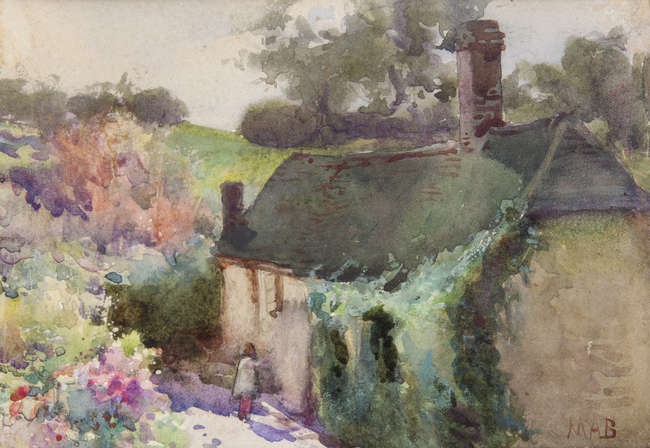
A Hampshire Cottage
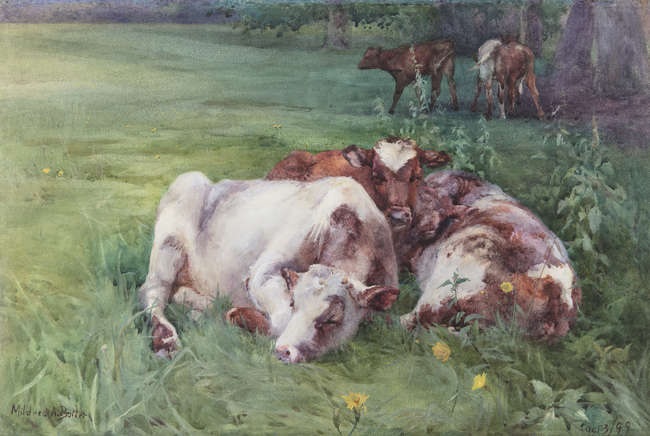
Cattle Grazing at Kilmurry
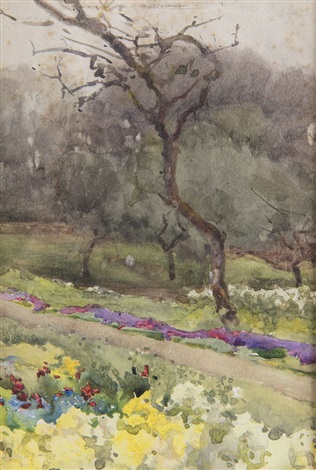
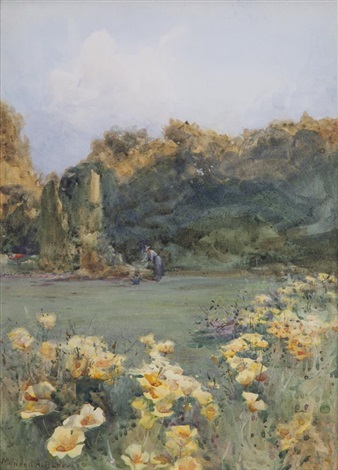
Border in Flower in Spring
Cows and Trees at Kilmurry
Eschscholzias
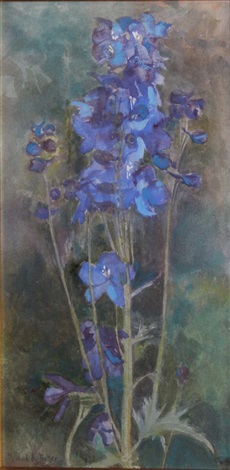
Delphinium
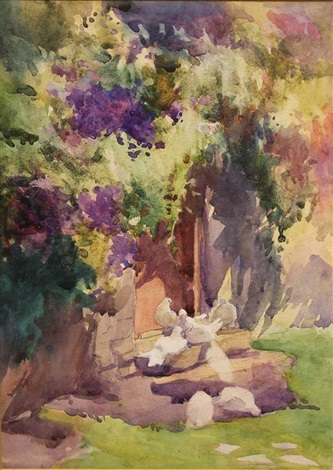
Geese at the Doorway
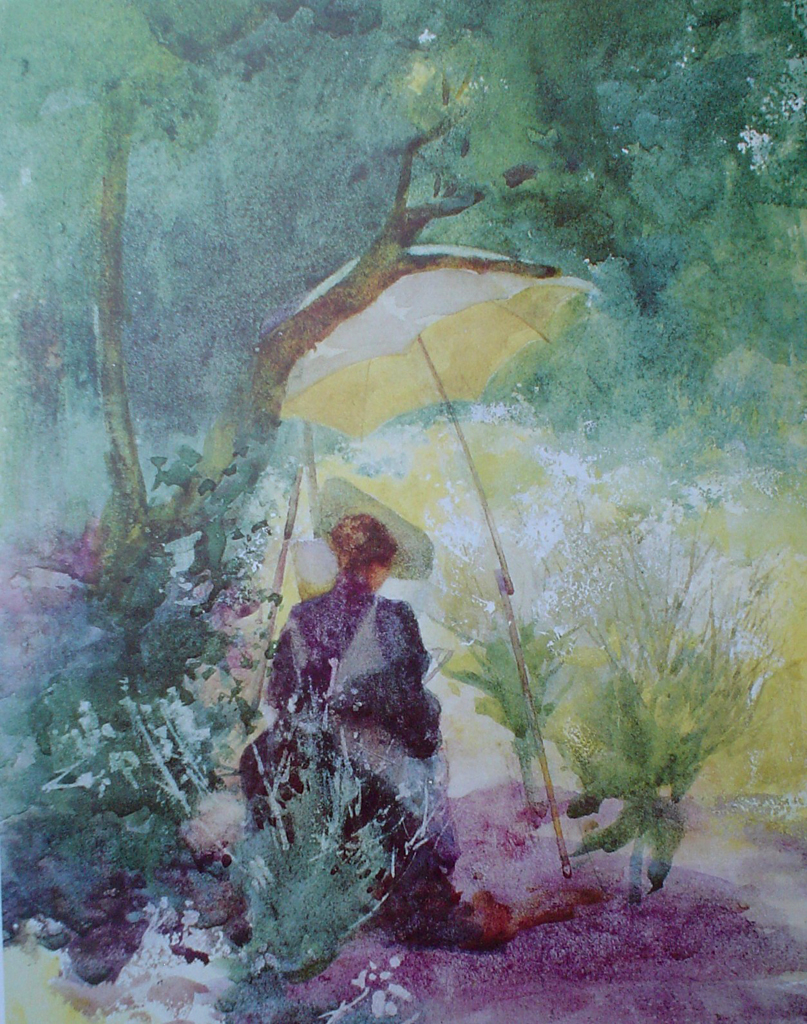
Artist in the garden
Membership
Mildred Butler became an associate member of the Royal Watercolour Society in 1896. But it wasn't until 1937 - 40 years after being granted associate membership - that she was given full membership of the society.
She was also a member of the Society of Lady Artists. In 1930 she became one of the first nine academicians elected to the Ulster Academy of Arts (later known as the Royal Ulster Academy).
Full membership since 1937.
Royal Watercolour Society
,
United Kingdom
1896
Royal Ulster Academy
,
United Kingdom
1930
Connections
Father:
Henry Butler
Great-grandfather:
Edmund Butler, 11th Viscount Mountgarret
Edmund Butler, 11th Viscount Mountgarret (1745-1793) was an Irish peer and politician.