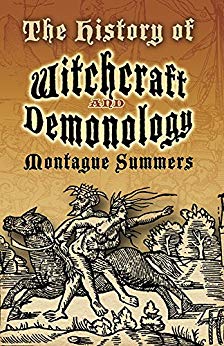
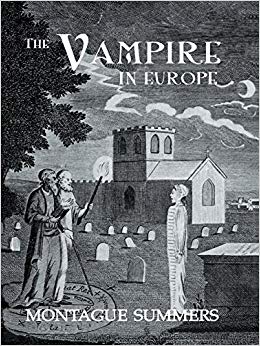
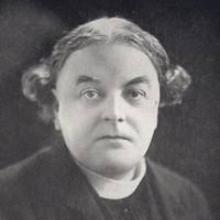
Montague Summers was an eccentric British author, historian, poet and clergyman. He is known primarily for his scholarly work on the English drama of the 17th century, as well as for his idiosyncratic studies on witches, vampires, and werewolves, in all of which he professed to believe.
Background
Augustus Montague Summers was born on April 10, 1880, in Clifton, City of Bristol, United Kingdom. Summers was the youngest of seven children born into a financially secure family. His father, a businessman and bank director who had known Anthony Trollope, constantly urged Trollope’s novels upon Summers when the bookish youngster complained that he had exhausted his family’s library. Rites of passage were often marked for Summers by his father’s permitting him access to the locked bookcases that held the works of such paternally proscribed authors as Henry Fielding, always with the caveat that they be kept from his sisters.
In his autobiography, The Galanty Show, Summers recalled the times spent in this library as among the happiest of his life. His favourite boyhood amusement, however, was a toy stage, or “miniature theatre,” with which he spent hours reenacting abridged versions of seventeenth-century dramas.
Education
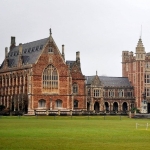
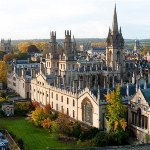
Frail and sedentary, Summers avoided athletic competition both at the private academy that he attended and later at Clifton College. He is said to have escaped his classmates’ derision because of an impudent willingness to talk back to his schoolmasters. In 1899 Summers entered Oxford as an honours student in the school of theology. He went from Oxford to Lichfield Theological College as a candidate for holy orders, taking his Bachelor of Arts degree in 1905 and his Master's degree a year later.
Career
In 1908 Summers was ordained as a deacon and appointed curate of a small Bristol parish. He left this post after he and another deacon were prosecuted on charges of pederasty. While the other man was found guilty, Summers was acquitted. In 1909 Summers converted to Roman Catholicism. He claimed to have been ordained a priest in 1909, at which time he added Alphonsus Joseph-Mary to his name. He was commonly known as the “Reverend Montague Summers”, but his standing and position within the Catholic Church was never really made clear and his name dose not appear on any clergy lists of Great Britain. Nevertheless, after 1913, and until his death, Summers referred to himself as a priest and habitually wore full clerical vestments. He concurrently held various teaching jobs, working as a teacher intermittently at various schools, including Hertford Grammar, the Central School of Arts and Crafts in Holborn, and Brockley School in south London from 1911 until 1926.
From 1926, when he was in his mid-forties, Summers' writings and editing earned him the freedom to pursue full time his many enthusiasms and love of travel, particularly in Italy. The bulk of his activity then was related to English Restoration drama of the seventeenth century. Beginning in 1914 with the Shakespeare Head Press, Summers edited a large number of Restoration plays for various publishers, accompanied by lengthy critical introductions which were highly praised in their own right, and did much to rescue that period of literature from oblivion.
Not content with editing and introducing these plays, Summers helped in 1919 to found the Phoenix Society whose aim was to present them on stage in London. The venture was an immediate success and Summers threw himself wholeheartedly and popularly into all aspects of the productions, which were staged at various theatres. This brought him a measure of fame in London society and invitations to the most select salons, which he dazzled with his wit and erudition. By 1926 he was recognized as the greatest living authority on Restoration drama.
Religion
Religion always played a large part in Summers' life. He was raised as an evangelical Anglican but his love of ceremonial and sacraments drew him to the High Church. After graduating in Theology at Oxford he took the first steps towards holy orders at Lichfield Theological College and entered his apprenticeship as a curate in the diocese of Bitton near Bristol. This ended in a cloud of unproven scandal involving choirboys that was to dog him for the rest of his life. A year or so later he converted to Catholicism and was soon claiming to have been ordained a Catholic priest, adopting the title of Reverend. There was some doubt about the legitimacy of his orders though. He was in the habit of celebrating the Mass publicly when travelling abroad, so must have been able to produce some kind of evidence, but at home in England he only performed the sacraments in private. The truth is probably that he was ordained technically but outside the regular procedures of the Church. He therefore appeared on no clergy list in the United Kingdom, was under the authority of no bishop and could not practise publicly without first submitting to such authority.
None of his close friends doubted the sincerity of his religious faith, however, no matter how blasphemous his conversation often seemed.
Membership
Despite his conservative religiosity, Summers was an active member of the British Society for the Study of Sex Psychology, to which he contributed an essay on the Marquis de Sade.
Personality
Summers was a fascinating character in himself. Throughout his life he was described by acquaintances as kind, courteous, generous and outrageously witty; but those who knew him well sensed an underlying discomfort and mystery. Despite his cherubic demeanour and affability some people found him sinister, a view he delighted in encouraging. It was always hard to tell how much Summers was putting on a show when in company, particularly in his early life, but he does appear to have been driven by demons, not least of them being those arising from having homosexual tendencies in an intolerant age. And although in everyday life he was kind and considerate, when engaged in academic debate he was furiously intolerant. There were also rumours that in his youth Summers had dabbled in black magic. If true, the only effect seems to have been to turn him completely against such meddling later. He may have been fascinated, even obsessed by witches, vampires and the like but the tone of his writings is consistently hostile towards them.
Physical Characteristics:
In appearance Summers was plump, round-cheeked and generally smiling. His dress resembled that of an eighteenth-century cleric, with a few added flourishes such as a silver-topped cane depicting Leda being ravished by Zeus in the form of a swan. He wore sweeping black capes crowned by a curious hairstyle of his own devising which led many to assume he wore a wig. His voice was high pitched, comical and often in complete contrast to the macabre tales he was in the habit of spouting.
Quotes from others about the person
Dame Sybil Thorndike wrote of him: 'I think that because of his profound belief in the tenets of orthodox Catholic Christianity he was able to be in a way almost frivolous in his approach to certain macabre heterodoxies. His humour, his "wicked humour" as some people called it, was most refreshing, so different from the tiresome sentimentalism of so many convinced believers.'