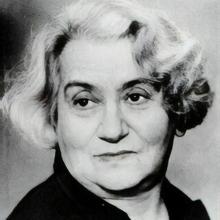
Olga Forsh was a Russian Soviet writer. She is known mainly as the author of historical novels that draw the revolutionary-democratic struggle in Russia on the examples of prominent personalities.
Background
Olga Forsh was born on May 16, 1873, in Gunib, Dagestan,Russia, where her father was the chief of the military district. Her mother died early, and father remarried. After his death in 1881, his stepmother sent Olga to the Olginsky gymnasium in Stavropol and the "Orphan Institute" in Moscow. At first, Olga was attracted by her career as an artist and studied at art workshops in Kiev, Odessa, and Saint Petersburg, she also learn from Chistyakov.
Education
In 1891 she graduated from the Nikolaev Orphan Institute in Moscow. She studied at drawing schools in Kiev and Odessa.
Career
Olga Forsh had published her works since 1907. She is an author of many short stories and historical novels. Forsch also wrote stories describing the pre-revolutionary life of the city and village, books of satirical stories on foreign topics, screenplays, and plays. The writer's works have been translated into the languages of the peoples of the USSR and foreign languages.
She worked as an art teacher at the Levitskaya School in Tsarskoye Selo in 1910-1911, but she turned toward writing as time went by. Olga's husband died of typhus while serving with the Red Army in Kiev. After his death she continued to dedicate herself to cultural work.
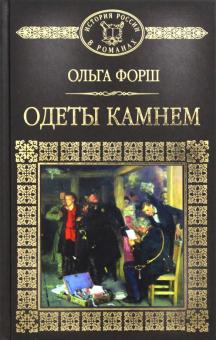
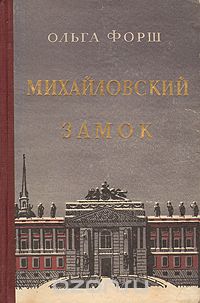
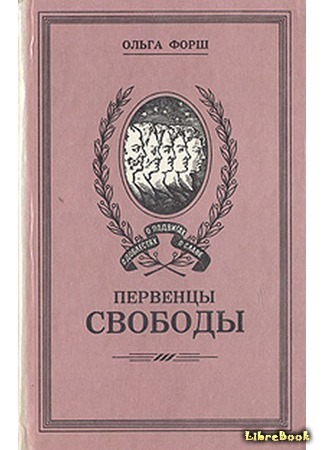
She devoted several novels to the history of revolutionary thought and the revolutionary movement in Russia. Among them are Palace and Prison (1924-1925, also made into a film script), about the revolutionary Mikhail Stepanovich Beideman, The Fervid Workshop (1926), about the Revolution of 1905-1907, and Pioneers of Freedom (1950-1953), which deals with the Decembrists. She also wrote the three-part biographical novel Radishchev, which comprises the books Jacobin Leaven (1932), The Landlady of Kazan (1934-1935), and The Pernicious Book (1939). Her experimental play The Substitute Lecturer was published in 1930.
The fate of the creative individual under an oppressive regime is treated in the novel The Contemporaries (1926), which is about Nikolay Gogol and A. A. Ivanov.
In the novels The Lunatic Ship (1931) and The Raven (originally titled The Symbolists, 1933), Olga portrayed life among the Street St. Petersburg artistic intelligentsia in the early 20th century and the first post revolutionary years and created portraits of such contemporaries as Maxim Gorky, Alexander Blok and Fyodor Sologub. Olga rose to prominence in the arena of Soviet literature, playing important roles at the 1934 Congress of Writers, and at the 1954 Congress, where she gave the opening address.
Achievements
She was awarded the Order of the Red Banner of Labour (twice) and the Order of the Badge of Honour.
In 1895 Olga Komarova became the wife of Boris Eduardovich Forsh, the son of Lieutenant General E. I. Forsh, who led the Corps of military topographers. Olga and Boris often lived in the Smolensk estate of Gerchiki, which was owned by Boris's sister and her husband A. p. Meshchersky.
husband:
Boris Forsh
father-in-law:
Edward Forsh
He came from the Baltic Germans. Was a chief of the Military topographical Department of the General staff-chief of the Corps of military topographers, member of the Russian geographical society, where from 1866 to 1885 he was assistant Chairman, and from 1879 to 1886 was a Chairman of the Department of mathematical geography.
Edward had 5 children.
The name of Eduard Ivanovich Forsh is written on gold boards in two military academies: the Engineering Academy and the General staff; his surname was stamped on the jubilee medal "in memory of the 50th anniversary of the Corps of military topographers".
mother-in-law:
Elizaveta Yankovskaya
Elizaveta was Edward Forsh's wife. She had 5 children.