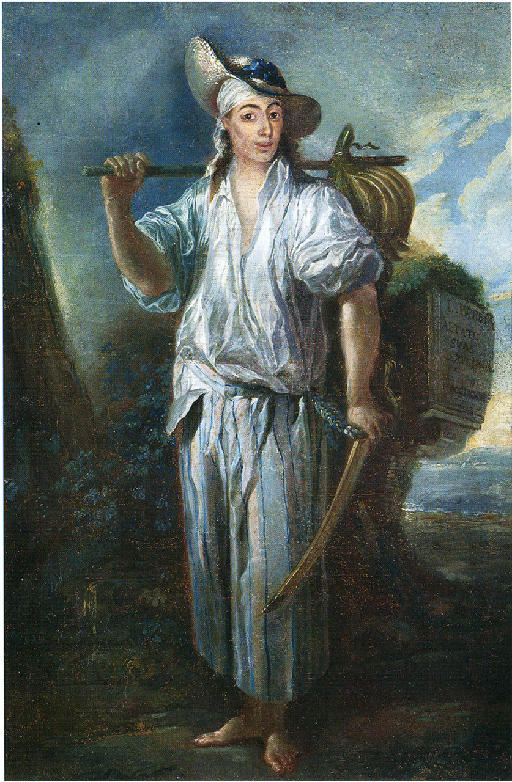
José Campeche y Jordán was a Puerto Rican visual artist considered by art critics as one of the best rococo artists in the Americas. Campeche y Jordan loved to use colors that referenced the landscape of Puerto Rico, as well as the social and political creme de la creme.
Background
José Campeche y Jordán was born on December 23, 1751 in San Juan, Puerto Rico. His parents were Tomás Campeche and María Jordán y Marqués. His father was a freed slave born in Puerto Rico and his mother was a native of the Canary Islands. His father, a restorer and painter of religious statues, was an early influence on the young Campeche's interest in the arts.
Education
Campeche learnt a lot from his father. Luis Paret was a Spanish painter who was exiled to Puerto Rico. Between the years of 1775 and 1778, Campeche studied with him and perfected his skill and natural talent. Paret taught Campeche how to control his colors and a variety of techniques. These lessons helped Campeche develop his own style and he became known for his realistic paintings and extreme attention to detail.
Career
He began producing a variety of work that documented history, and depicted many social and political changes in Puerto Rico. He painted religious works and was commissioned to do portraits of well-known figures. Some of his most famous works of art include Saint John the Baptist, Virgin de la Soledad de la Victoria, The Sacred Family, Our Lady of Bethlehem, The Shipwreck of Power, The Bishop of San Francisco de le Cuerda, The Vision of Saint Anthony, and The Virgin of the Rosary. He also painted portraits of Miguel A. de Ustariz, Juan Alejo de Arizmendi and Ramon de Castro.
Campeche died in the city of San Juan on November 7, 1809. He was laid to rest at the San José Church, also located in Old San Juan.