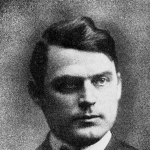
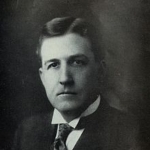
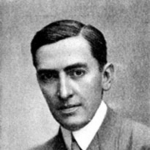
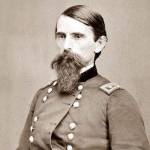
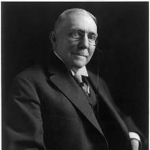
Ray Long was an American editor. He worked one time as editor of Cosmopolitan Magazine and as vice president of International Magazine company. Long was associated with Hamptons, Red Book, Blue Book and Green Book.
Background
Ray Long was born on March 23, 1878, in Lebanon, Indiana, United States. He was the son of John H. Long and Mary Allice Humes Long, a milliner.
His parents, who soon relocated to Sheridan, Indiana, had little money for their children’s education. Long’s father worked as a clerk in a retail goods store. Early on, however, Long’s father died, leaving his mother, Mary Allice Humes Long, to support the family by making hats.
Education
Ray attended educational public schools in Indianapolis.
Career
Long worked to support the family from the time he was a child; he worked as a delivery boy briefly, hauling newspapers and packages after school, but eventually he left school in order to work as a Western Union telegram delivery boy. After flopping around in some unlikely professions - professional bicycle racer, shoe salesman, and politician - Long decided his future lays in journalism. Apparently, the business seemed glamorous to the young Long. Long went about entering the field in his usual persistent, brash fashion: he dogged the News’s editor, Charles R. Williams, for four years until he finally landed a job.
At the Indianapolis News, Long quickly developed enriching and important contacts. He befriended Roy W. Howard, a young reporter with a gutsy style, who had himself been a former delivery boy. Howard soon moved on to the Indianapolis Star, but he and Long remained friends throughout their lives; Howard eventually became the editorial director of Scripps-Howard newspapers, the massive chain of papers formerly called Scripps-McRae.
Long spent more time in newspapers, though he moved from Indianapolis after ten years. In 1905, he became managing editor of the Cincinnati Post, and then in 1908 moved to become editor of the Cleveland Press. But in the 1910s, Long was still on his way up. He undertook an entry into the magazine world that was every bit as persistent and bluffing-brash as his entry into the newspaper world; he wrote to the owner of Hampton’s Magazine, a likely journal, offering free editing advice until Hampton hired him in exasperation. Long started as assistant editor, but soon became its editor.
Though the magazine folded, Long’s work on Hampton’s put him on the A-list of magazine editors. He next edited Louis Eckstein’s magazine group - Red Book, Blue Book, and Green Book - which he redesigned along the lines of Cosmopolitan. He developed a wider audience by introducing serial fiction (to keep readers coming back month after month) and by choosing his fiction writers with amazing acuity. Accordingly, Long read two or three novels per week, along with a radiator-sized stack of short stories, magazines, and trade papers. It was said that he read all the major American Sunday newspapers. From this morass of type, Long was able to cull those items he thought would most appeal to his audience - and he was able, moreover, to choose items that would develop a readership with upscale purchasing tastes.
This selection and marketing strategy made Long an appealing editor to William Randolph Hearst, who hired Long to Cosmopolitan just before the end of World War I. The two men apparently jibed well, and through the years Hearst raised Long’s salary to the highest figure made by any editor in 1931: $185,000. But Hearst also allowed Long to control the magazine’s content and layout completely. Long thus was able to organize the magazine around a “cult of personality” that would make the Cosmopolitan more glamorous by glamorizing its staff.
By 1931, Long had left Cosmopolitan. The reason for his resignation is unclear; he claimed to be interested in working on book publishing, but some suspected that Hearst might have felt fed up with the “personality” that Long splashed over his magazine’s pages. At any rate, Long’s career was never the same. His book publishing firm folded, and after editing a magazine called Photoplay he spent some months working as a script supervisor in Hollywood. In July 1935, as Long was about to take on the humbling post of Western editor for Liberty, he shot himself in the mouth with a small bore rifle. Long’s rise seems to have been built on the sort of unending confidence that his suicide recasts as mere bluffing.
Achievements
Ray Long is best known for his long and felicitous editorship of Cosmopolitan. As president of Cosmopolitan under owner William Randolph Hearst, Long became the highest-paid magazine editor of his day, and his regular contributors made up a virtual Who’s Who of novelists and short-story writers of the early twentieth century.
Long also cultivated a cult of personality around his writers: he altered the magazines title page to include photographs of his authors, thus adding to their glamour and to the magazine’s overall appeal. His plan must have appealed to his authors as well, since his roster displayed a startlingly vivid array of talent. He created the same cult around his own personality, posing for articles such as “The Cosmopolitan of Ray Long” in Fortune magazine.
An able editor with a brilliant mind for marketing, Long managed to pull himself out of poverty to become one of the glitziest, highest-paid magazine men around.
He owned five automobiles but did not drive any of them for fear of having an accident. His forty imported suits were all tailored to be too small for him, lest he would become overweight. He loved cigarettes, fish chowder, and Scotch, and Irvin S. Cobb called him the greatest poker player in the world.
Quotes from others about the person
"Long believed fervently that the success of any publication was a function of its ‘personality,’ which depended in turn upon a single individual exercising total editorial control. Accordingly, Long not only read and approved every line that was printed, but he chose the illustrators and laid out most of the magazine’s typography himself.” - Applegate
Interests
Poker
Connections
In 1901, Ray Long married Pearl Dillon Schou, but they divorced in 1920. On July 25, 1922, he married Lucy Virginia Bovie. Long had a son Ray Jr.
George Ade was an American writer, newspaper columnist, and playwright.
colleague:
Lewis Wallacу
April 10, 1827 – February 15, 1905
Lewis Wallace was an American lawyer, Union general in the American Civil War, governor of the New Mexico Territory, politician, diplomat, and author from Indiana.
colleague:
James Whitcomb Riley
October 7, 1849 – July 22, 1916
James Whitcomb Riley was an American writer, poet, and best-selling author.
colleague:
Charles Majors
colleague:
Maurice Thompson
September 9, 1844 – February 15, 1901
James Maurice Thompson was an American novelist, poet, essayist, archer and naturalist.
colleague:
George Barr McCutcheon
July 26, 1866 – October 23, 1928
George Barr McCutcheon was an American popular novelist and playwright.
colleague:
Booth Tarkington
July 29, 1869 – May 19, 1946
Newton Booth Tarkington was an American novelist and dramatist best known for his novels The Magnificent Ambersons and Alice Adams.
References
DLB 137: American Magazine Journalists, 1900-1960
The second volume to cover publishers and editors of American magazines in the early 20th-century, DLB Volume 137 traces the shift in magazine publishing from a mass-marketed, nationally circulated medium to a highly targeted, subject-specific medium. From the pulps of the 1920s to the skin magazines introduced in 1953, magazine genres introduced during this time were a reflection of American interests-rather than a leader of popular tastes.