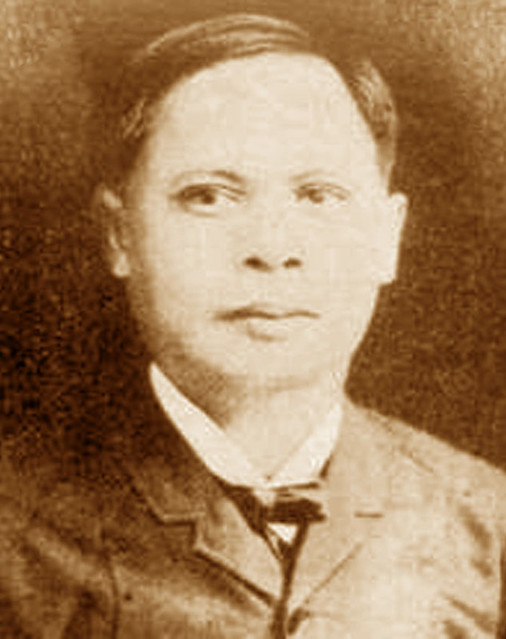
Roman Basa was a Filipino revolutionary and propagandist who became the second Supremo of the Katipunan in 1893. He helped circulate nationalist literature, organized revolutionary activity in Cavite, and served during the society's early expansion before his arrest in 1896 and execution in Manila on February 6, 1897.
Background
Roman Basa was born on February 29, 1848, in San Roque, Cavite, to Mariano Basa and Dorotea Esteban. He was the fourth of six children. Cavite, a maritime and politically active province near Manila, later became one of the principal centers of the Philippine Revolution against Spanish rule.
Basa received early instruction from Padre Pedro Manalak, a chaplain attached to an army regiment stationed in Cavite, and subsequently continued his education through self-study. He later attended the Escuela Náutica de Manila, an institution associated with the training of personnel for the maritime professions in the Spanish colonial Philippines.
Education
Basa received early instruction from Padre Pedro Manalak in Cavite and later pursued further education at the Escuela Náutica de Manila. The nautical school prepared students for maritime service and reflected Manila's role as the administrative and commercial center of the Spanish colonial Philippines. His education was followed by employment in the marine administration, where his position gave him access to communications and shipping networks.
Career
Basa began his working life as a second official in the Navy Office, or Comandancia de Marina, in Manila, receiving a monthly salary of fifty-eight pesos. His work in the marine administration placed him in a position from which nationalist literature could be received and circulated. He resided on Calle Asuncion while employed in the Navy Command, and Ladislao Diwa boarded with him.
After the Katipunan was founded by Andrés Bonifacio, Teodoro Plata, and Ladislao Diwa in 1892, Basa was informed of the society's existence and aims. Initiated on November 9, 1892, under the symbolic name Liwanag, he became an active agent in distributing copies of La Solidaridad and writings by José Rizal. The literature was secretly transported from Hong Kong to Manila aboard ships, including the Don Juan, and Basa helped introduce it among supporters in Manila and Cavite.
When the Liga Filipina was revived in 1893 and provincial branches were planned, Basa and Diwa were assigned to work in Cavite. In February 1893, Basa was elected president, or Supremo, of the Katipunan's Supreme Council. During his presidency, the society expanded its provincial organization and created a women's section.
Basa did not retain the leadership after the subsequent reorganization of the Supreme Council. His disagreements with Bonifacio involved the proposed initiation of his young son Lucio, the society's demanding initiation procedures, and the preservation and expenditure of Katipunan funds. After his connection with the organization became known through seized papers or testimony, Basa was arrested in September 1896. He was imprisoned and executed by firing squad at Bagumbayan in Manila on February 6, 1897.
Achievements
Basa helped circulate La Solidaridad and José Rizal's writings through clandestine channels linking Hong Kong, Manila, and Cavite, contributing to the spread of reformist and nationalist ideas before the Philippine Revolution.
As the second president, or Supremo, of the Katipunan, Basa oversaw the society during an early phase of provincial expansion and the creation of its women's section.
Politics
Basa's political activity developed within the Katipunan, a secret revolutionary society founded in Manila in 1892 to organize resistance to Spanish colonial rule and seek Philippine independence. He joined the movement on November 9, 1892, helped distribute reformist and nationalist literature, and became its second Supremo in February 1893.
The Katipunan combined clandestine organization with an emerging program of national emancipation. During Basa's presidency, it expanded its provincial work, including activity in Cavite, and organized a women's section. His later disputes with Andrés Bonifacio concerned membership procedures, the initiation of Basa's young son, and the handling of the society's funds, reflecting internal disagreements over the movement's organization and finances.
Views
Basa's documented political outlook was centered on opposition to Spanish colonial rule and support for Philippine national emancipation. His work distributing La Solidaridad and José Rizal's writings connected him with the reformist and nationalist intellectual currents that preceded the armed Philippine Revolution.
Personality
Basa's documented disagreements with Andrés Bonifacio show that he emphasized careful preservation of Katipunan funds and objected to what he regarded as unnecessary expenditure. He also declined to have his young son initiated while the boy was still underage, despite the son's courier work for the movement.
Interests
Writers
José Rizal
Connections
Basa was the son of Mariano Basa and Dorotea Esteban and the fourth of their six children. He married Josefa Inocencio, a cousin of Maximo Inocencio, and had two children, Cristina and Lucio.
His political and revolutionary connections included Andrés Bonifacio, Deodato Arellano, and Ladislao Diwa. Arellano was the first president of the Katipunan, while Diwa was one of its co-founders and worked with Basa on revolutionary activity in Cavite. Bonifacio succeeded Basa as Supremo after the reorganization of the society.
Father:
Mariano Basa
Mother:
Dorotea Esteban
Wife:
Josefa Inocencio
She was a cousin of Maximo Inocencio.
Daughter:
Cristina Basa
Son:
Lucio Basa
He performed courier work for the Katipunan and its propaganda activities while still young.